Principals
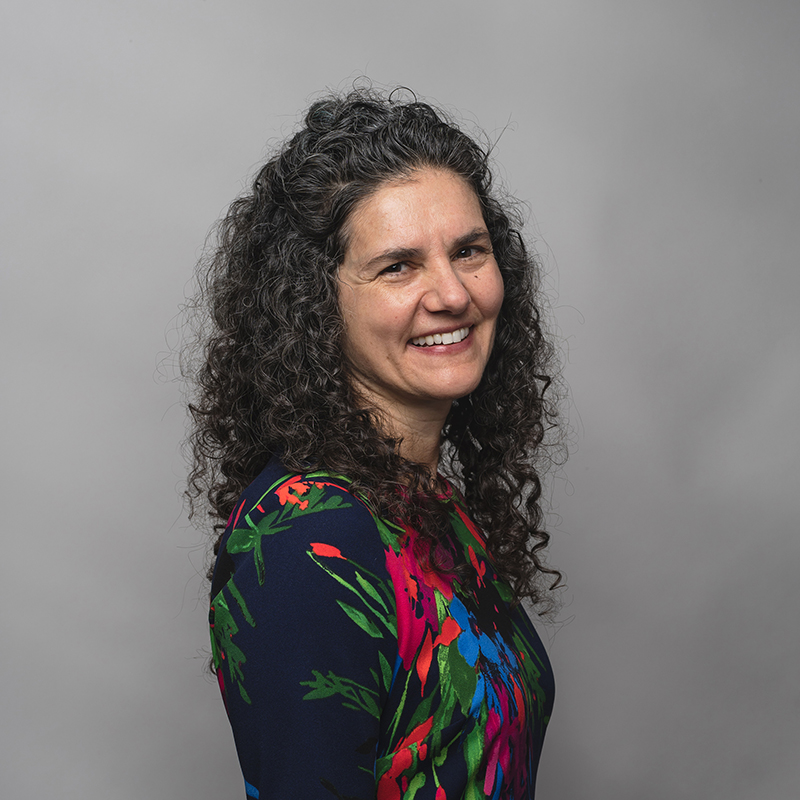
Jean Carroon leads Goody Clancy’s extensive preservation and renovation practice. She has received national recognition for her special expertise in applying sustainable design technology to historic buildings and has been appointed to (Boston) Mayor Menino’s Green Building Task Force and the Advisory Board of the Green Roundtable’s Nexus Green Building Resource Center. Her book, Sustainable Preservation; Greening Existing Buildings, was published in 2010 by John Wiley & Sons. Jean is also a recognized expert in the design of accessibility solutions for historic buildings. She has led Goody Clancy’s restoration of some of the most distinguished landmark buildings in the country, including H.H. Richardson’s Trinity Church in Boston. She has also directed the renovation of a number of venerated buildings on historic university campuses throughout New England.
Jean lectures frequently on preservation and sustainable design topics to local and national audiences, including the National Building Museum in Washington, DC. She has participated in panels and symposia for such organizations as the General Services Administration, AIA Livable Communities, the Association for Preservation Technology, and the Green Building Alliance, and is a member of the National Trust for Historic Preservation Sustainability Coalition. She earned a Bachelor of Arts and Master of Architecture at the University of Oregon.
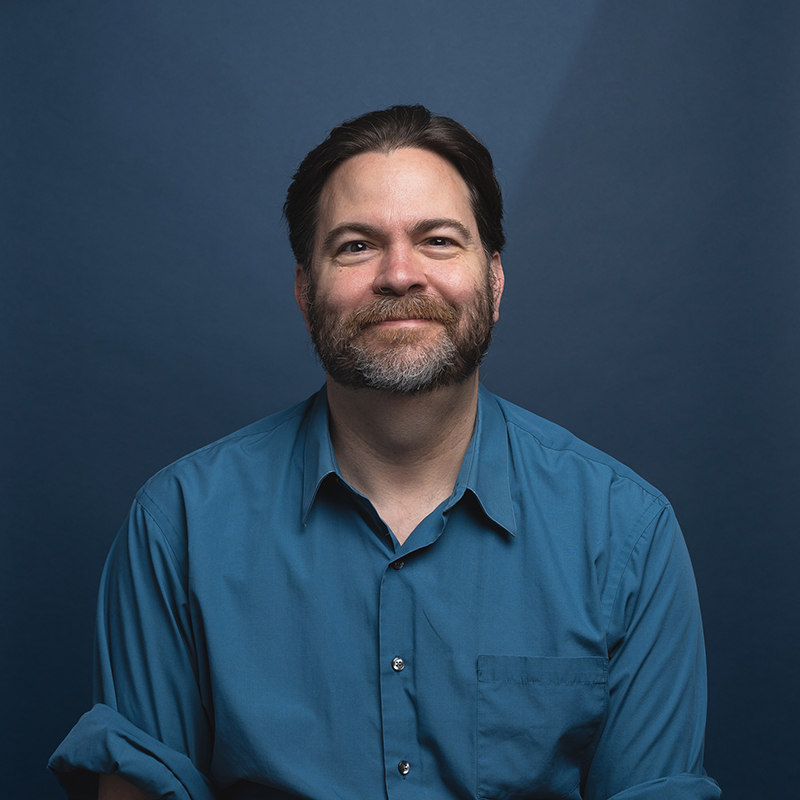
Mr. Chandler has led many of the Goody Clancy’s mixed-use and urban design projects. His experience includes the planning and design of city, town and campus master plans, large-scale housing, and mixed-use development. His award-winning work has received national attention for its elegant design and its contribution to urban vitality.
Since joining the firm in 1986, and he has led the design of several national-award-winning housing developments. He has also directed many of our significant educational projects, involving new building design, renovation, and campus master planning. He is currently serving as Principal-in-Charge of Austin 21c, a 44-story mixed-use facility in downtown Austin, Texas. Other ongoing projects include the Jerry S. Rawls College of Business at Texas Tech, the new Academic / Science Facility at Emmanuel College, and a New Residence Hall at a Private College in Boston.
Rob received a Bachelor of Arts degree from Colby College and Master of Architecture degree from Harvard University.
David Dixon leads Goody Clancy’s Planning and Urban Design division. His work has won national awards from the American Institute of Architects, Congress for the New Urbanism, Society for College and University Planning, and American Society of Landscape Architects. The Boston Globe’s architecture critic hailed the “Civic Vision for Turnpike Air Rights in Boston” as Boston’s “most ambitious planning endeavor since Olmsted’s Emerald Necklace.” In 2007 David was honored with the AIA's Thomas Jefferson Award for Public Architecture for his achievements in support of the public sector.
David served as 2003 President of the Boston Society of Architects (the local AIA Chapter) and chair of the 2003 national conference on “Density: Myth and Reality.” He has been invited to speak about revitalizing America’s downtowns and neighborhoods by the AIA, the Mayor’s Institute for City Design, the Congress for the New Urbanism, and the Society for College and University Planning; served as a juror for the AIA’s Regional and Urban Design Honor Awards; and is one of five national advisors of the AIA’s Regional and Urban Design Committee. He writes frequently about urban issues, including recent chapters on university-sponsored revitalization (published by the Lincoln Institute for Land Policy and Great Cities Institute) and urban design issues related to homeland security (MIT Press). He earned a Bachelor of Arts from Wesleyan University, Master of Architecture from University of Pennsylvania, and Master of Urban Design from Harvard University.
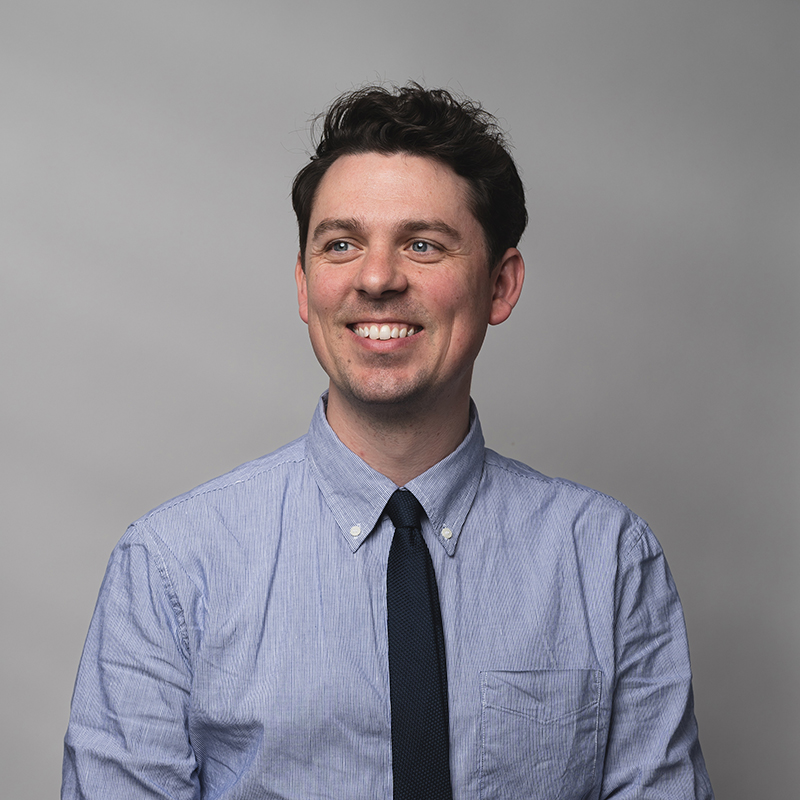
Mr. Goldstein has more than thirty years of design and project leadership experience. He is a specialist in academic buildings and planning, with expertise in business schools and interdisciplinary science research centers such as the Brain & Cognitive Sciences Complex at the Massachusetts Institute of Technology. His current ongoing projects include work at Medical University of South Carolina, University of Connecticut Health Center, Washington University in St. Louis and Northern Kentucky University.
Roger serves regularly on design juries, and speaks frequently at the national conferences of the American Institute of Architects (AIA), the Association of College and University Housing Officers International, and the Society for College and University Planning. A leader in the profession, he has acted in the past as president of the state and local AIA chapters and the chair of the national AAF Environmental Education Committee.
He earned Bachelor of Science and Master of Architecture degrees at the Massachusetts Institute of Technology.
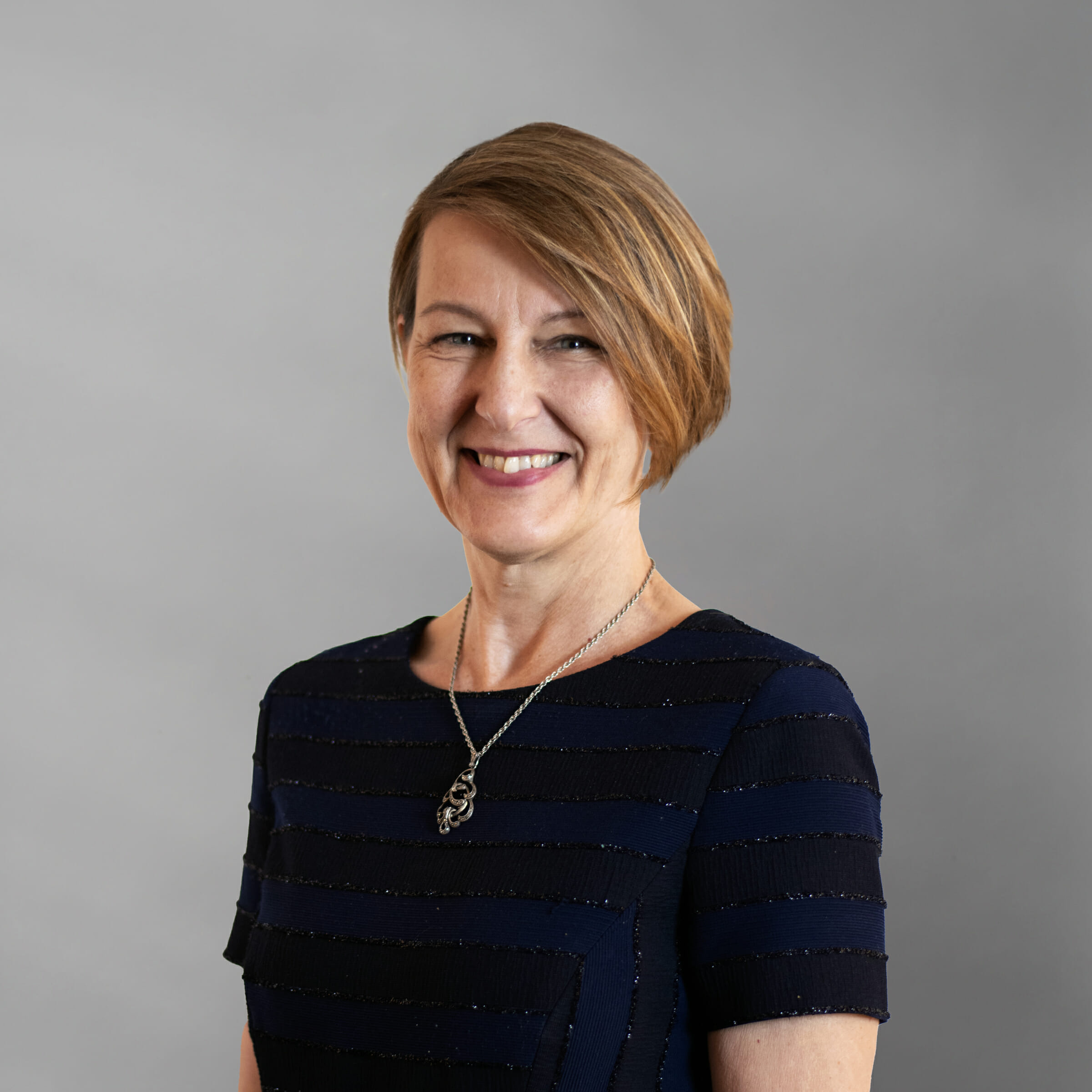
Lisa Howe is the firm’s Director of Preservation. She has a unique diversity of experience which includes more than 20 years directing the adaptive reuse and preservation of signature buildings in a broad range of market sectors, including education, civic and cultural projects for clients such as Harvard University and Trinity Church in the City of Boston. Her current work includes two National Historic Landmarks. The first is the renovation of over 50 historic buildings at St. Elizabeths West Campus in Washington, D. C., which is part of a General Services Administration project creating the new headquarters for the Department of Homeland Security. The second is the facade restoration of the Ayer Mansion in Boston, Massachusetts, a project which received the highly competitive Save America’s Treasures Grant.
Her unorthodox career began as a bricklayer and demonstrates a continuous commitment to design excellence, technical knowledge, research and innovation. During a sabbatical year in 2005, Howe undertook graduate work in “Strategic Leadership Towards Sustainability” at Blekinge Institute of Technology in Sweden. Recognized nationally for promoting cultural and environmental sustainability through the reuse of existing buildings, she is currently the co-chair of the Technical Committee for Sustainable Preservation for the Association for Preservation Technology International (APTI).
Lisa holds a Bachelor of Science in Historic Preservation from Roger Williams University.
Steve Kleinrock leads Goody Clancy’s Washington, DC, office, which serves the Mid-Atlantic. Steve has focused much of his career on the design of higher education facilities and campus planning, with extensive experience in academic buildings and buildings for the arts and student life.
Steve joined Goody Clancy after leading his own international practice and serving for many years as design principal and a member of the board of directors with EYP. He has earned many awards for his design work, including commendations from the AIA, the APA, and the Louis I. Kahn Citation from American School & University. Clients have included Georgetown University, American University, George Washington University, Catholic University, the University of Richmond, Montgomery College, and the Azerbaijan Diplomatic Academy. His work has frequently been published and noted with acclaim by clients as well as architectural critics and design award juries.
Steve’s perspective as an accomplished artist informs and distinguishes his approach to design. He has frequently been recognized for his creative and collaborative approach to planning and design. His commitment to creating people-focused environments—revitalizing and energizing campuses to foster highly interactive academic communities—inherently resonates with Goody Clancy’s deep commitment to social and environmental responsibility. He holds a Master of Architecture and a Bachelor of Fine Arts from the University of New Mexico.
David Spillane is the firm’s director of planning and urban design. His work has been recognized through national awards from the American Institute of Architects, the Congress for the New Urbanism and the Waterfront Center and numerous regional awards from the American Planning Association. Over the last ten years he has led design and planning projects for public and private sector in more than twenty states with a focus on revitalizing and reshaping urban waterfronts, downtowns and neighborhoods, and creating new communities through significant development projects.
He serves as a member of Boston’s Harbor Planning Advisory Committee, and as a design advisor to the Capital Center Commission in Providence, Rhode Island. He earned a Bachelor of Architecture degree at University College Dublin in Ireland and a Master in Architecture degree at the Harvard University Graduate School of Design.
Senior Staff
Larissa Brown PhD, AICP provides leadership and management for public and private clients in a broad range of communities, including city comprehensive and strategic plans, visioning, neighborhood and downtown revitalization plans, and open space plans. She has served as chief planner for a regional council of governments and as director of community planning for a municipal government, and is a founding member of the Massachusetts Smart Growth Alliance, a statewide smart growth advocacy collaborative. Her experience on all sides of the planning process and with a range of community types – urban, suburban and exurban – informs her understanding of community building and smart growth.
Bernard Dooley AIA, LEED is Senior Associate and one of Goody Clancy’s chief laboratory design specialists. Since joining the firm in 1985, he has played a major role on all of our research and animal facility projects, including MIT’s Brain and Cognitive Sciences Complex and Koch Biology Building, the Neuropsychiatric Research Institute at the University of Massachusetts Medical Center and the Whitehead Institute for Biomedical Research. His background as a polymer chemist gives him valuable perspective on how scientists work. Mr. Dooley currently specializes in the design of all types of academic, scientific and administrative facilities. He is also the firm’s Animal Facility Design expert.