Daylight, Equity, and Evolving Tradition in Student Housing

Daylight is a Design Responsibility
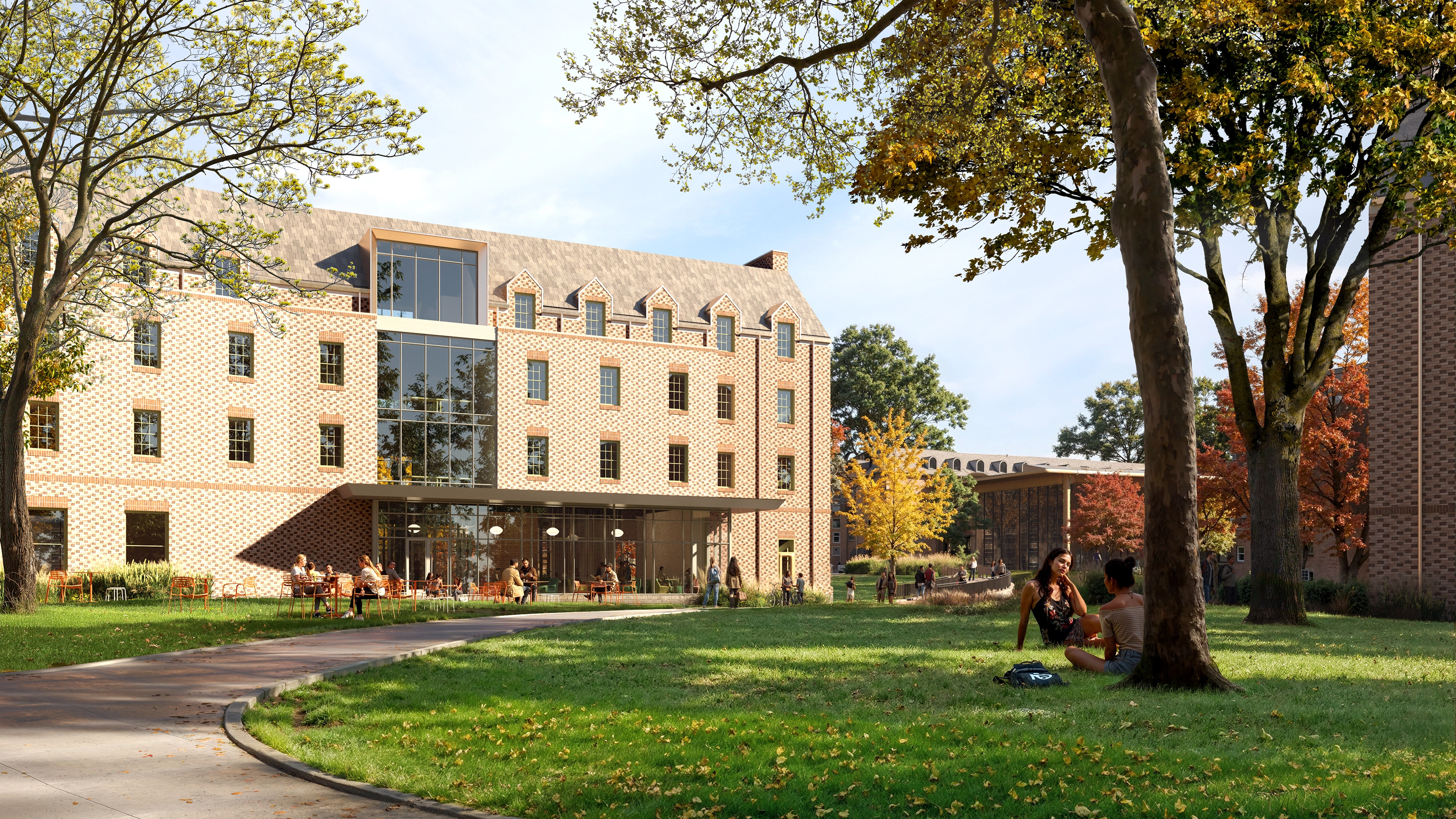
Natural light is one of the most important considerations in campus residential design. Students spend roughly 1/3 of their time in their rooms, and access to natural light in these spaces has an outsized impact on their wellbeing. Research consistently shows that natural daylight improves mood, supports circadian rhythms, and enhances academic performance. With that in mind, we approach daylight as a fundamental responsibility as we design for student life.
At West Woods, that responsibility intersected with another priority: honoring William & Mary’s historic architectural traditions.
When Tradition Challenges Performance
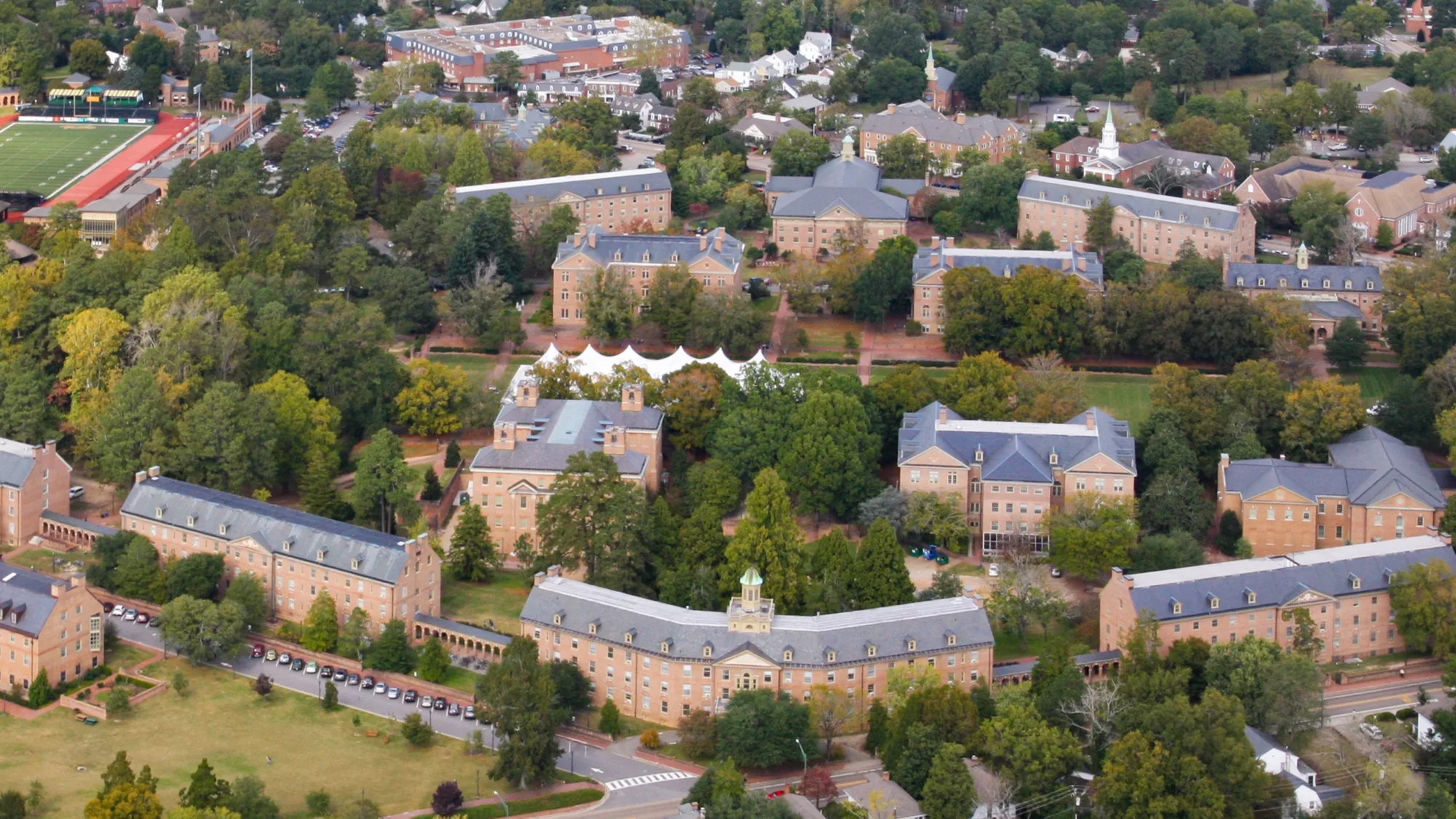
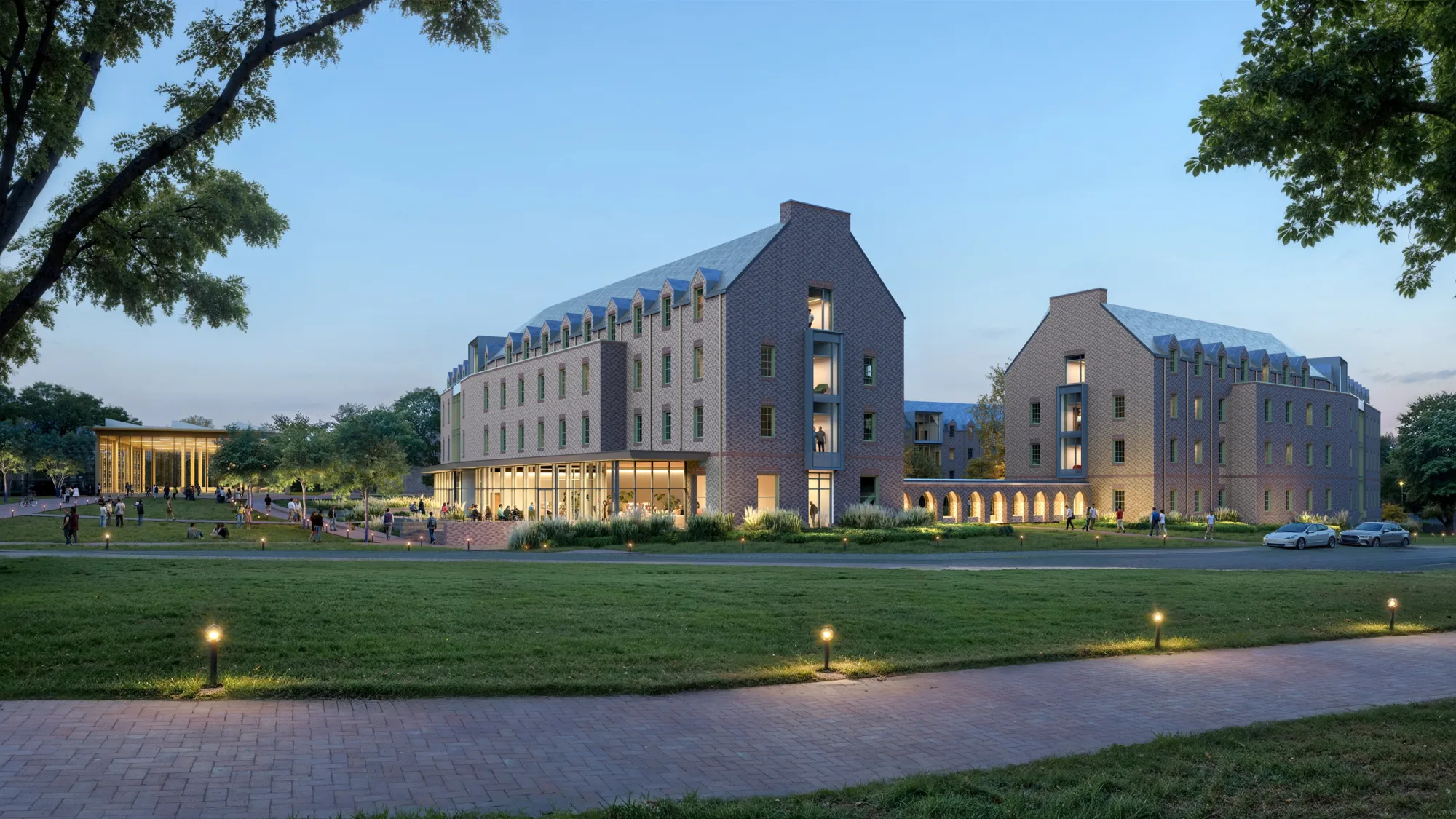
Founded in 1693, the William & Mary campus developed alongside colonial Williamsburg. Its Georgian architecture is synonymous with the college’s identity and brand, and as the college has grown, it has maintained this tradition through the continued use of brick facades, pitched roofs, and dormers. New campus buildings must strike a balance here: meeting modern needs with respect for architectural legacy.
For residence halls, that balance becomes especially challenging at the roofline. Traditional Georgian roof forms, consisting of sloped roofs with dormer windows, introduce a disparity in daylight conditions between floors. Dormer windows are typically smaller, set higher within the wall, and constrained by the roof and dormer geometry. From the outside, these features contribute to the visual character of Georgian buildings; but from within, they limit the daylight and views available in rooms at the top level.
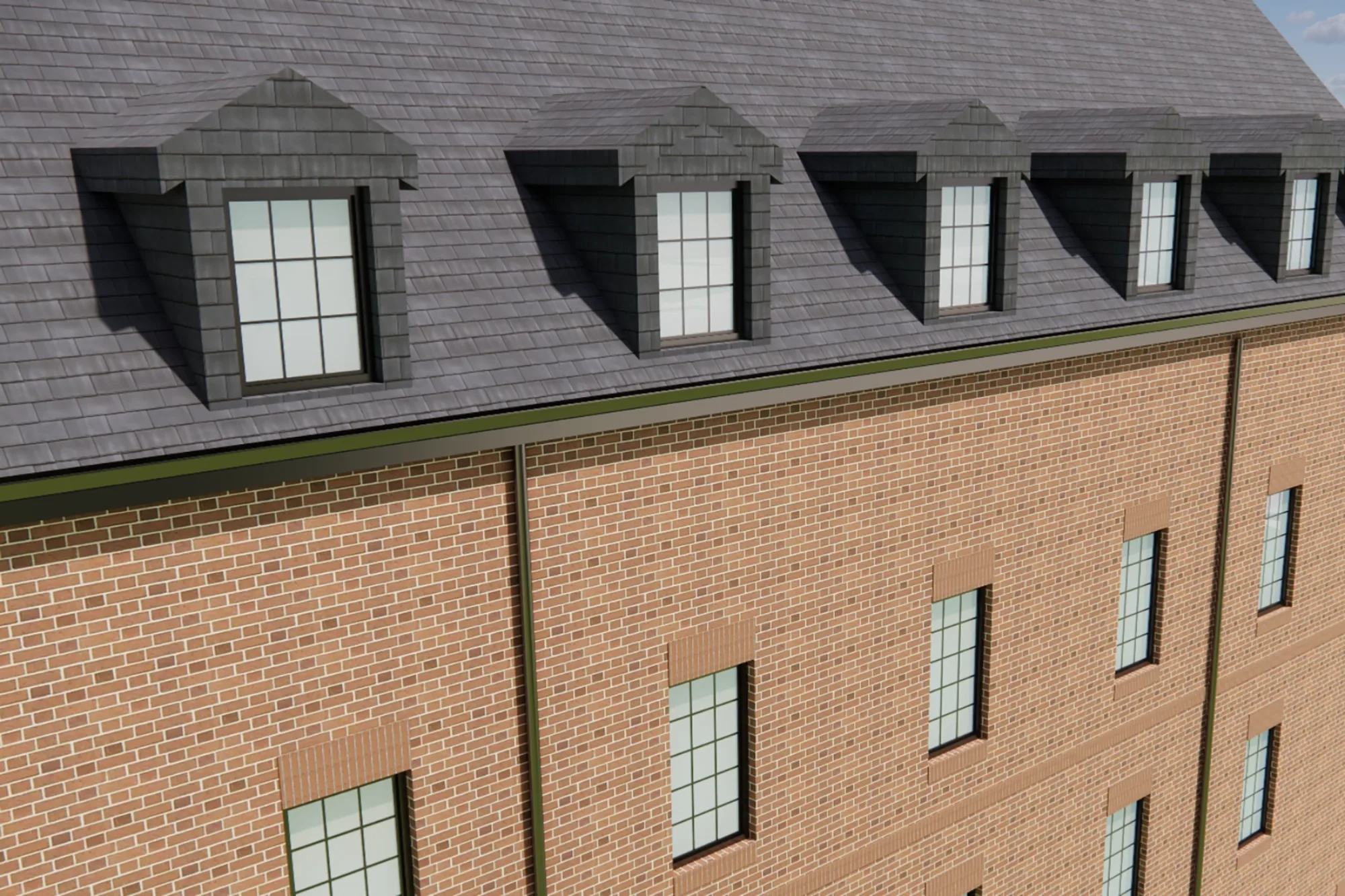
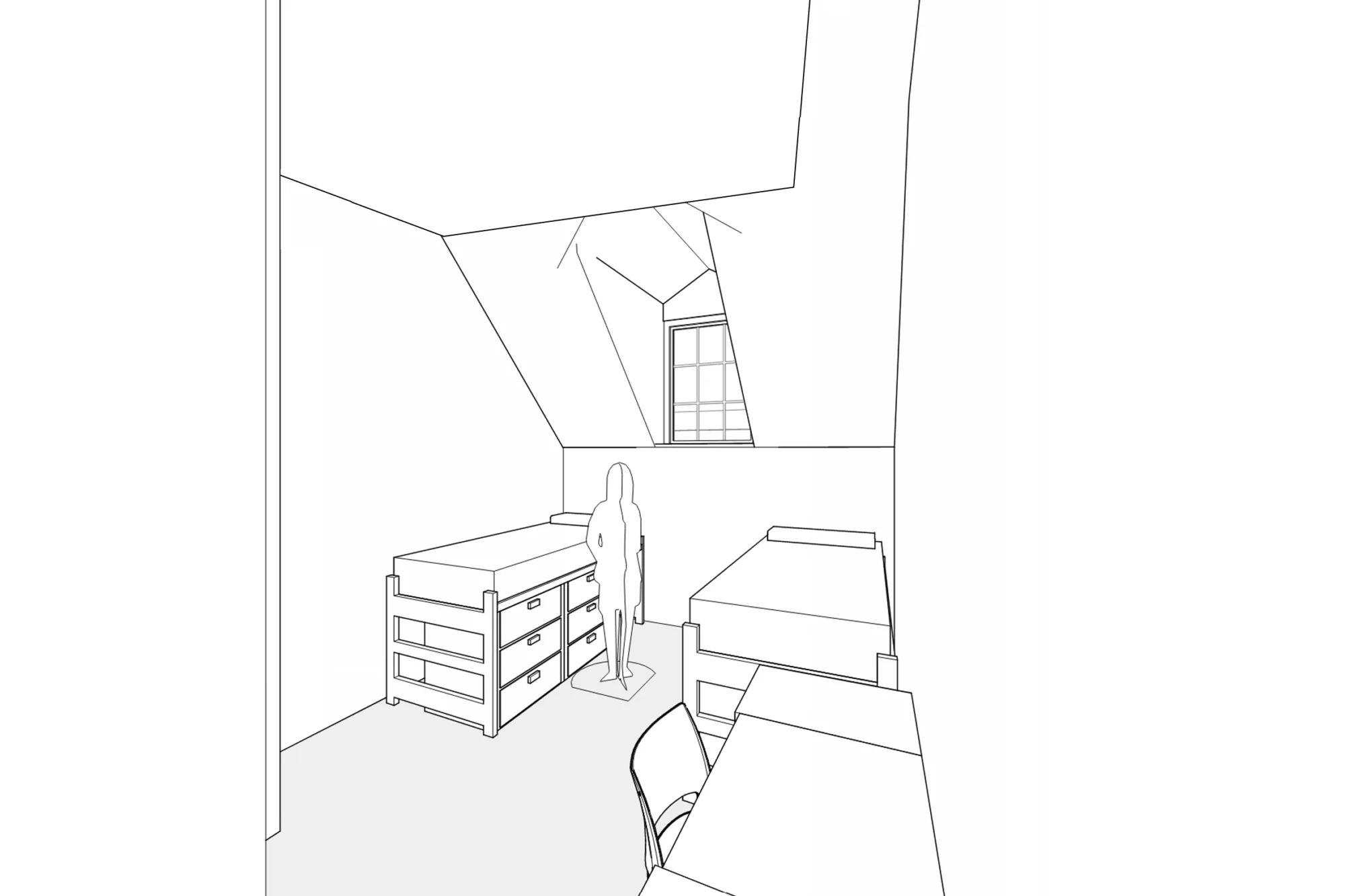
To understand the extent of the issue in our West Woods design, we used Spatial Daylight Autonomy simulations to compare light levels across bedrooms on different floors. The results were clear: if we adhered strictly to traditional Georgian dormer configurations, the upper-level bedrooms would receive significantly less daylight than those on the floors below. The difference was meaningful enough to affect the quality of the living environment.
The data moved the conversation beyond subjective preferences and into a more objective discussion about well-being, equity, and architectural character. The question shifted from “Should we preserve the traditional look?” to “How do we uphold the spirit of the architecture while ensuring a fairer living experience for all students?”
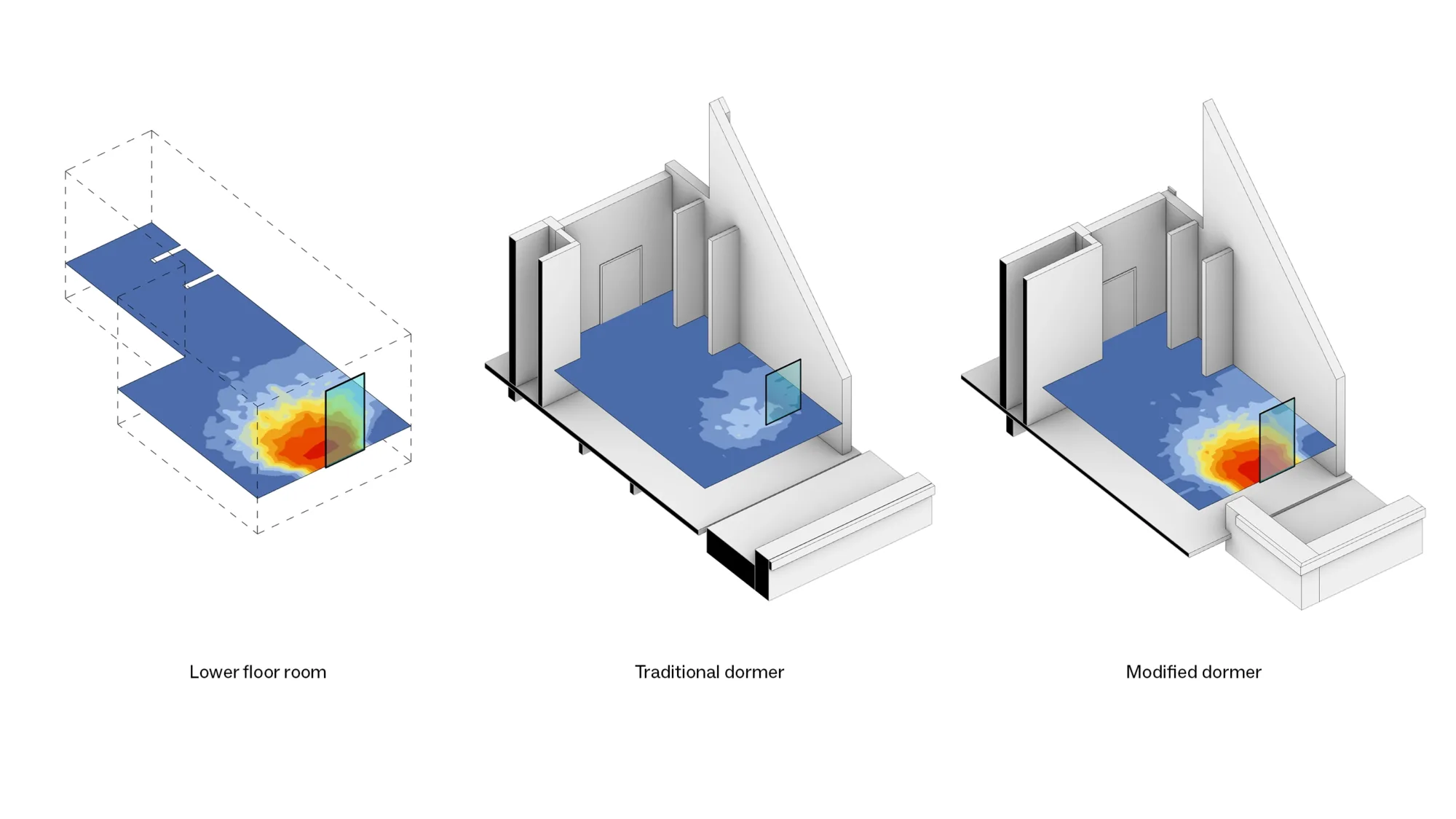
Iterative daylight analysis empowered our team to make agile, data-driven design decisions in real time. It’s a perfect example of how rigorous environmental simulation can actively inform and elevate classical architectural traditions.
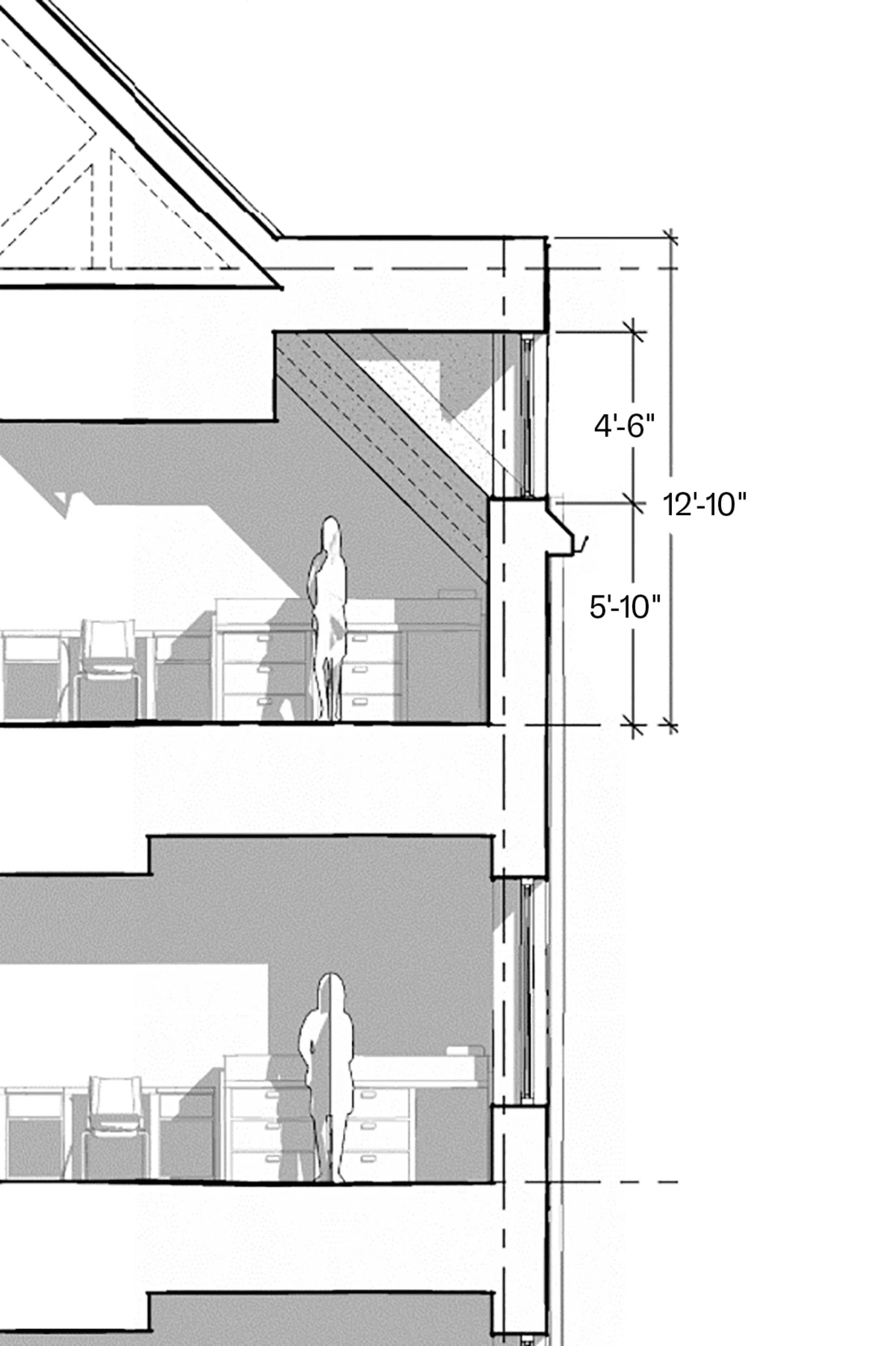
The solution we explored was subtle but impactful. By lowering the dormer windows so that they broke the eave line of the building, we were able to maintain the same window sizes and heights above floor level as the other floors. This adjustment significantly improved daylight penetration into the top-floor rooms, bringing them into alignment with the conditions experienced at the lower levels.
From a performance standpoint, it resolved the disparity. From an architectural standpoint, however, it required careful consideration. Breaking the eave line is not a typical move in traditional Georgian design. The eave is usually a clean, continuous edge that reinforces the building’s compositional order. Introducing interruptions to the eave risks disrupting the visual harmony that defines the style and complicates the approach to roof drainage. Our task was to integrate this modification in a way that felt intentional and respectful.
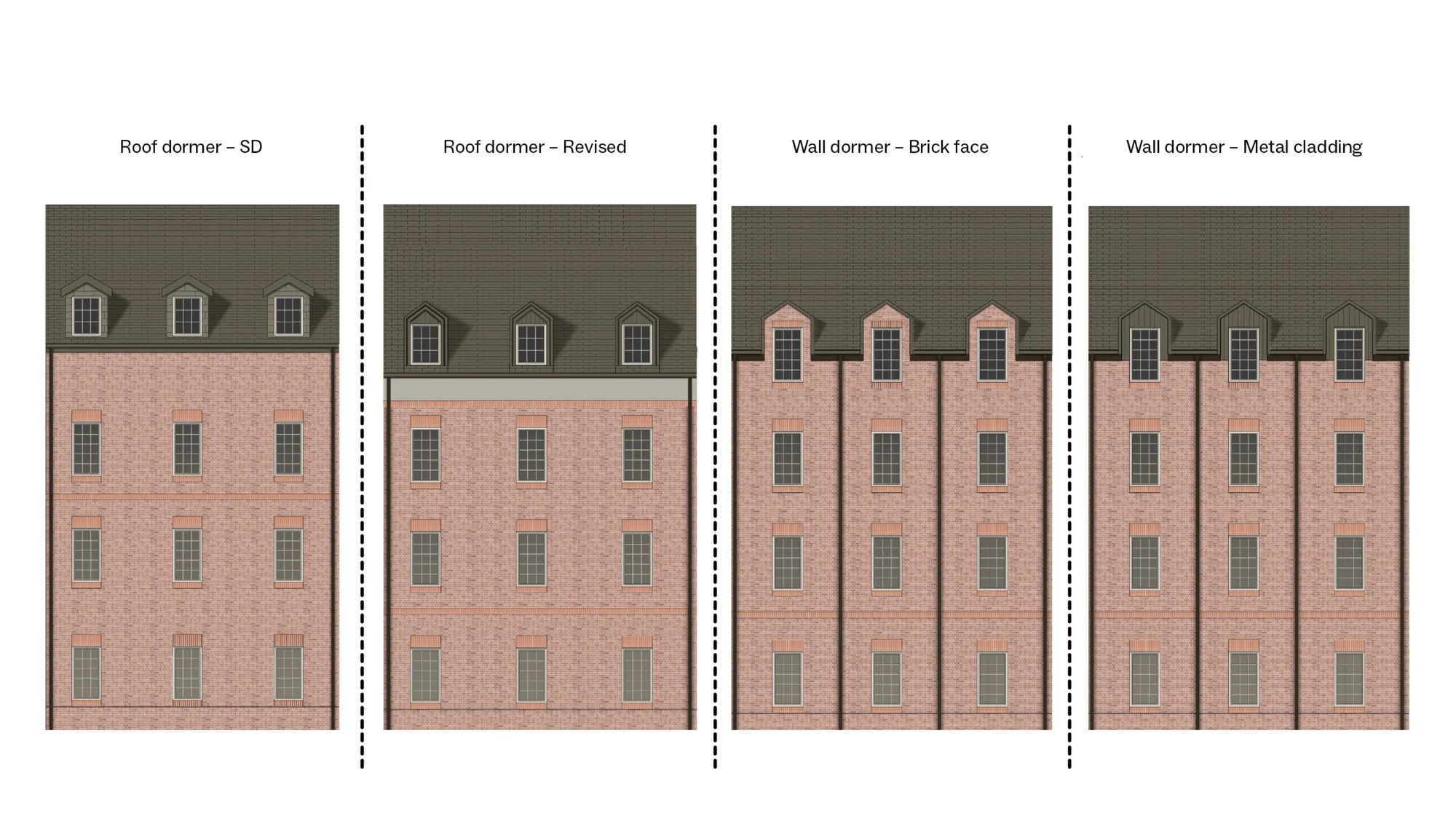
We studied proportions, alignments, and rhythms to ensure that the adjusted windows still contributed to a coherent facade. The goal was not to replicate historical precedent exactly, but to work within its principles while allowing for thoughtful evolution.
In the end, the brick-faced “Wall Dormer” design was the preferred option. It maintains a distinctly Georgian character. The facade reads as familiar and appropriate within its context, yet the subtle extensions at the eave line signal that something more is happening beneath the surface.
Presenting this idea to college stakeholders required both clarity and humility. The daylight data helped make the design challenge visible and gave everyone a shared basis for discussing priorities. The discussion was not framed as a trade-off between aesthetics and performance, but rather as an opportunity to align architectural character with the institution’s values.
In a residence hall, where community and inclusivity are central, the idea of providing more equitable living conditions resonated strongly.
Data can inform decisions, but it does not make them. The success of this project lies in the combination of quantitative analysis and architectural judgment. Iterative daylight simulation and analysis—performed in-house and early, as part of the design process—revealed the problem and informed the solution. Coupled with design judgment, our analysis allowed us to create a design that honors the past while better serving present-day human needs for equity and wellbeing.
More Perspectives
-
 IDEAS + EXPLORATION•DESIGN PROCESS
Reframing Reuse Through Living Building Challenge Core
 Elaine HoffmanDirector of Sustainability
 -
 PRACTICE AREA LEADERSHIP•DESIGN PROCESS
Impact at Every Scale: A More Responsive Approach to Campus Planning
 Ben CarlsonPrincipal / Campus Planning & Research Practice Leader
 -
 IDEAS + EXPLORATION•DESIGN PROCESS
Irving Institute for Energy and Society: COTE Top Ten Award Winner