Impact at Every Scale: A More Responsive Approach to Campus Planning
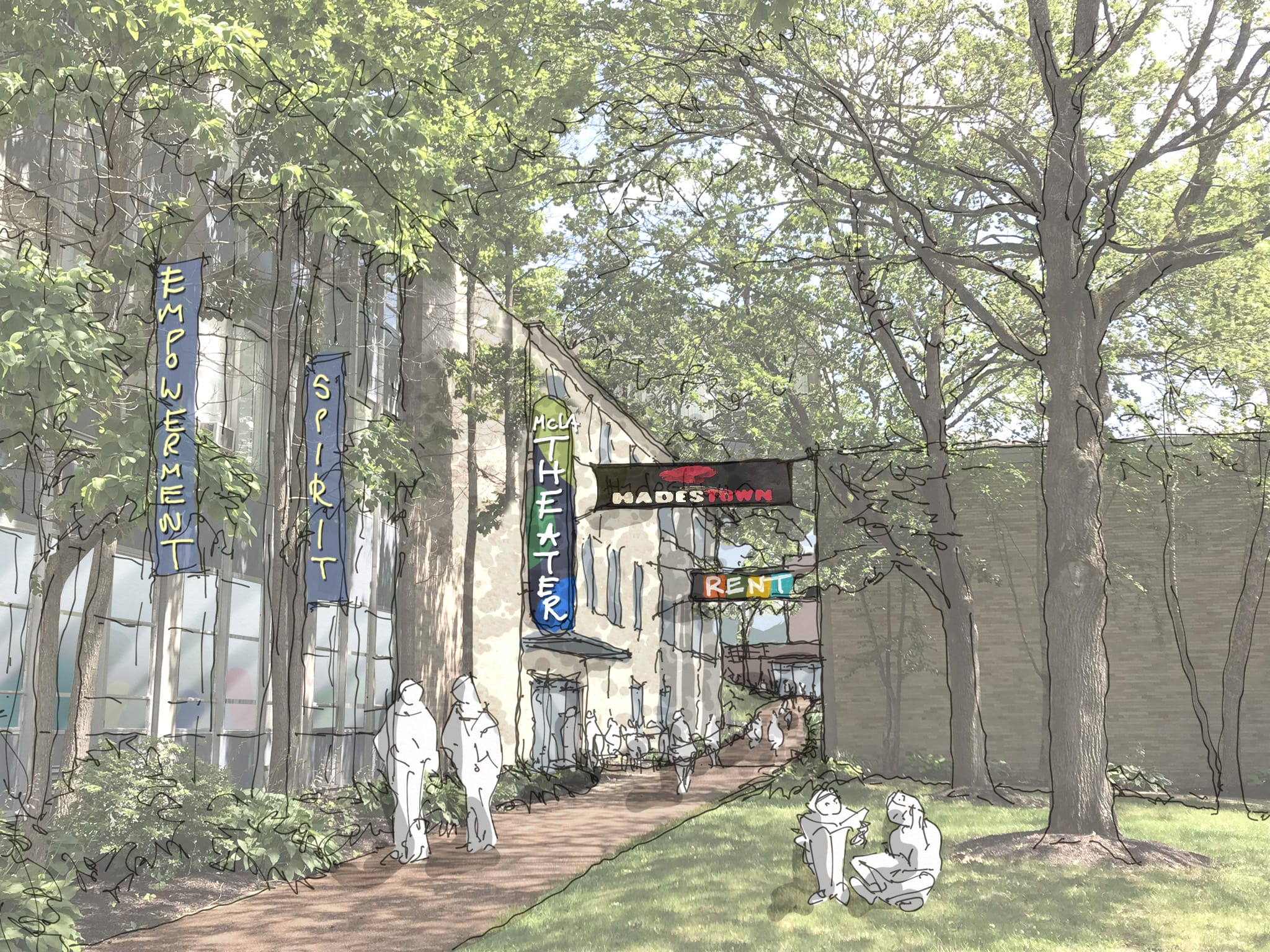

Campus master plans often focus on large, long-term capital projects: new buildings, major renovations, and transformative investments that take years to realize. But when we ask students, faculty, and staff about how their campuses could better serve them, we hear something different:
- Air-conditioning.
- Places to make friends.
- Easier parking.
- Reservable meeting spaces.
- Private spaces to think.
- Classrooms that encourage interaction.
- More food options.
- Improvements to dated spaces.


They also ask when they can expect these improvements.
Because solutions are often assumed to require significant time, money, and space, institutions may feel they cannot deliver meaningful change within the timeframe of current students or staff. In many cases, however, they can. Sometimes, the most meaningful campus improvements do not require large investments or long timelines. They require a planning approach that considers improvements at every scale—small, medium, and large—and aligns them with both immediate needs and long-term goals.
To do this effectively, campus plans must do three things:
- Conceive a series of improvements across scales
- Evaluate them using a shared understanding of value
- Clearly communicate why each project matters
Plan Across Scales: Big, Medium, and Small
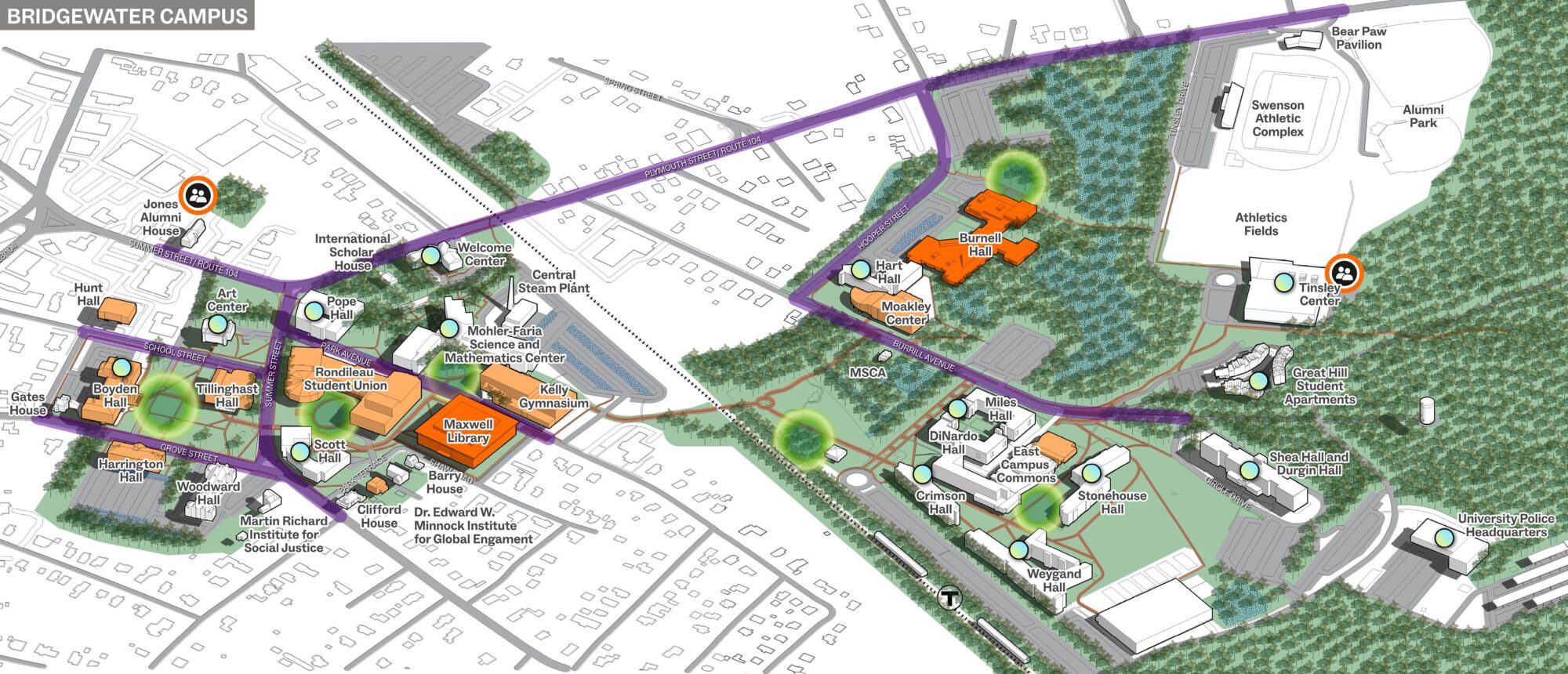
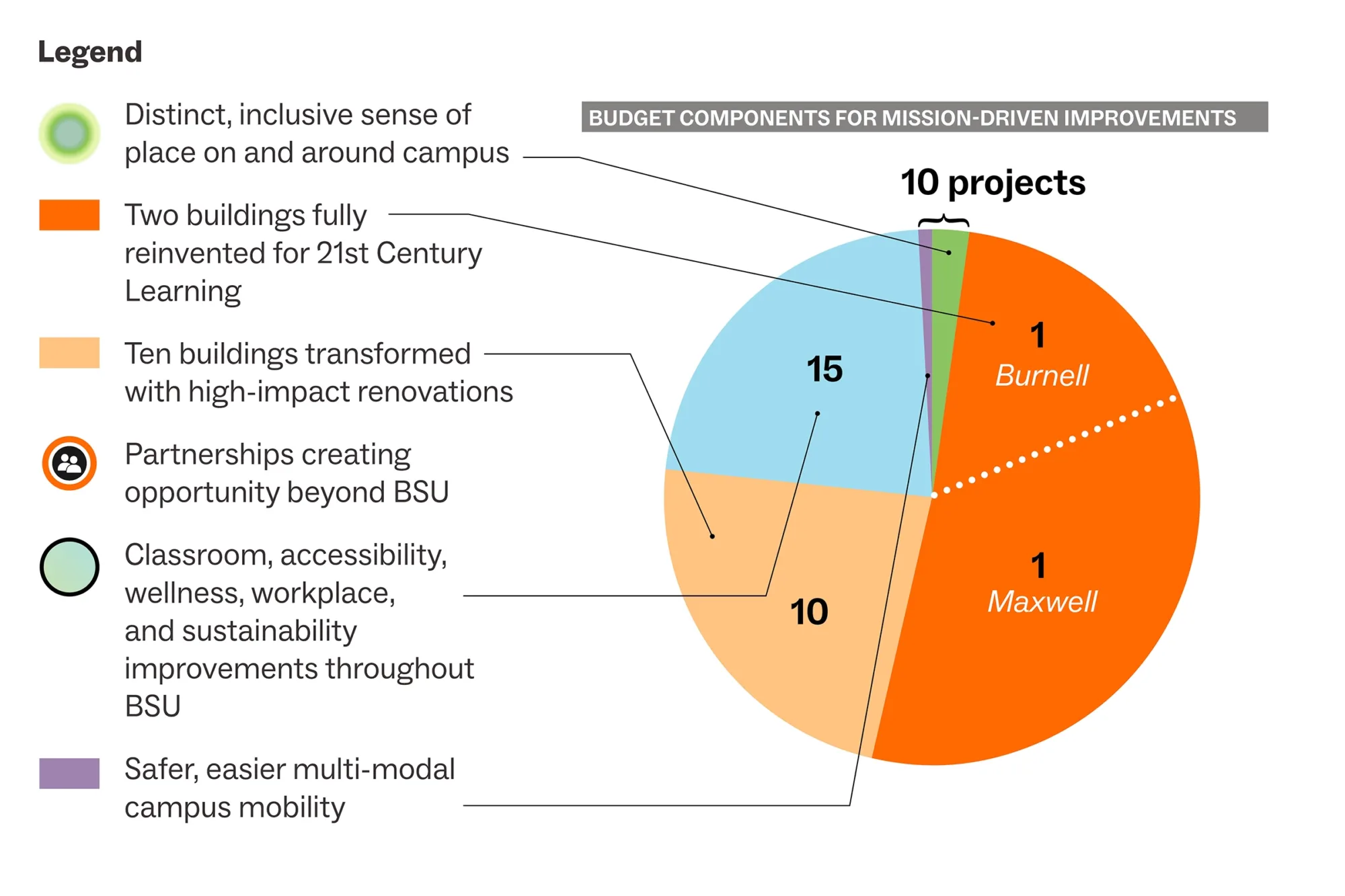
Planners must intentionally conceive improvements across scales—big, medium, and small. Our recently completed campus plan for Bridgewater State University intentionally identified a range of improvements across scales:
- Large: new residential building, gut renovation of academic building for accessibility and energy performance
- Medium: strategic renovations that elevate the usefulness of an entire building (e.g., new elevator, active-learning classroom renovation, student lounge upgrade)
- Small: new outdoor “room” on campus lawn, reservable sensory rooms created in multiple buildings across campus
It’s important that all of these improvements, regardless of scale, contribute to a cohesive, big-picture campus vision. Even near-term micro-investments—when organized by a campus plan framework—can build toward larger systems over time, rather than occurring in isolation.
When defining concepts, it’s also critical to consider potential funding mechanisms and their thresholds. If it is easier to fund projects under $5 million, or a grant program could fund certain types of spaces or infrastructure, worthwhile concepts can be tailored to meet these criteria and advance quickly to implementation.
Evaluate Projects Using a Common Value Framework
As concepts emerge across scales, comparing their relative costs and benefits can be challenging. It is difficult to weigh the value of a classroom technology upgrade against a major building renovation or an improved pedestrian crossing. They’re apples and oranges: fundamentally different investments with very different impacts.
To address this, we find it helpful to translate diverse project considerations into a common metric of project value. This metric makes it easier to evaluate improvements of different types and scales alongside one another, and helps campus leadership to make decisions on which initiatives to advance first.
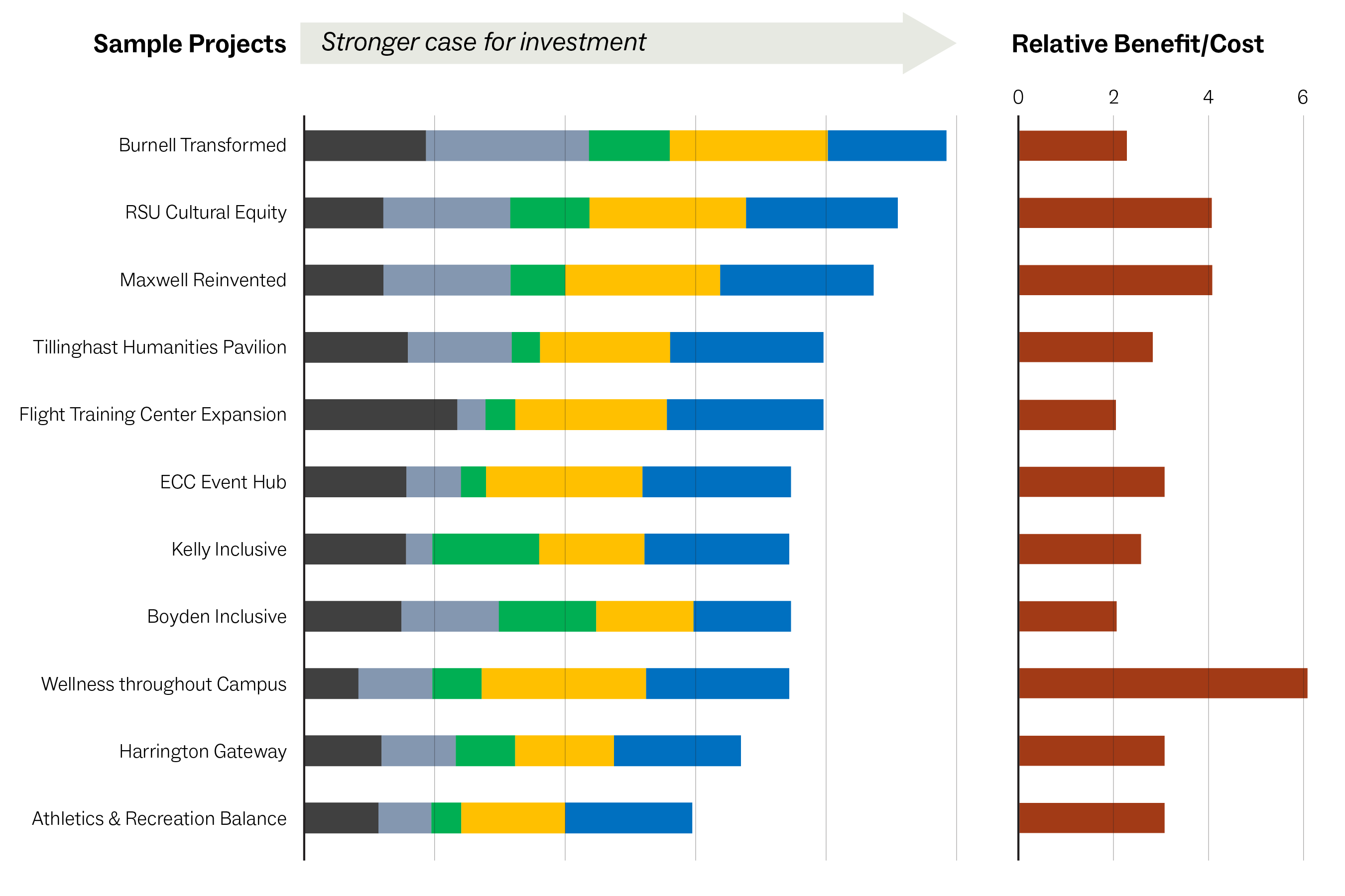
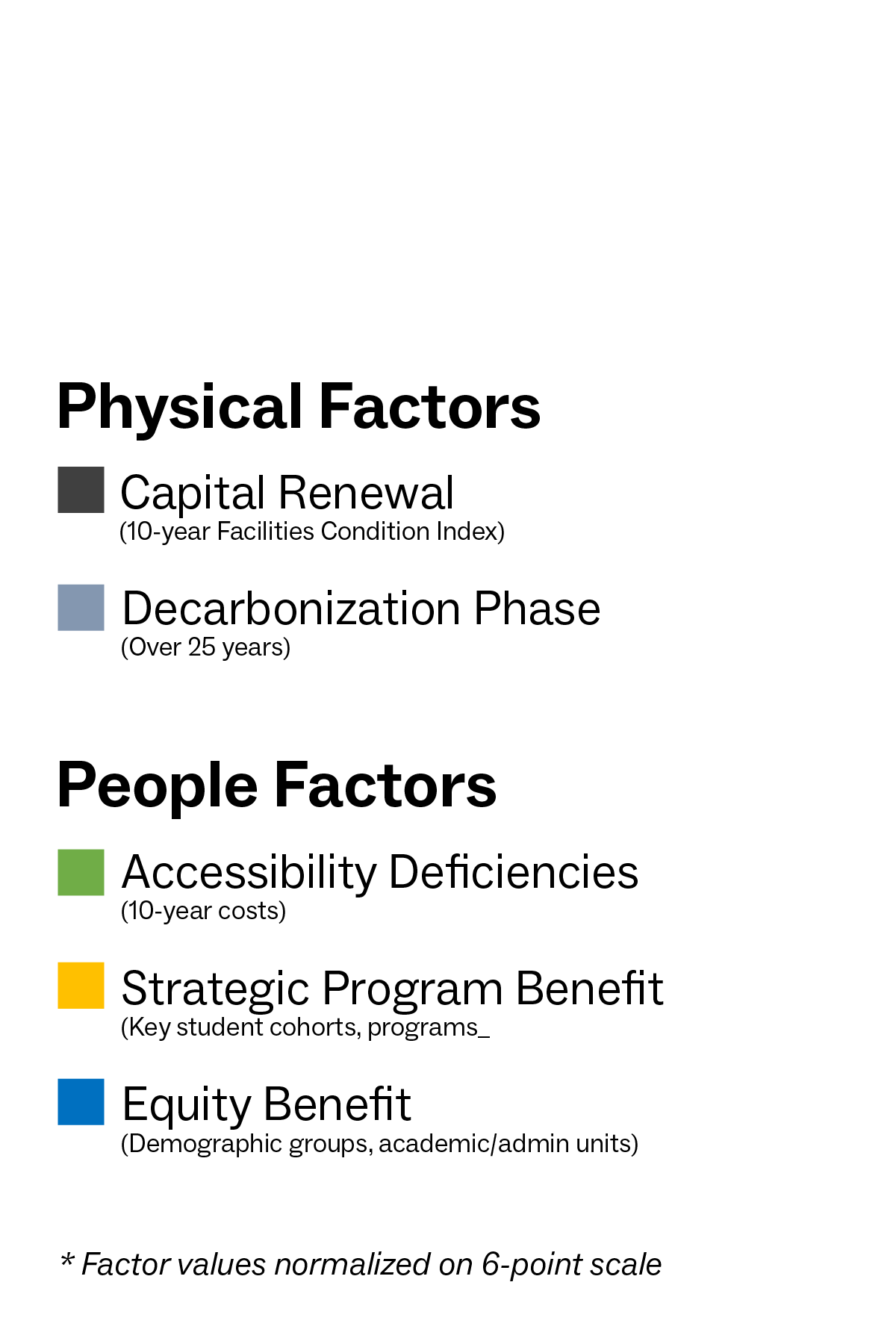
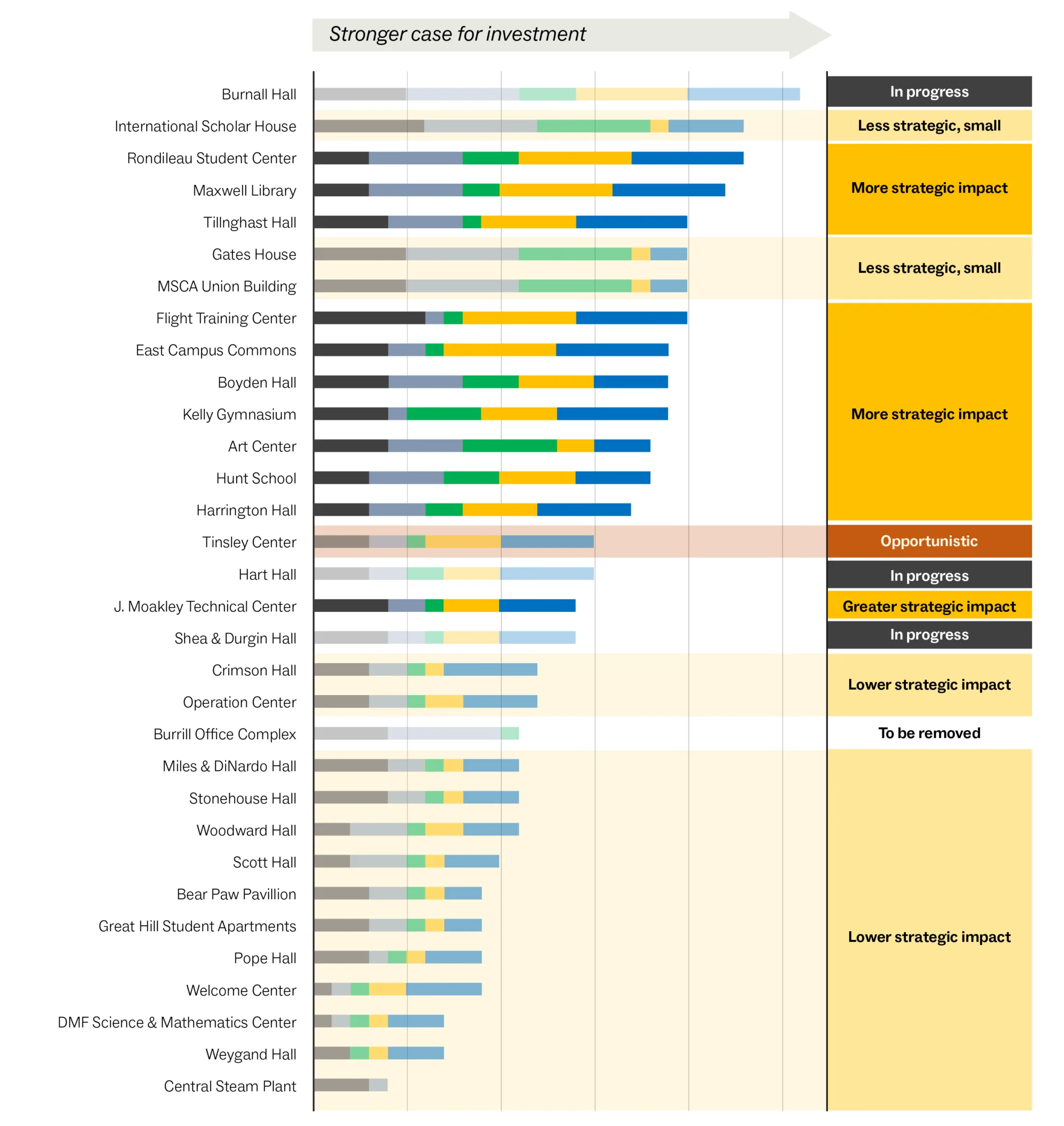
Initial analysis of reinvestment opportunities across more than 30 buildings at Bridgewater State revealed about a dozen that offered the greatest benefit while addressing the most significant maintenance needs. An even closer look at cost relative to benefit further clarified priorities—highlighting initiatives such as “wellness throughout campus,” a series of sensory rooms and inclusive spaces that responded to strong stakeholder interest and delivered meaningful impact at relatively low cost.
Make the Case for Each Project
Campus plan documentation must tell a compelling story to institution leaders, funders, and other stakeholders to motivate action and achieve results. It must both (1) articulate a big-picture vision and (2) define the multi-scaled projects and frameworks that will add up to achieve the vision.
While comparing project values makes it possible to weigh improvement options against each other, every individual project must also have its own description to make the clearest case for its value. Clear, concise project snapshots make each project’s rationale evident at a glance—identifying benefits and alignment with institutional priorities. This clarity makes it easier for decision-makers to prioritize initiatives and move them forward.
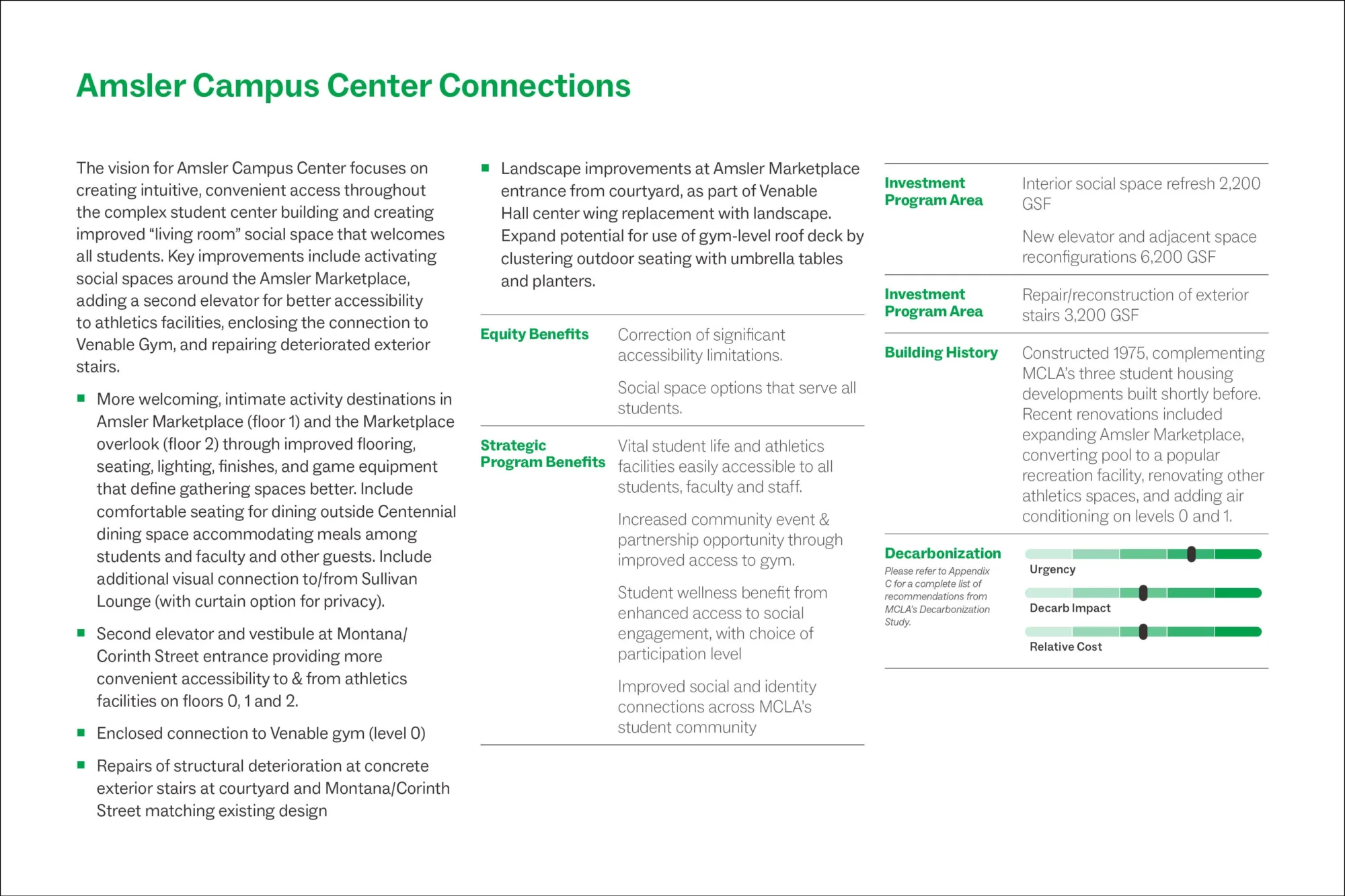
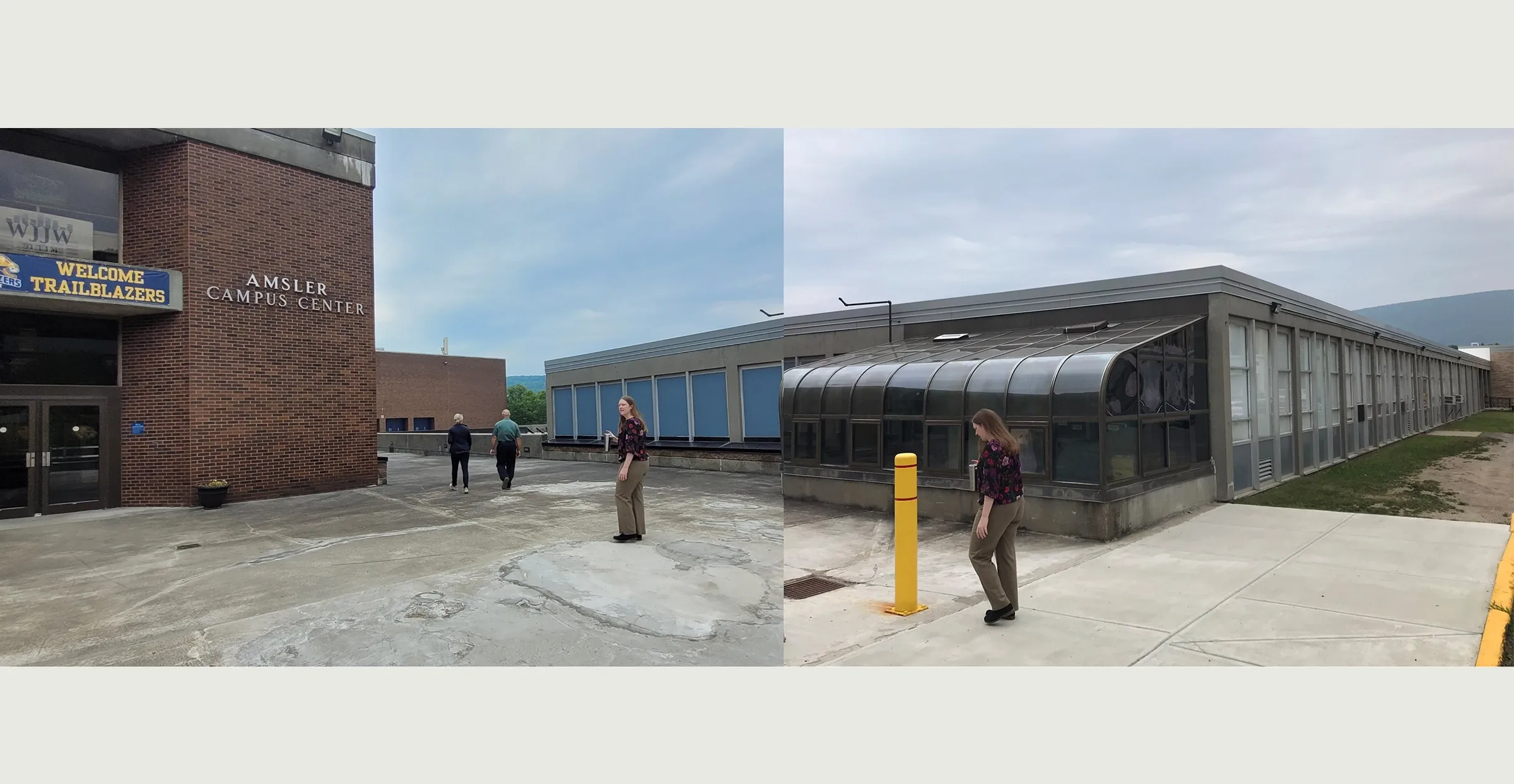
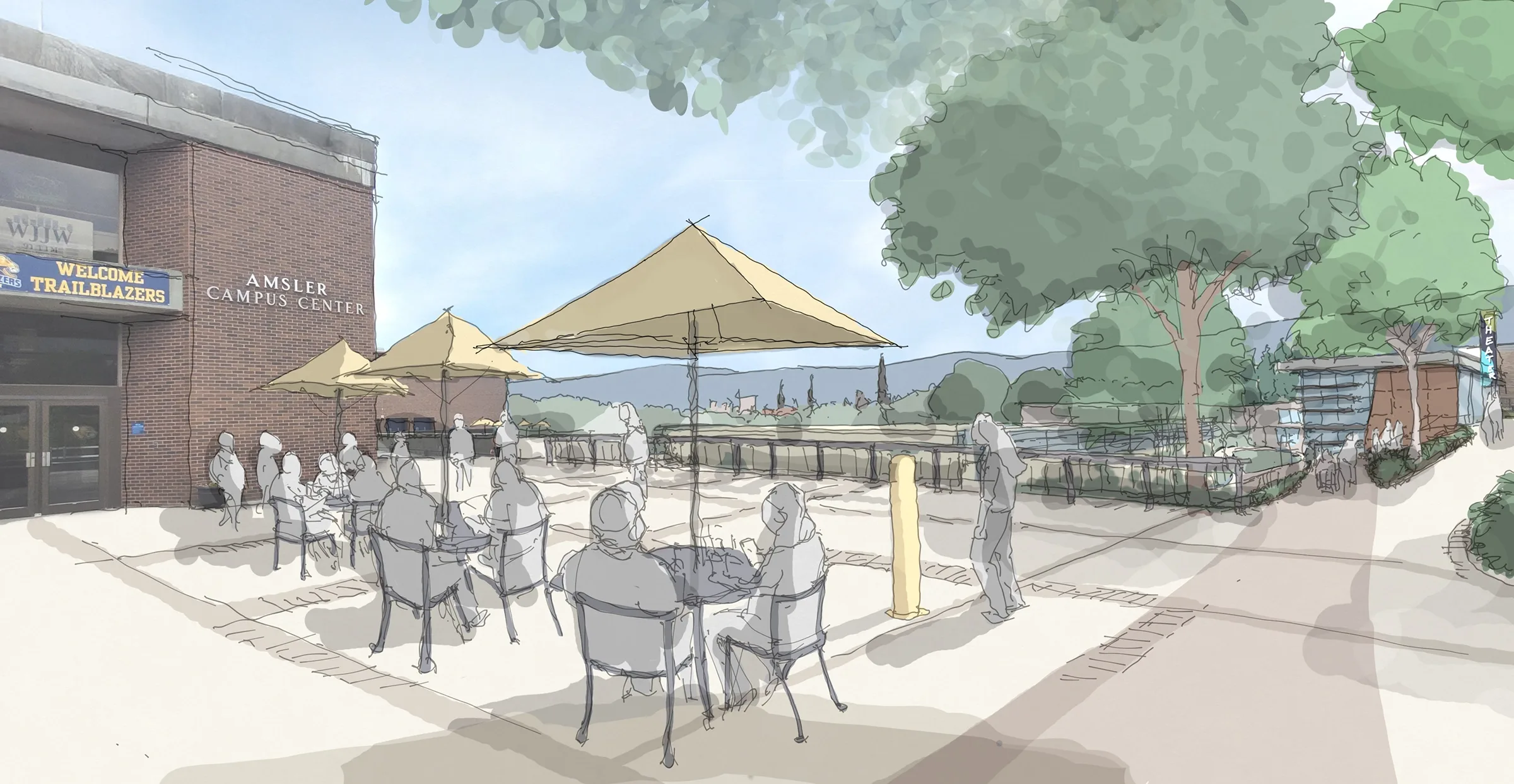
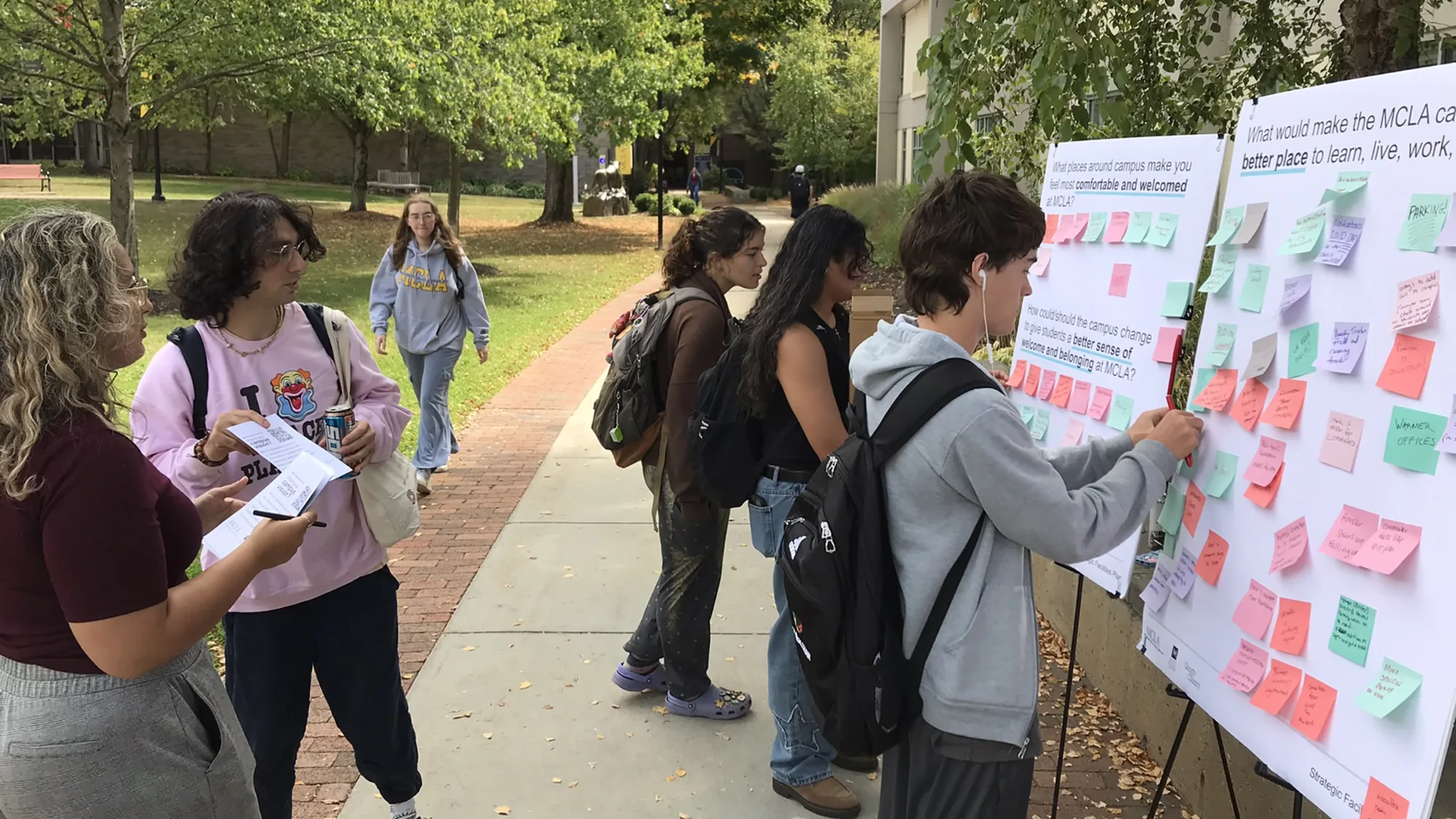
Long-range capital projects are the backbone of campus plans, helping to ensure the enduring success of the institution. But an effective plan should also include projects that can launch promptly to bring quick wins—sometimes even during the planning process—that make a difference for those on campus today, including those who helped shape the plan.
More Perspectives
-
 IDEAS + EXPLORATION•DESIGN PROCESS
Daylight, Equity, and Evolving Tradition in Student Housing
 Matthew FlynnSenior Associate
 -
 IDEAS + EXPLORATION•DESIGN PROCESS
Reframing Reuse Through Living Building Challenge Core
 Elaine HoffmanDirector of Sustainability
 -
 IDEAS + EXPLORATION•DESIGN PROCESS
Irving Institute for Energy and Society: COTE Top Ten Award Winner