Washington and Lee University
Williams School of Commerce, Economics, and Politics
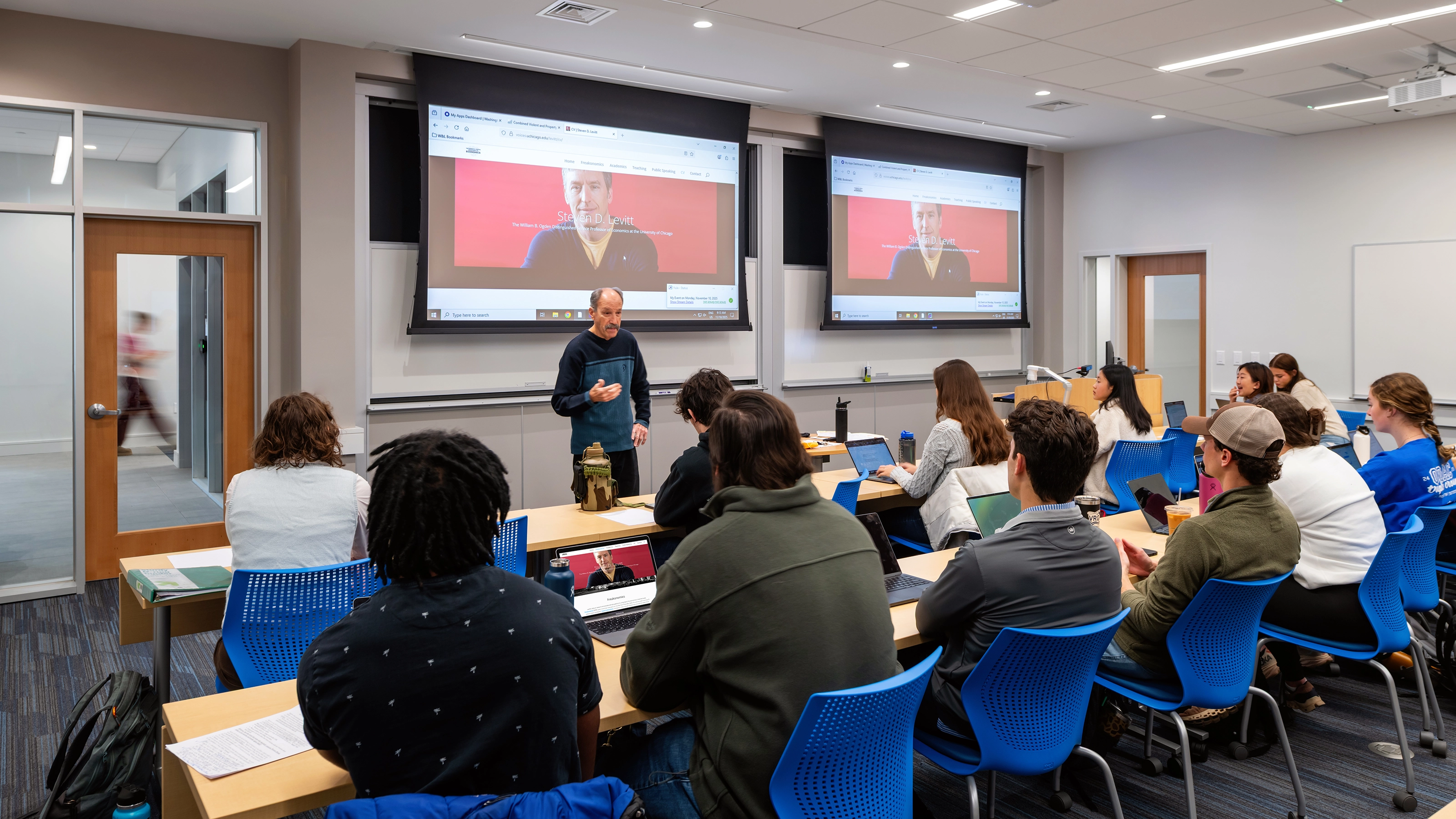
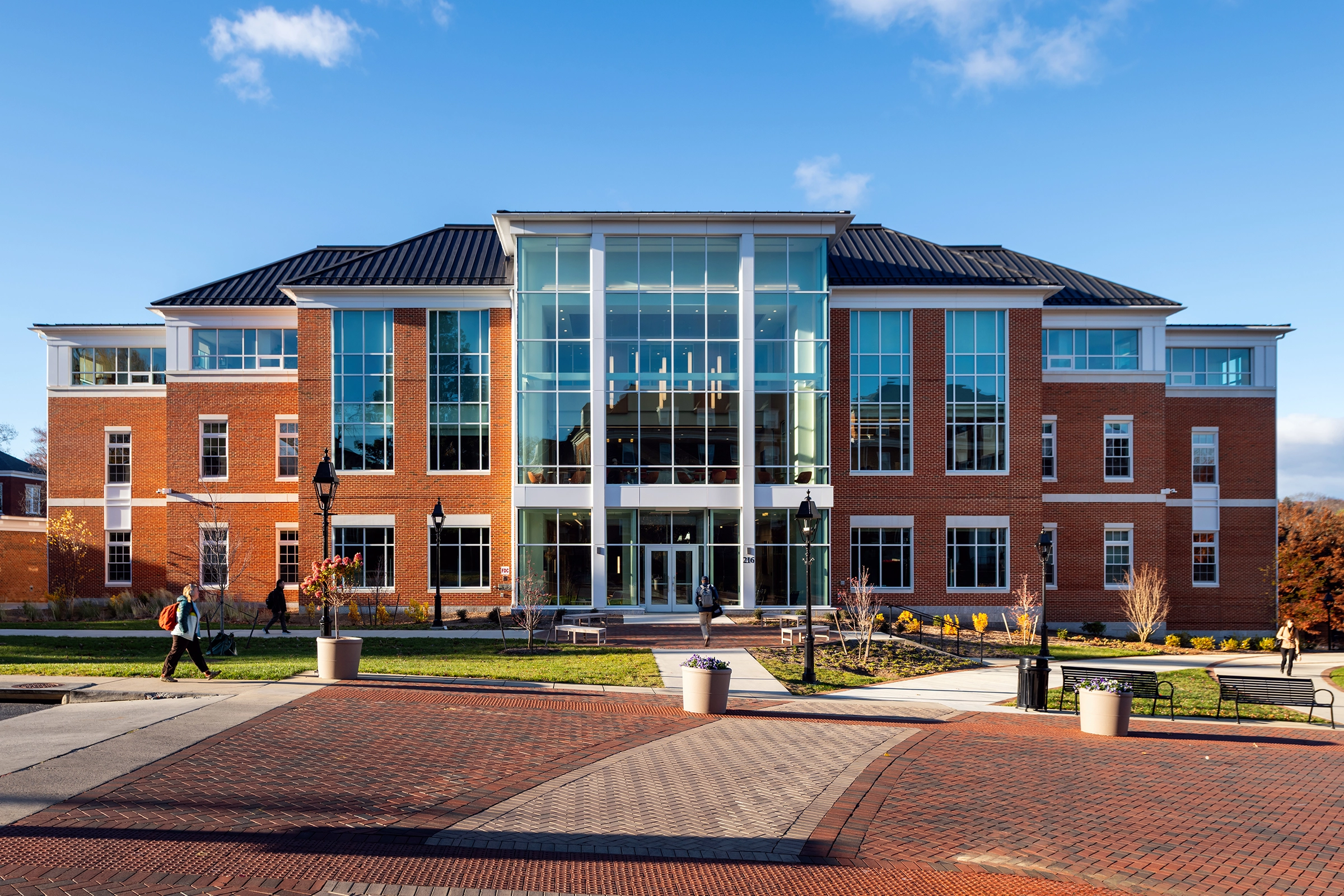
A new home for the Williams School brings active learning, student connection, and sustainable design together at an evolving edge of campus.
-
Location
Size
Program
Practice area
Certifications
Creating a home for a growing academic community
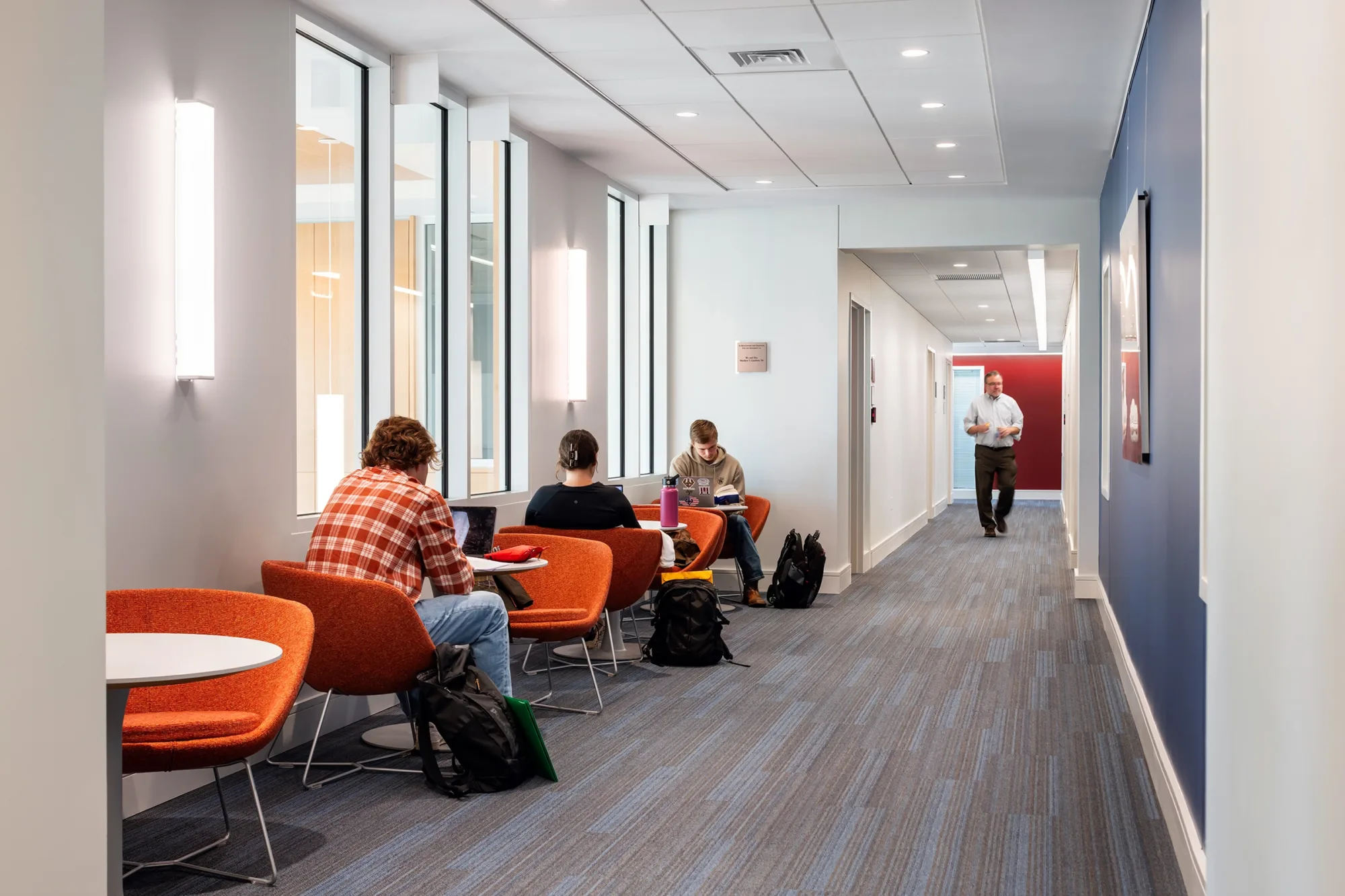
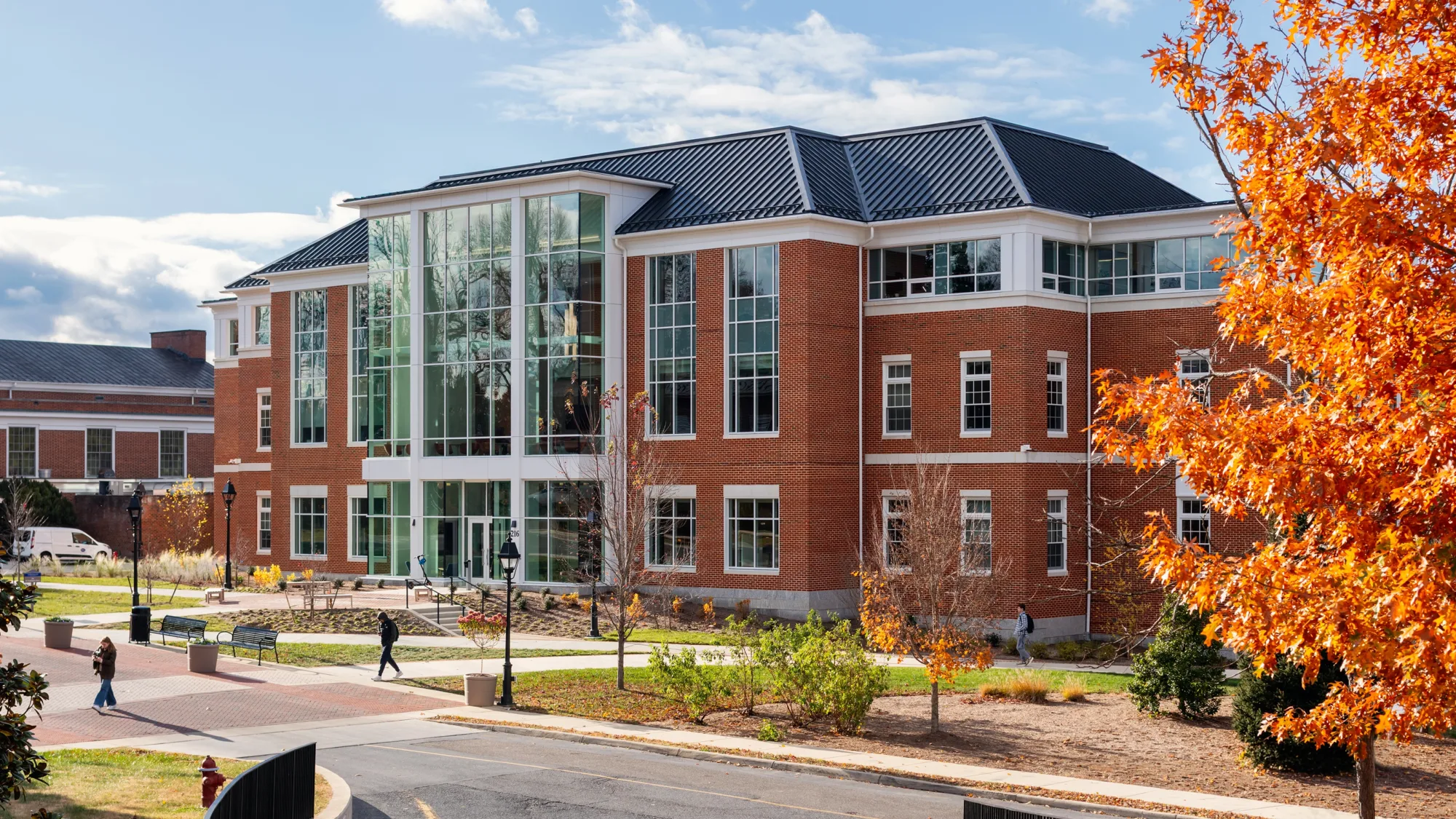
The Williams School’s former facilities could not fully support the school’s close faculty-student culture, evolving teaching methods, or need for places where students could gather outside class. The school’s new home gives the undergraduate business program room to grow in a welcoming and highly flexible building. Organized around a transparent, multilevel Hub, the building brings classrooms, innovation labs, faculty offices, breakout rooms, and student gathering areas together in an environment designed for connection.
A Hub for connection
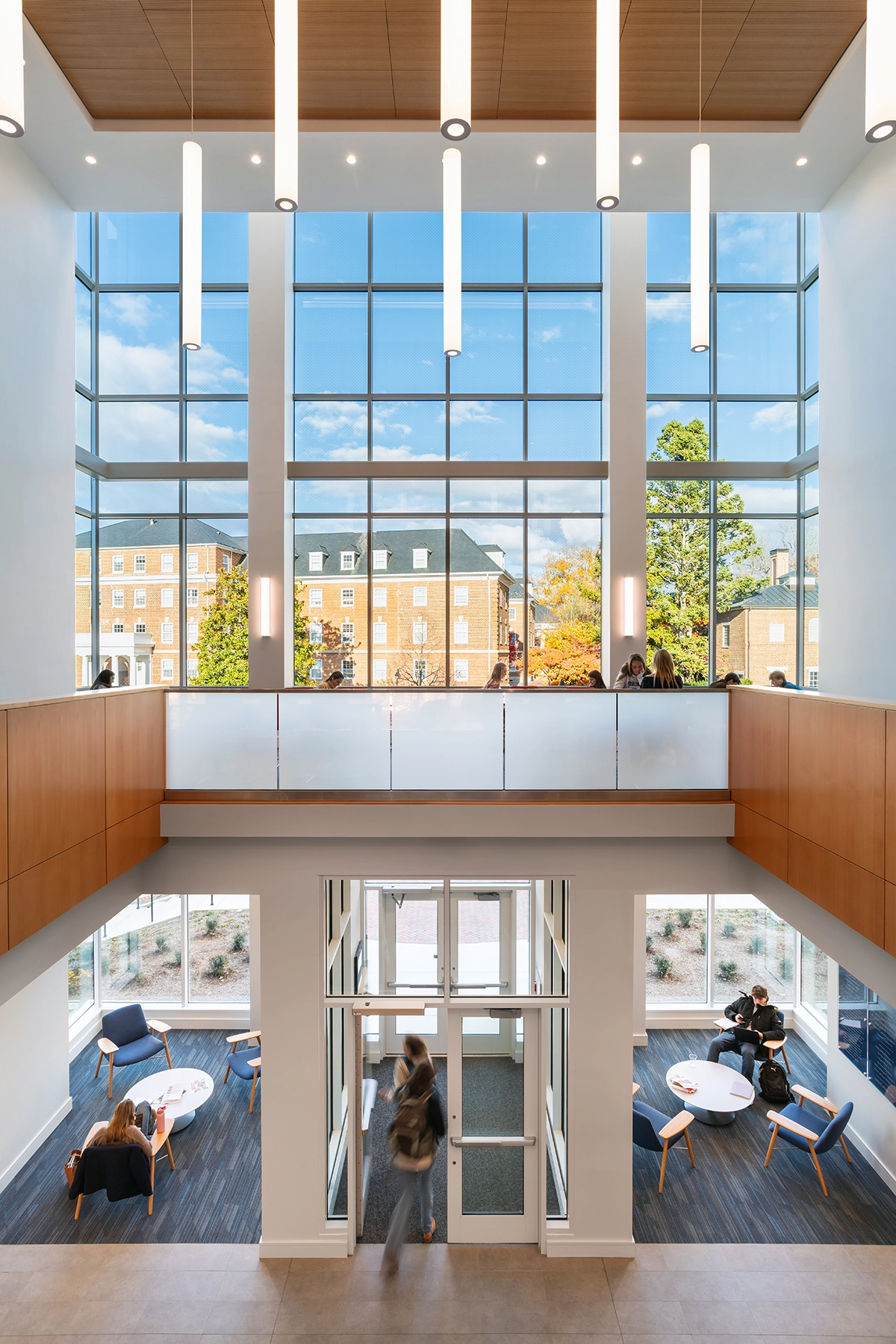
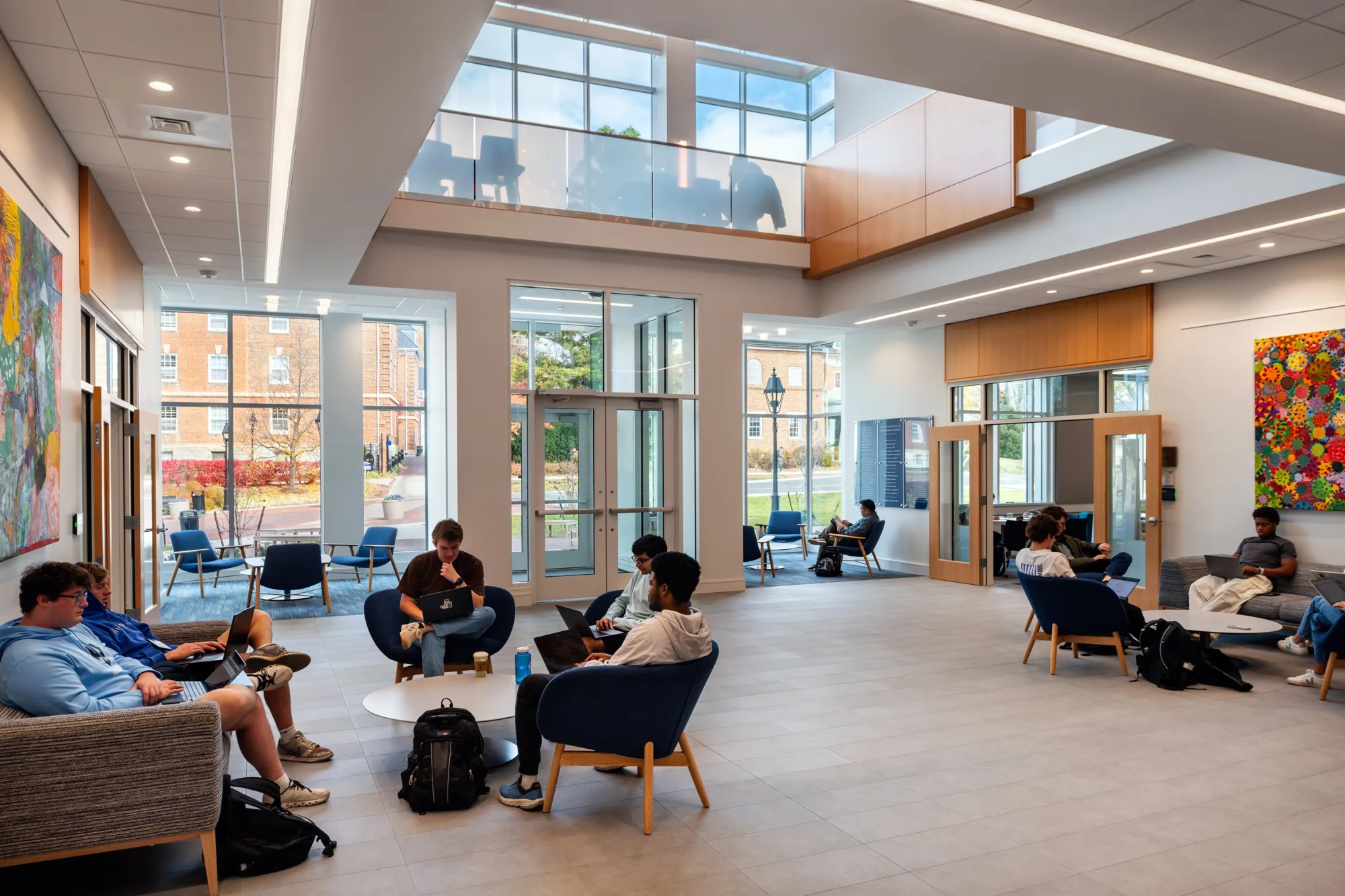
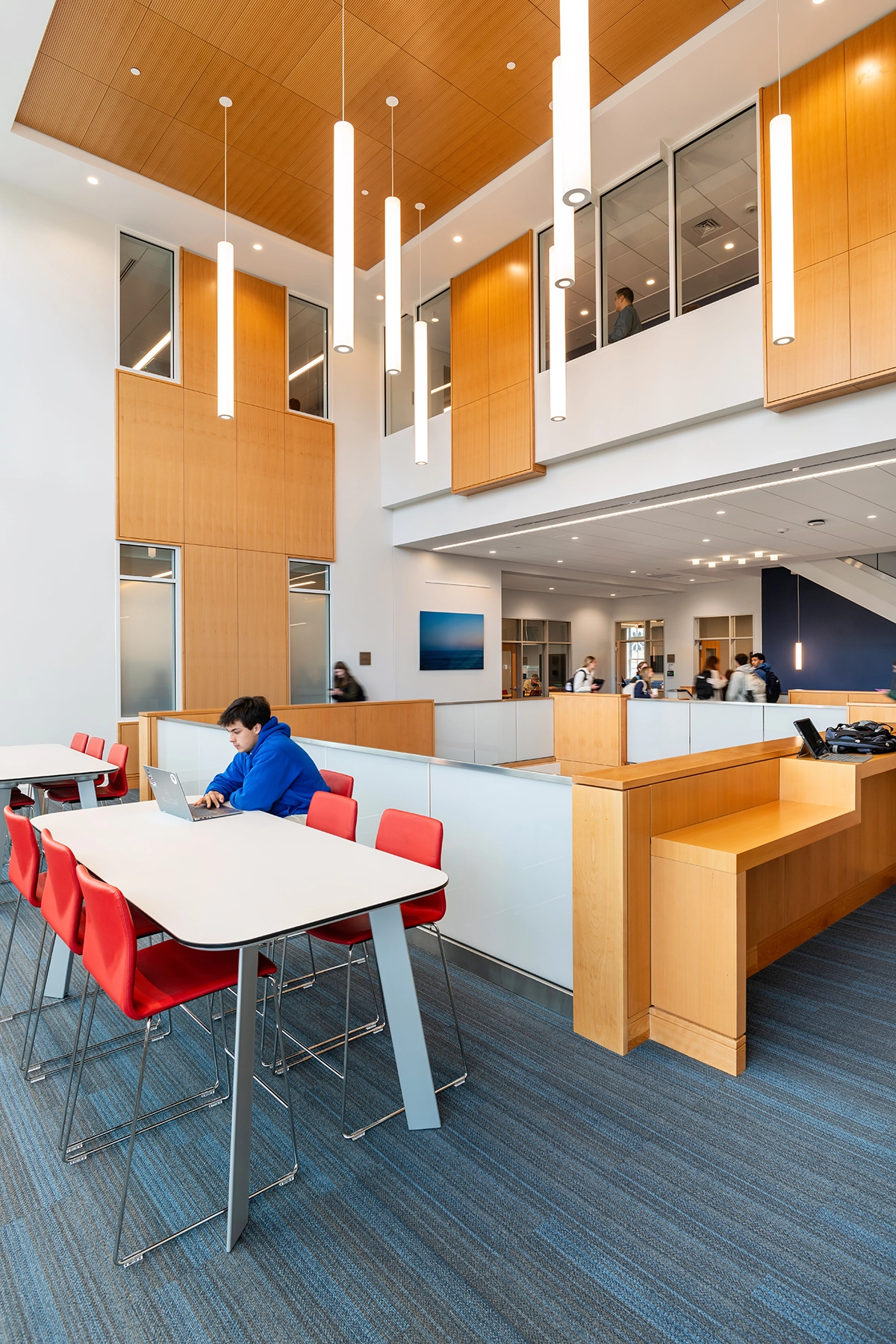
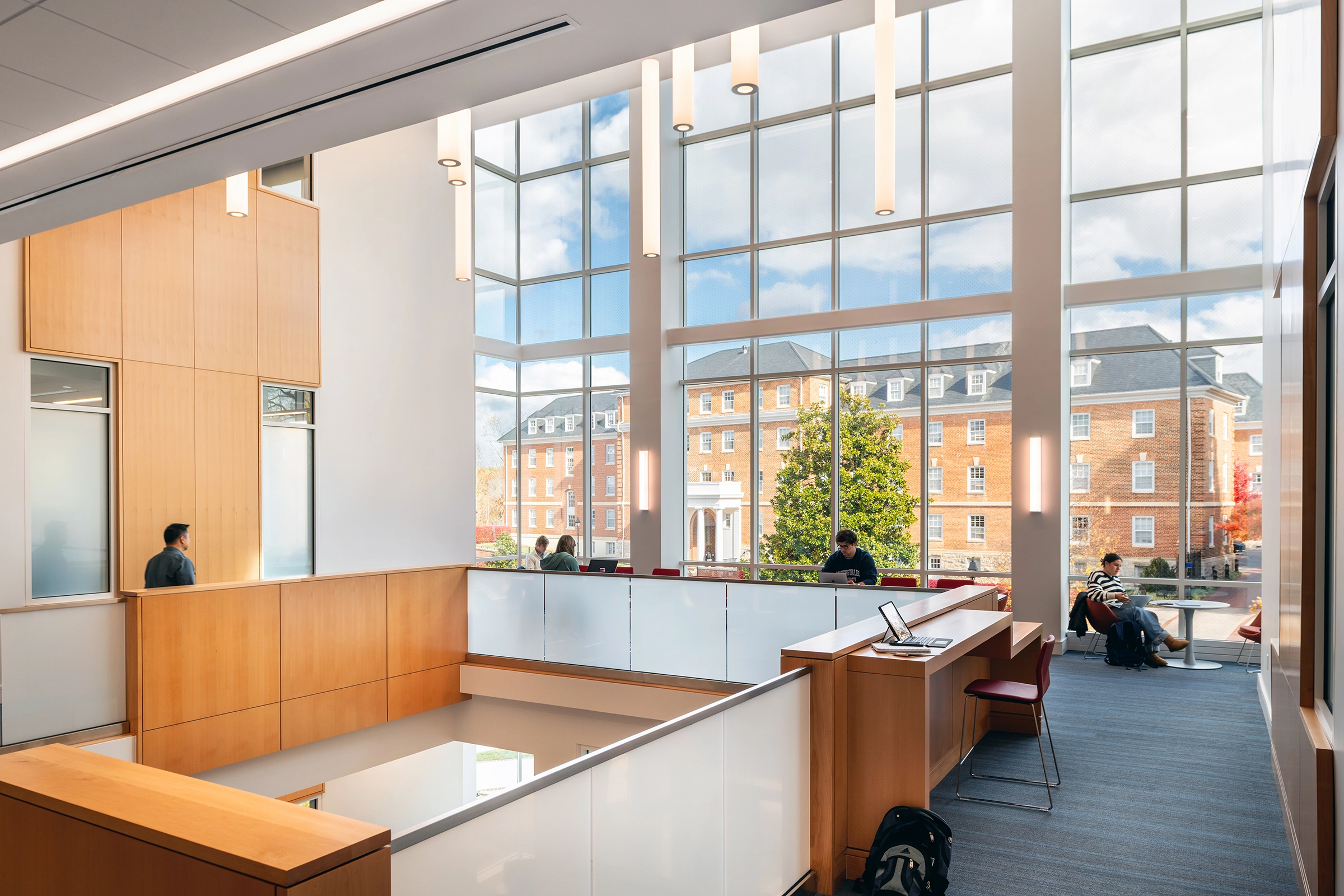
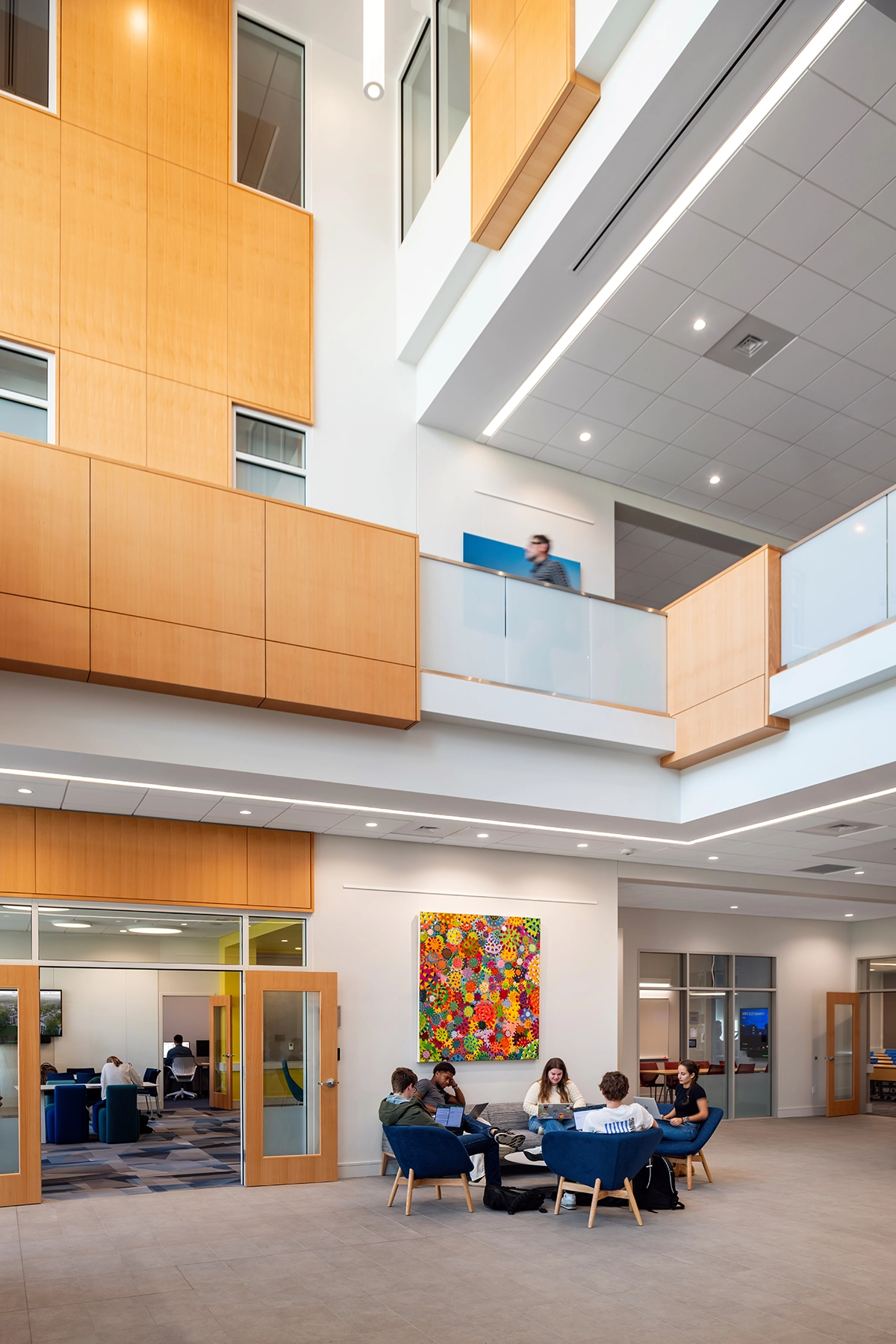
At the heart of the building, the Hub creates the social and spatial center that the Williams School had long needed. Open seating, an active central stair, internal windows, and views into adjacent classrooms make movement and activity visible throughout the building. The hub connects the building across three floors, bringing natural light deep into corridors and adjacent workspaces.
Designed for active learning
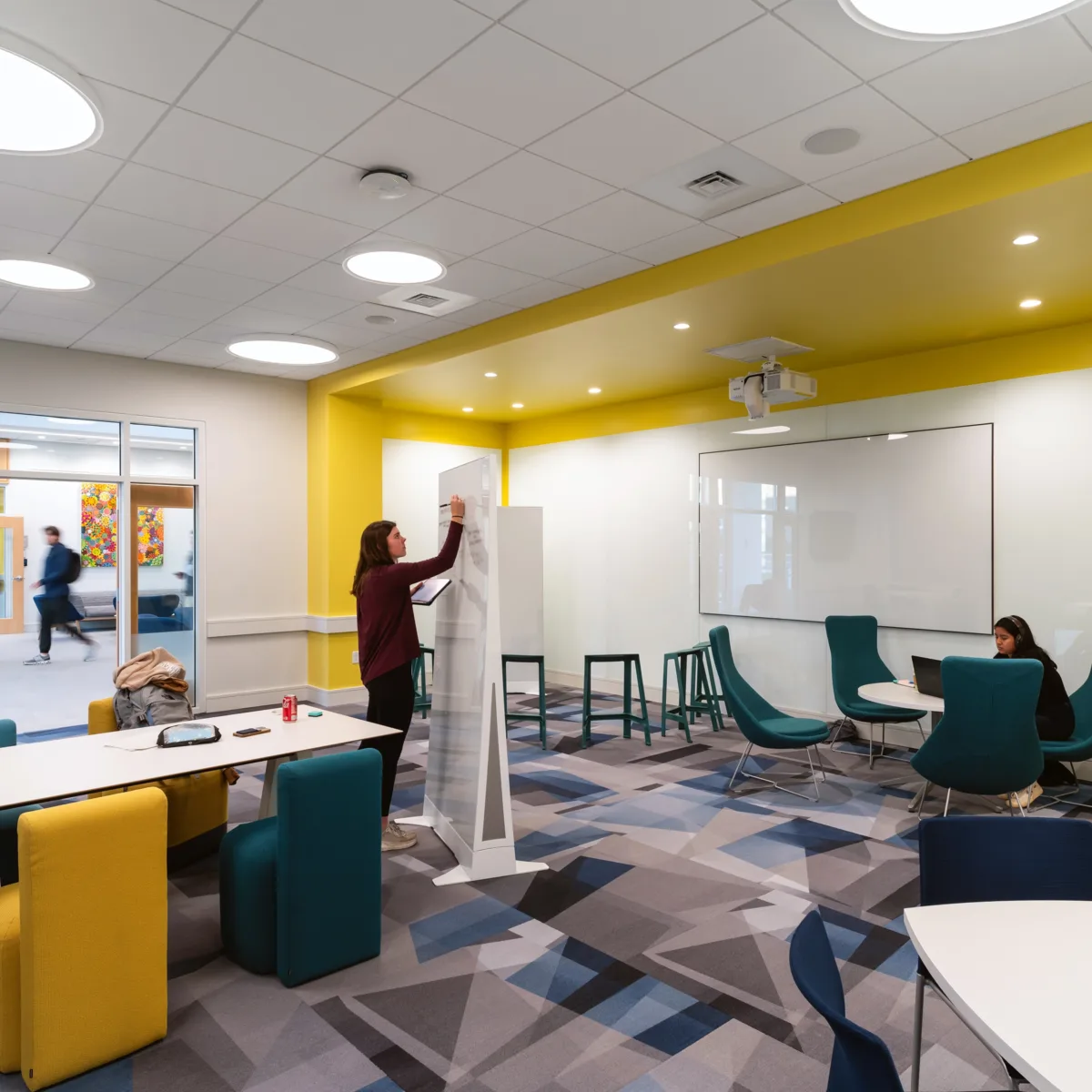
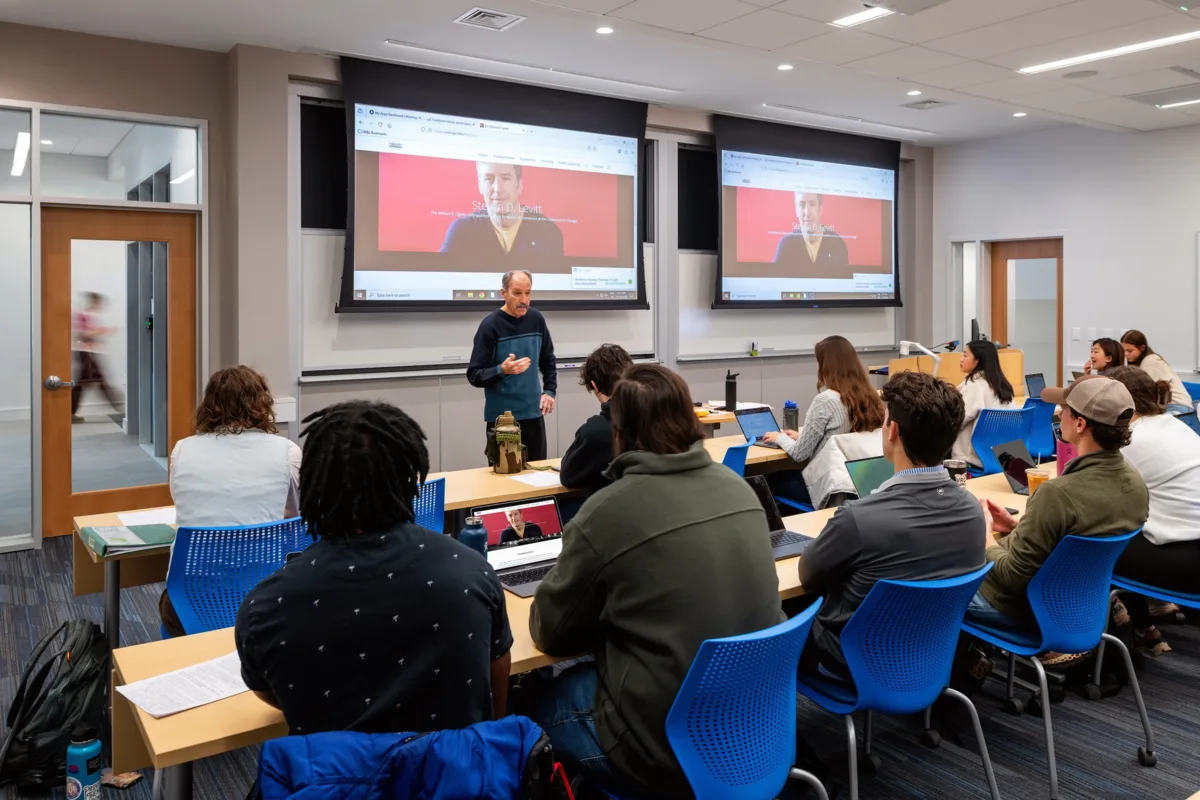
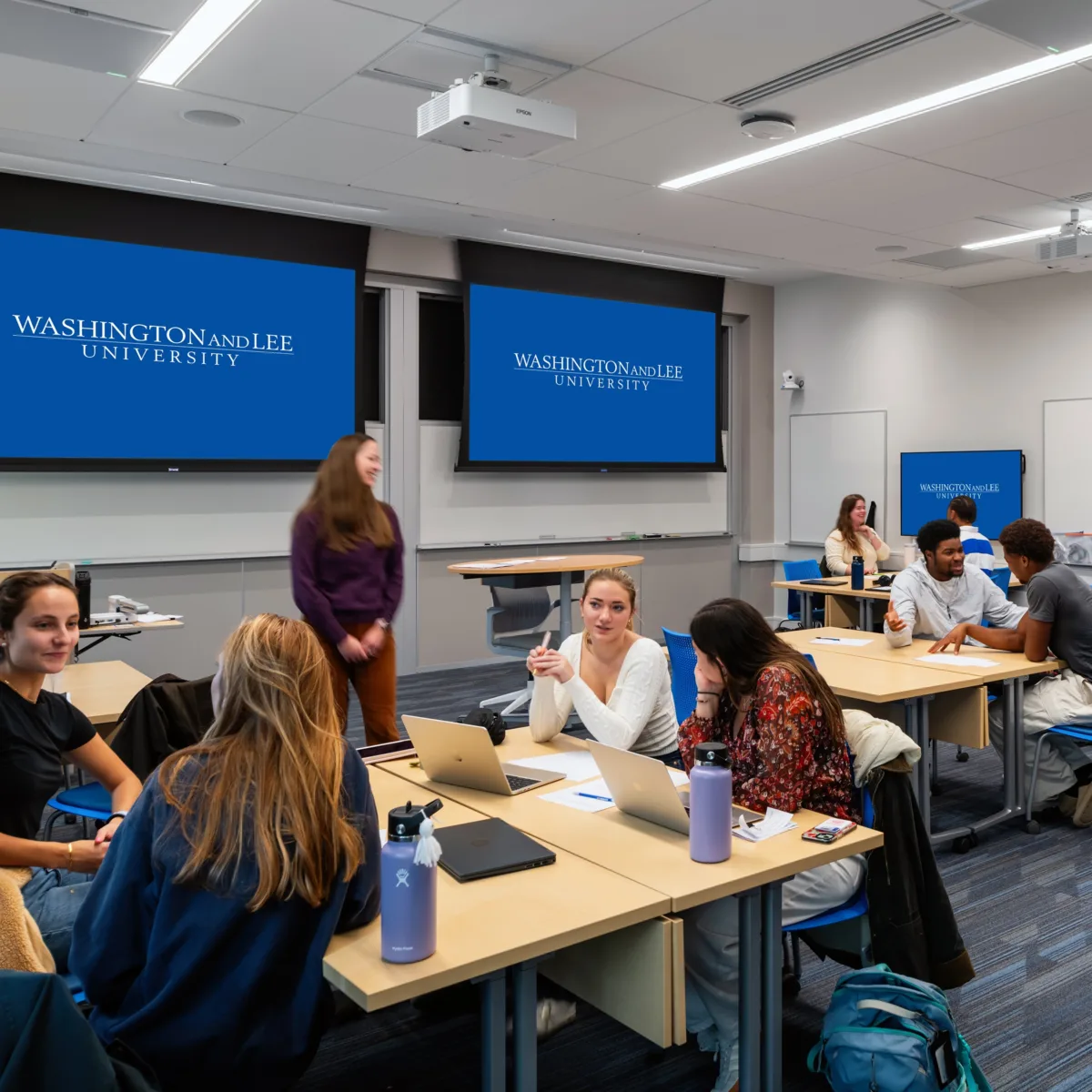
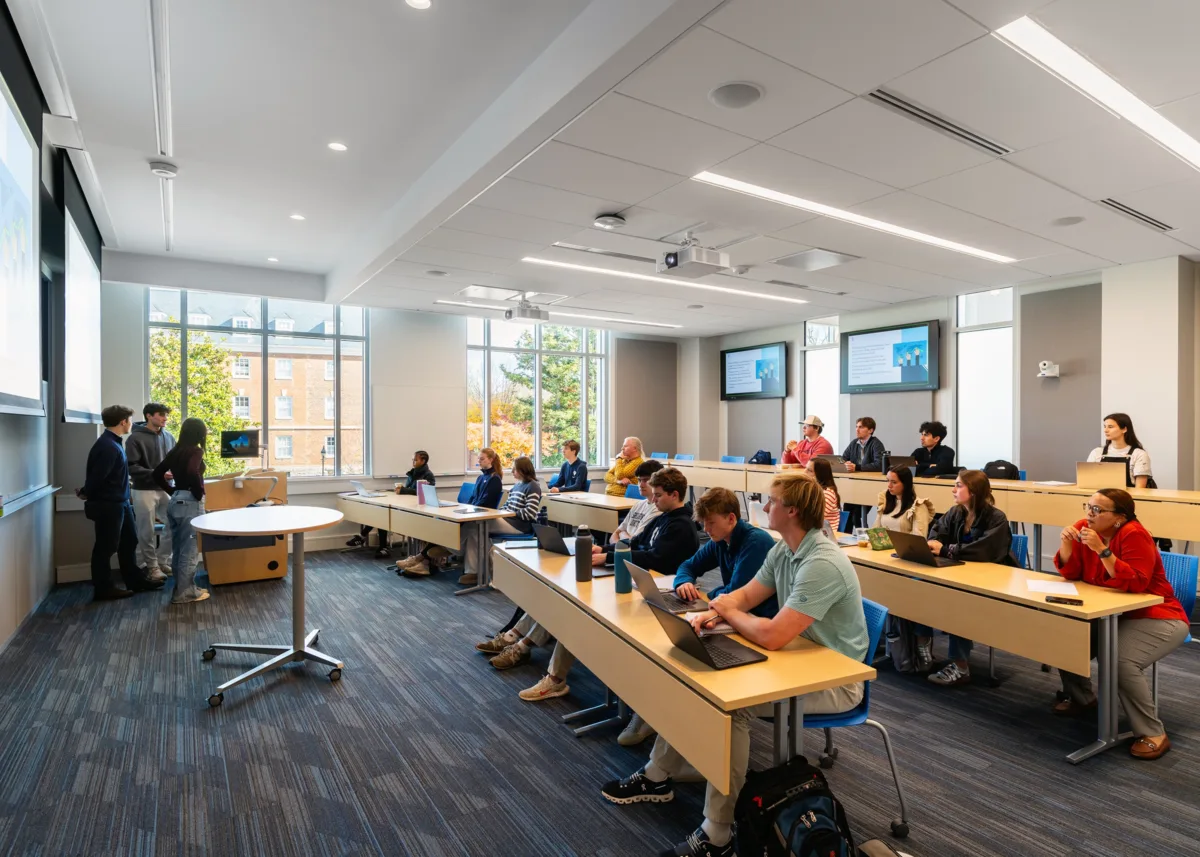
The building’s learning spaces support a shift from traditional lecture-based instruction toward more active, flexible, and collaborative models of learning. Two “innovation labs” open directly onto the Hub, putting the school’s most dynamic learning environments on display.
These spaces were shaped by close collaboration with faculty and users. The design team studied existing learning spaces across campus and listened carefully to what faculty valued, what limited them, and what new classroom models could make possible.
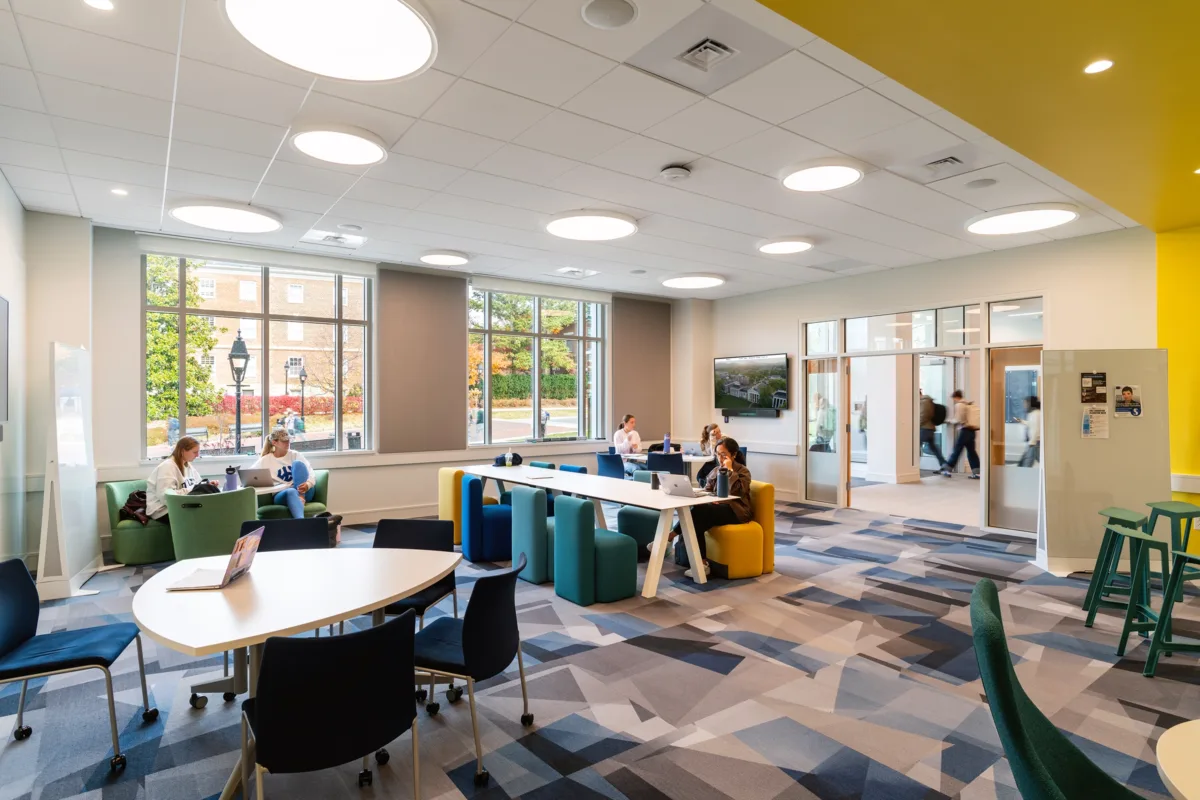
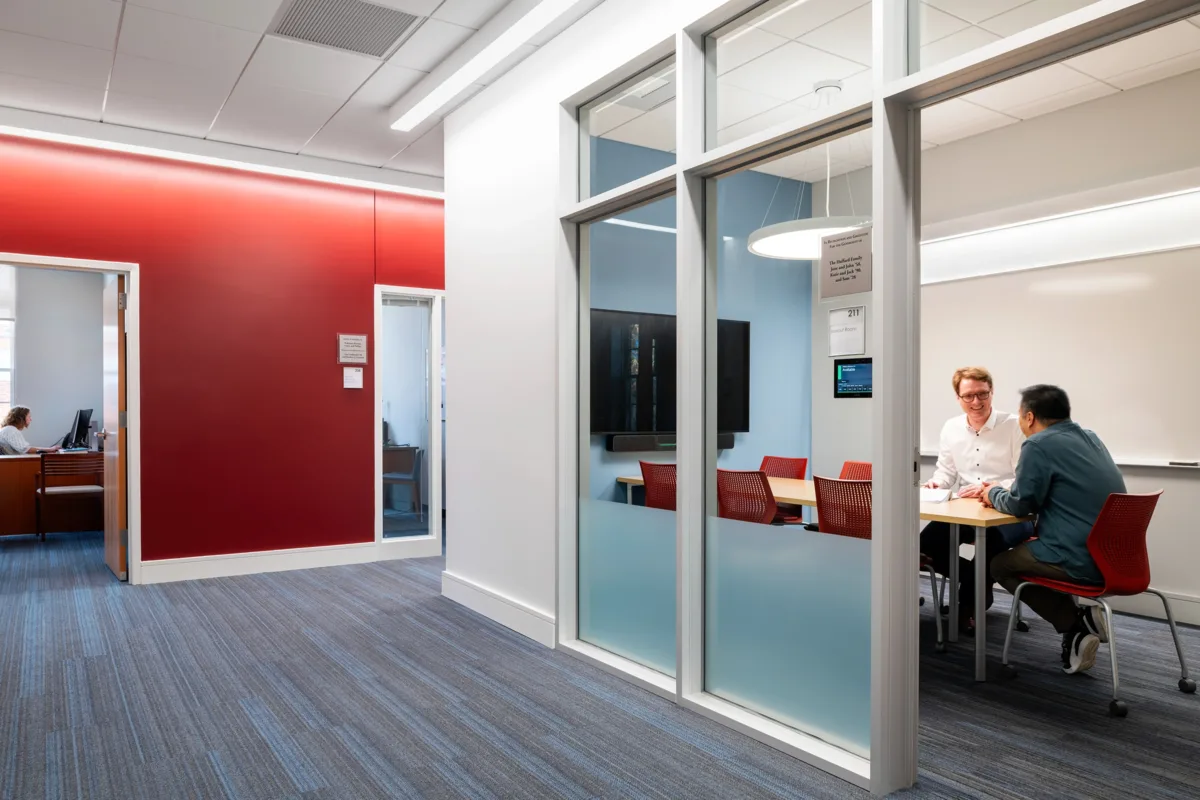
It’s a space designed truly to encourage conversation across different disciplines…and to spark new ideas that prepare us and our students to engage in principled, inclusive, forward-looking leadership in commerce, economics, politics and beyond.
Designed for comfort and wellbeing
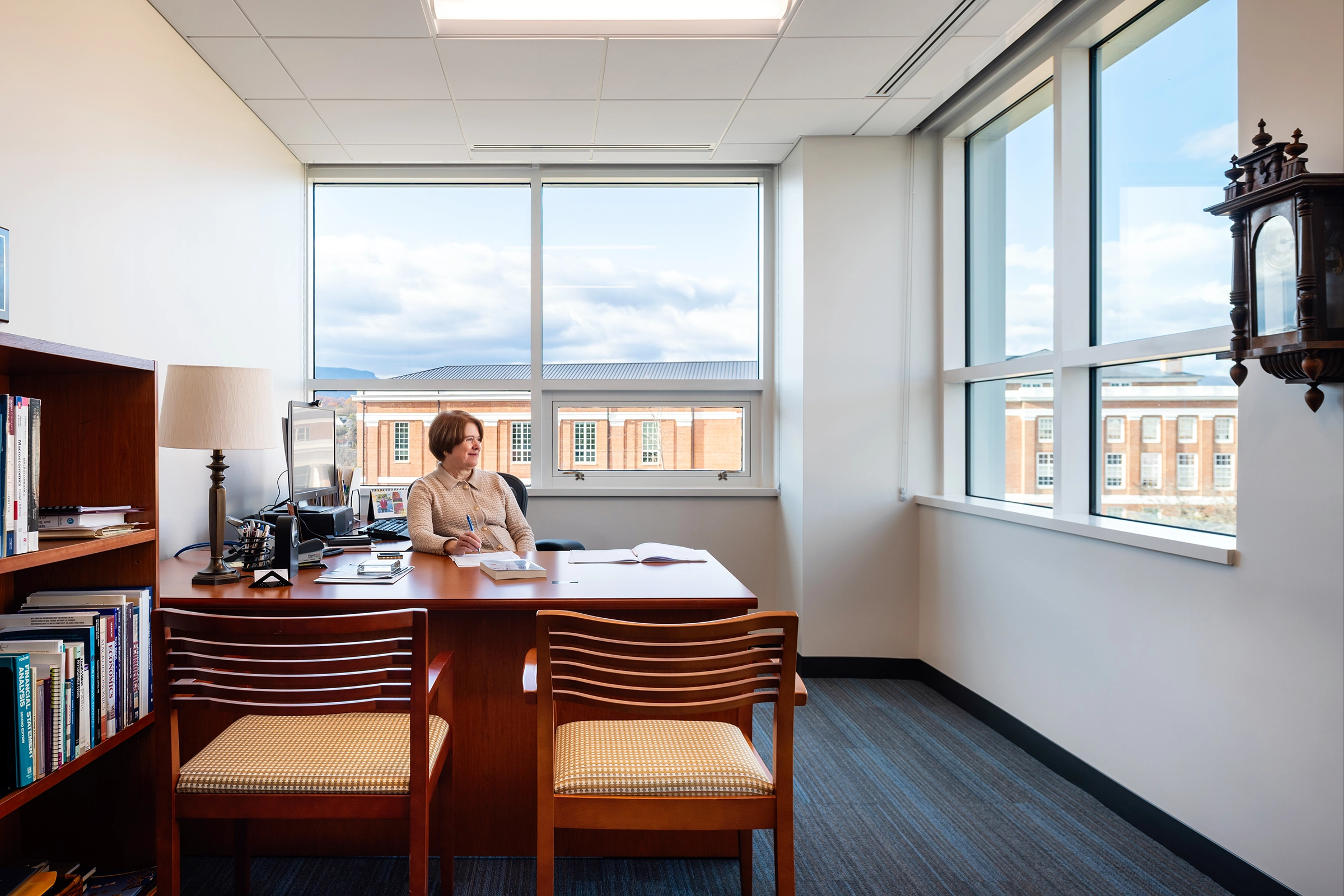
Sustainable design is embedded in the building’s performance, materials, site design, and occupant experience. A high-performance envelope, daylight-filled interiors, operable windows in offices, efficient building systems, and user controls support comfort while reducing energy demand.
The design also connects performance with wellbeing. Access to daylight, views, fresh air, and a range of comfortable work settings helps create an environment where students, faculty, and staff feel comfortable and connected throughout the day.
A new destination at a changing campus edge
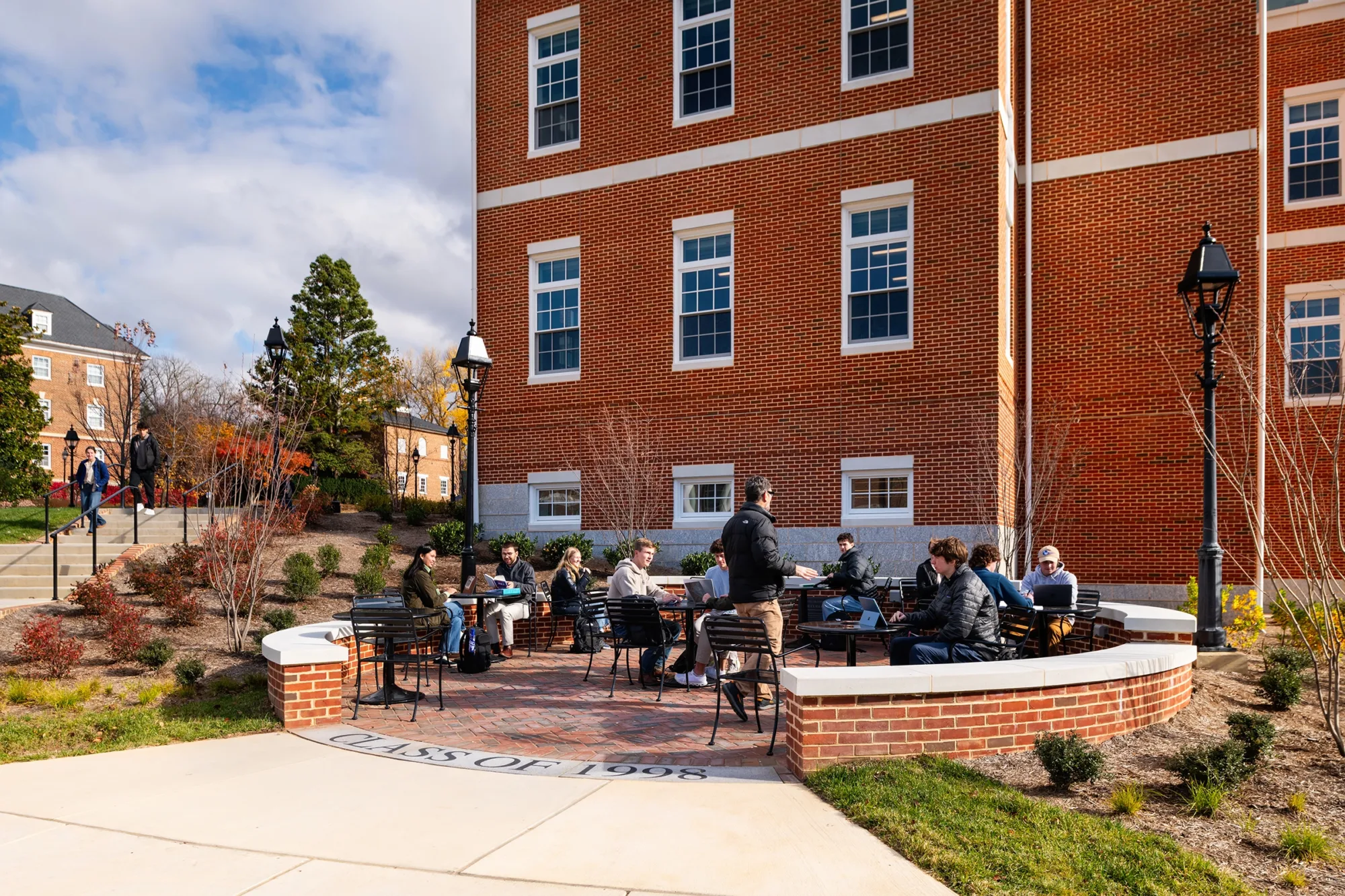
The building is sited on a prominent location along a public street. Its presence helps shift Washington and Lee’s center of gravity toward a newly developing area at the south end of campus.
Architecturally, the design balances continuity and change. Brick, white trim, gabled forms, and a dark metal roof connect the building to Washington and Lee’s campus language, while the transparent Hub introduces a more open and contemporary expression. Together, these elements create a building that feels rooted in its heritage campus context while clearly signaling a new chapter for business education.
-
37.3%
Energy Use Intensity (EUI) below baseline
-
0.12
CFM/sf @ 75 Pa blower door test result, confirming the building’s tight envelope
For more information on this page:
Project Team
Acentech
Code Red Consultants
Collaborative Lighting
Heller & Metzger
Nolen Frisa Associates
Pace Collaborative
Reichbauer Studio Landscape Architecture
Stefura Associates
Thornton Tomasetti
TRC
Photography
Ansel Olson
Related Projects
-
 Business SchoolsLeadership, innovation, and communityCollege of Business, Coppin State University
 -
 Business SchoolsA new gateway to campus, a new home for businessHerbert Wertheim Center for Business Excellence, Florida State University
 -
 Business Schools•Teaching + LearningCatalyzing economic growth with hands-on learningCollege of Business, Husson University