Cornell University
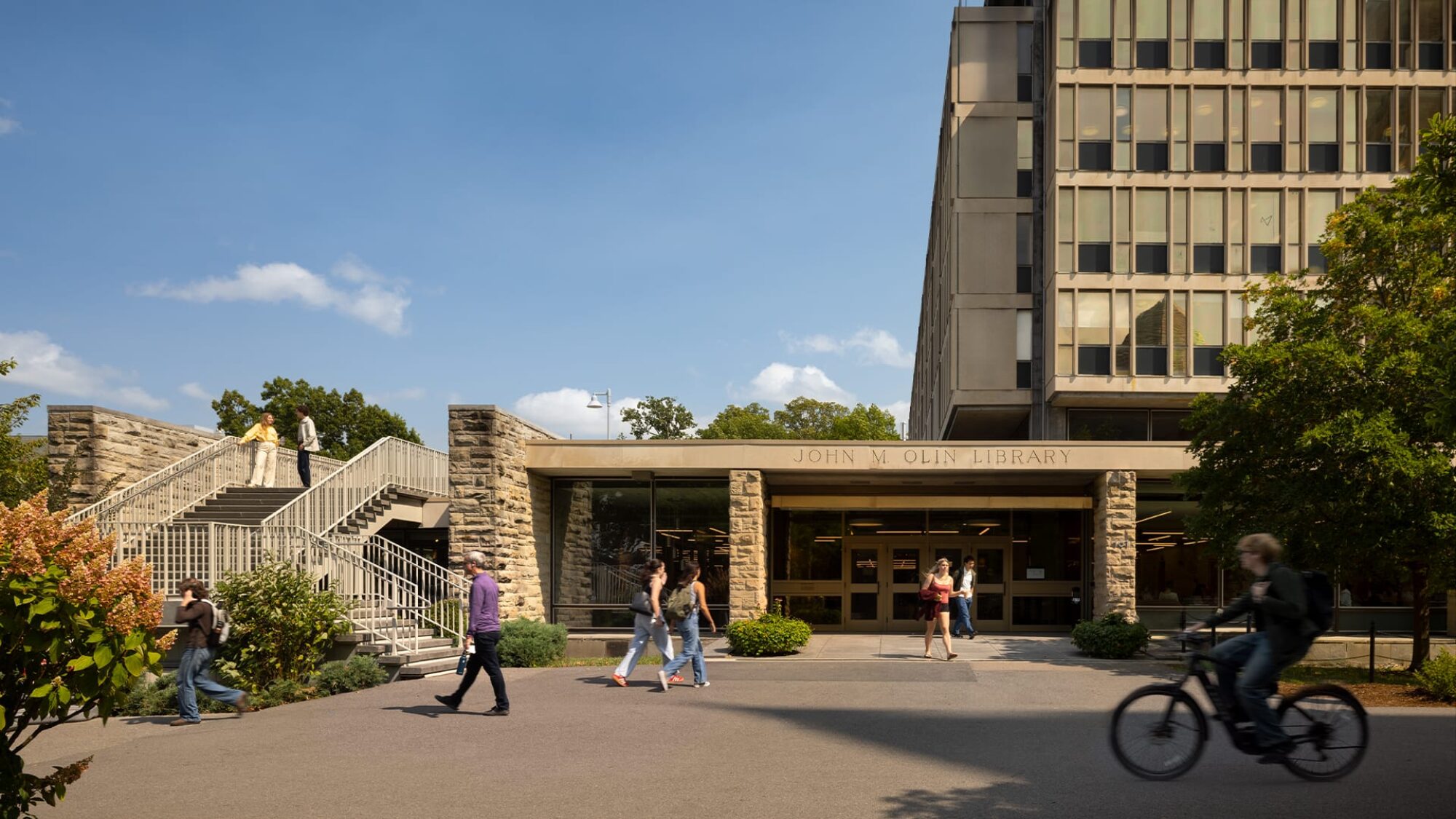
Olin Library Renewal
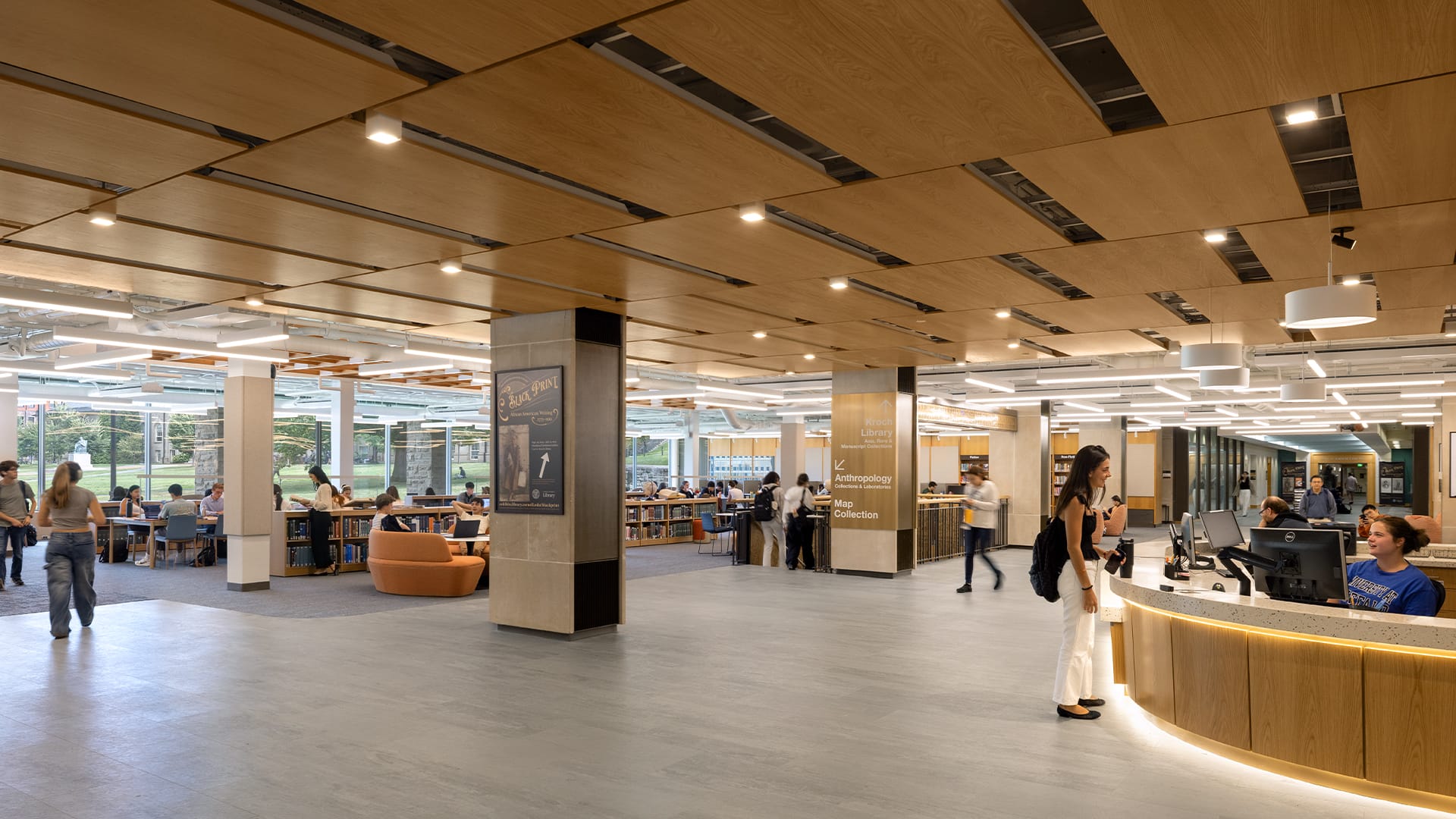
A thoughtful renewal reveals the beauty of Olin’s original structure while transforming its most-used spaces into a brighter, inclusive home for study and collaboration.
-
Location
Size
Program
Practice area
Renewed for how students learn today
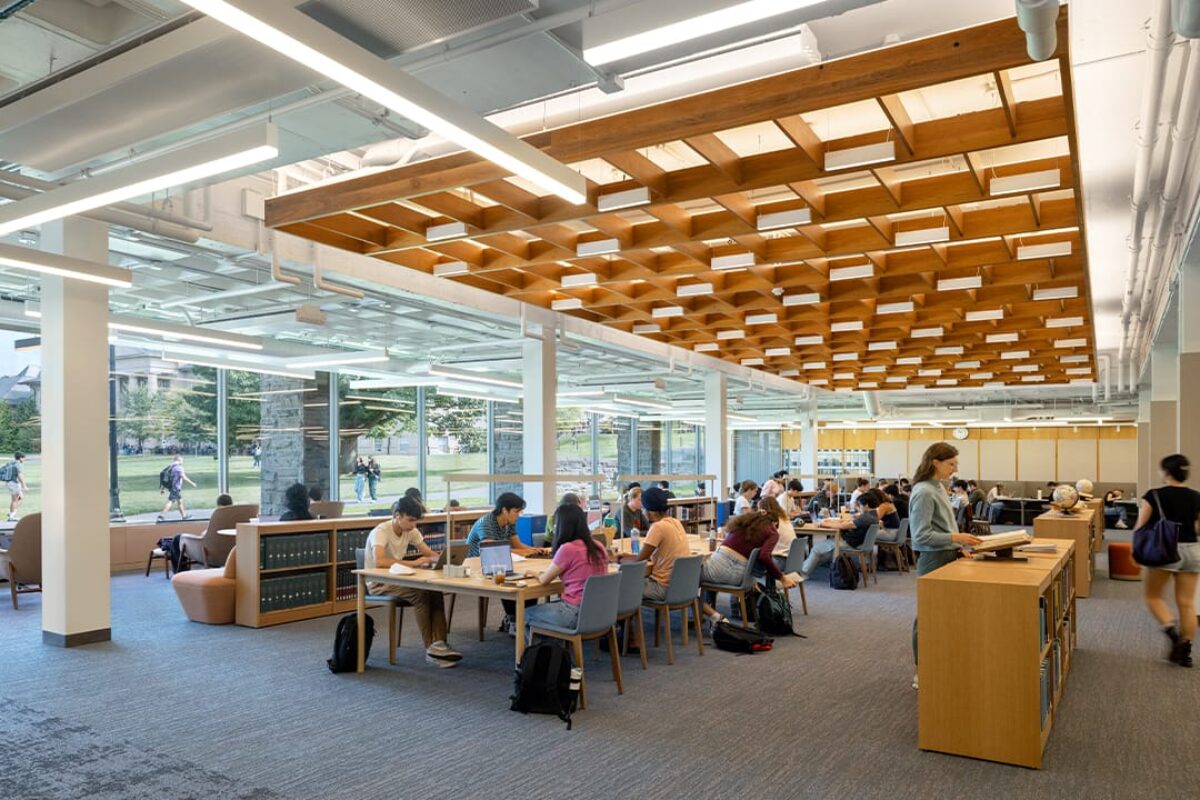
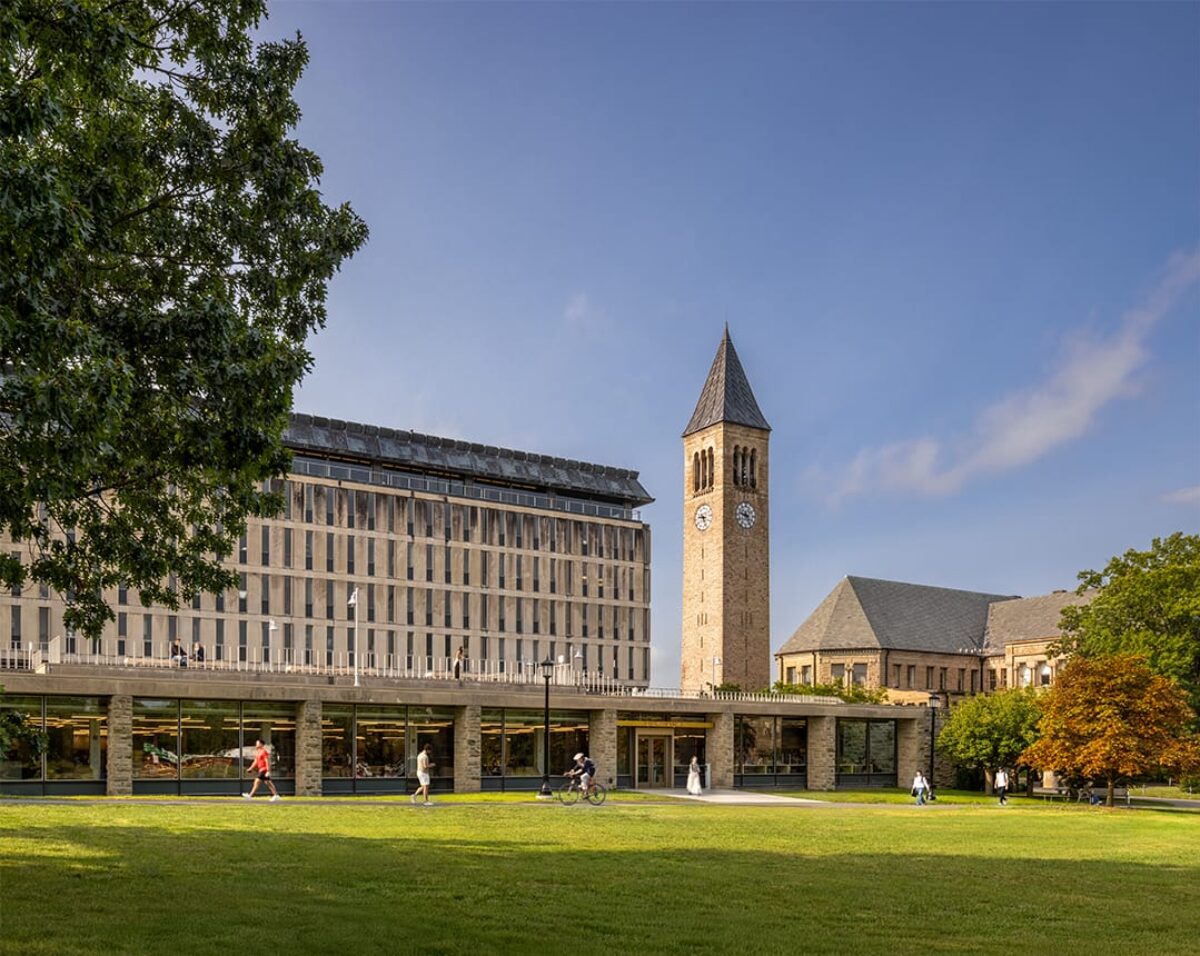
As libraries evolve from quiet repositories of books to vibrant hubs for study and connection, Olin Library has been renewed to meet that change. This renovation transforms one of Cornell’s most-used academic spaces into a brighter, more intuitive place to study and collaborate.
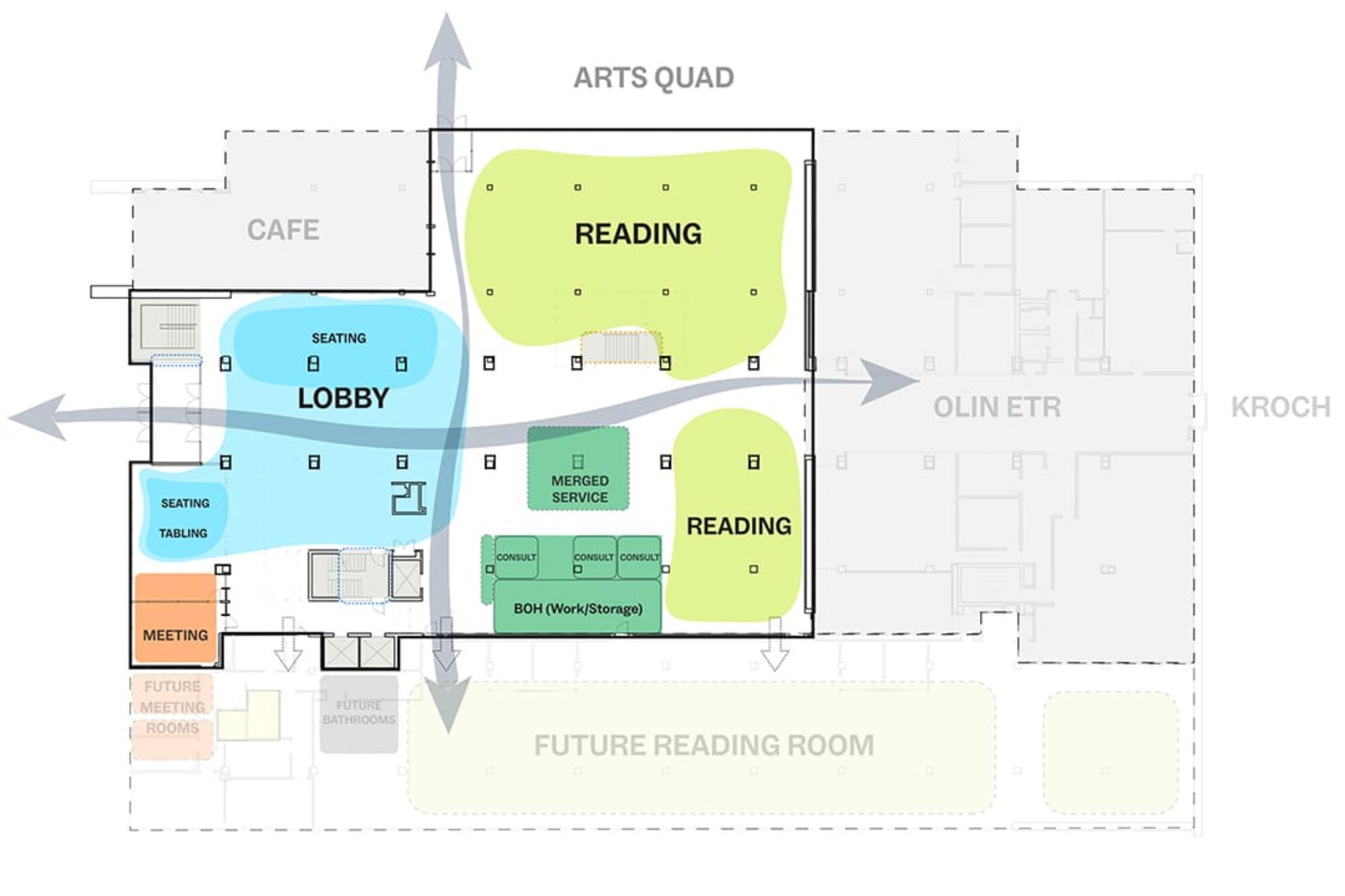
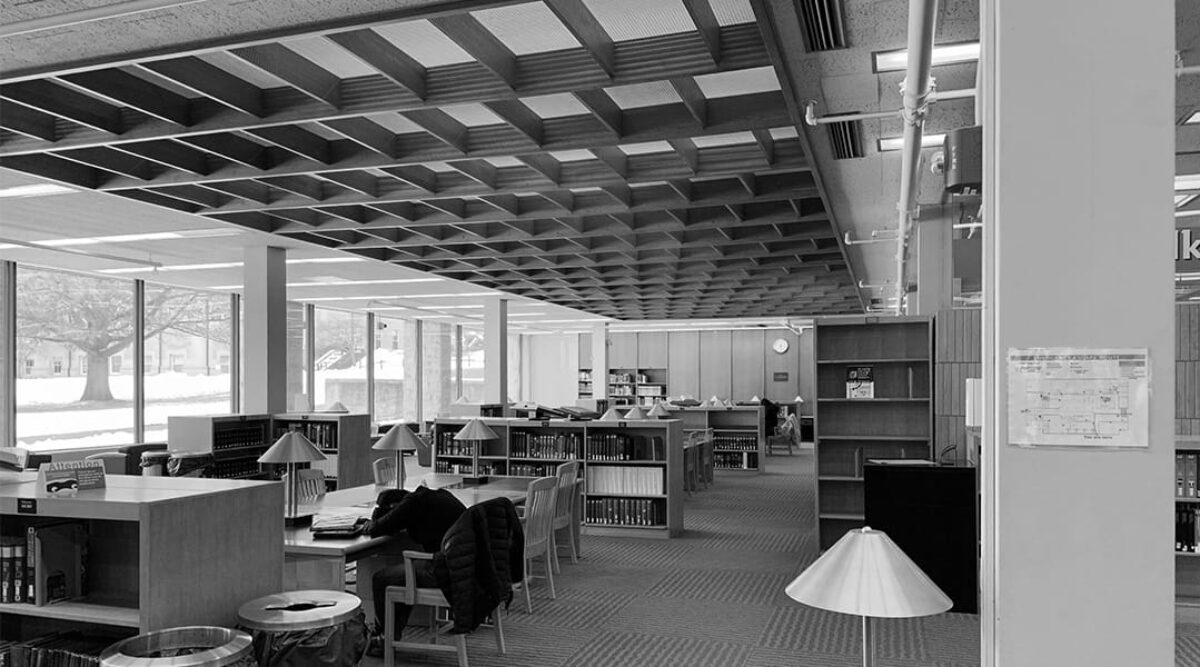
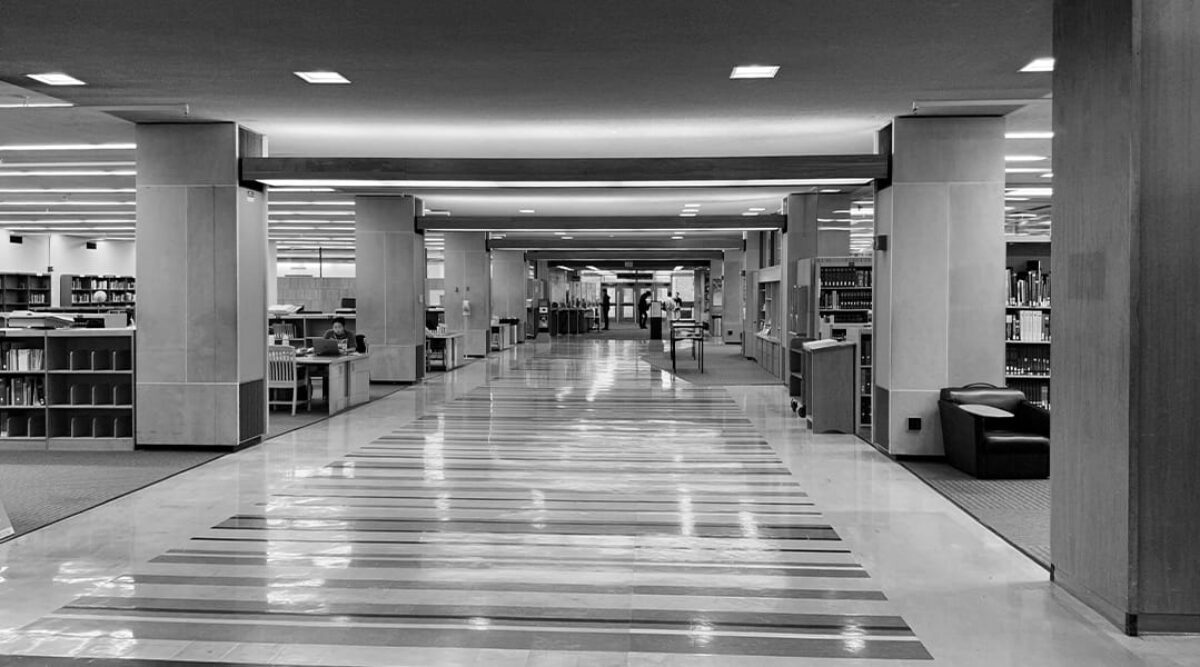
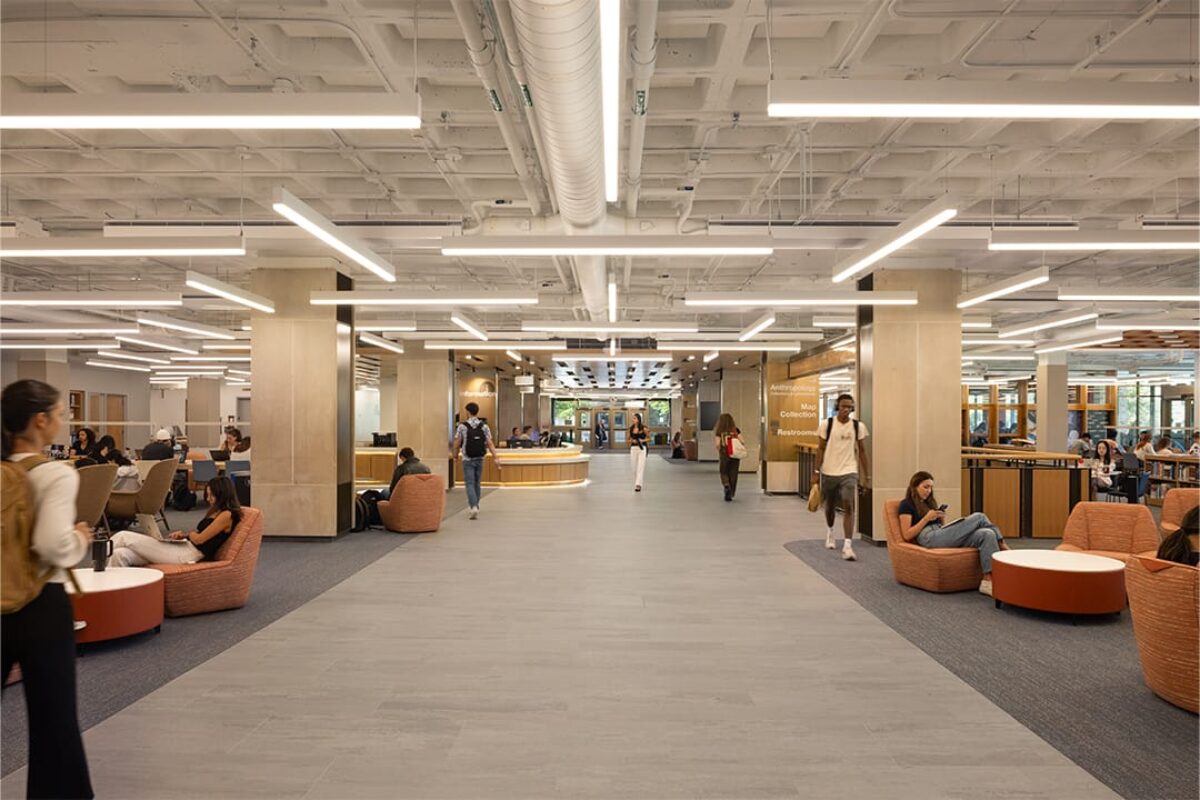
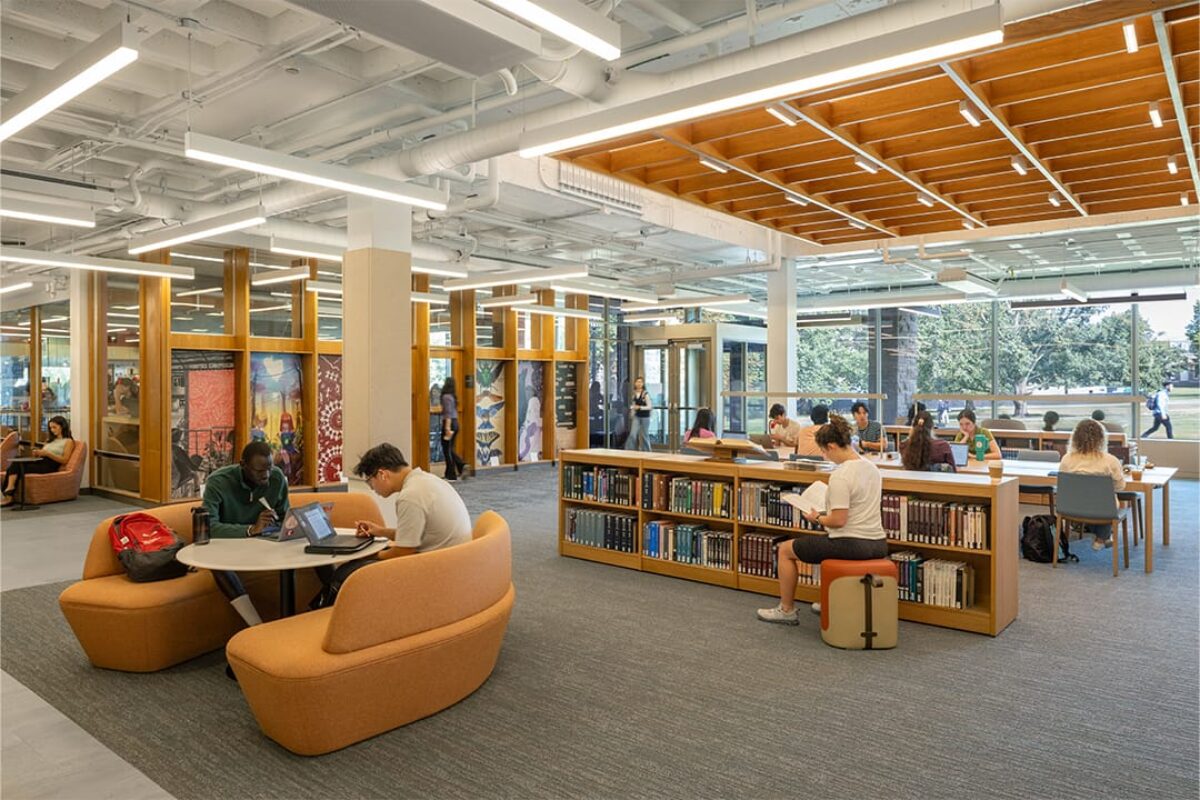
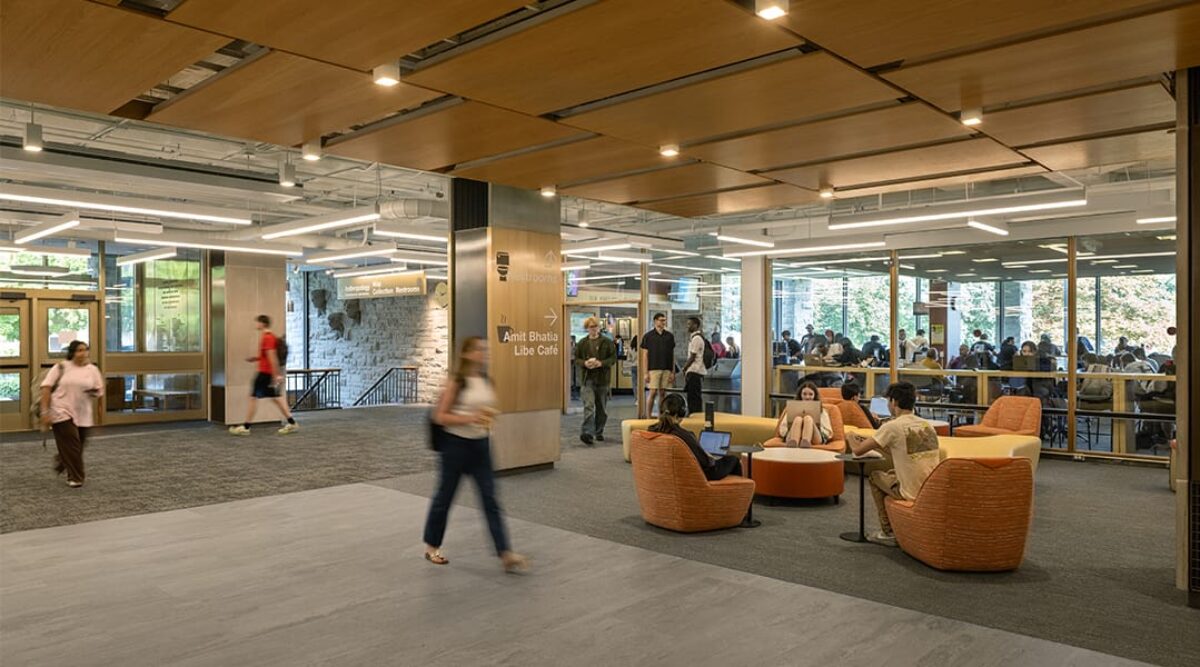
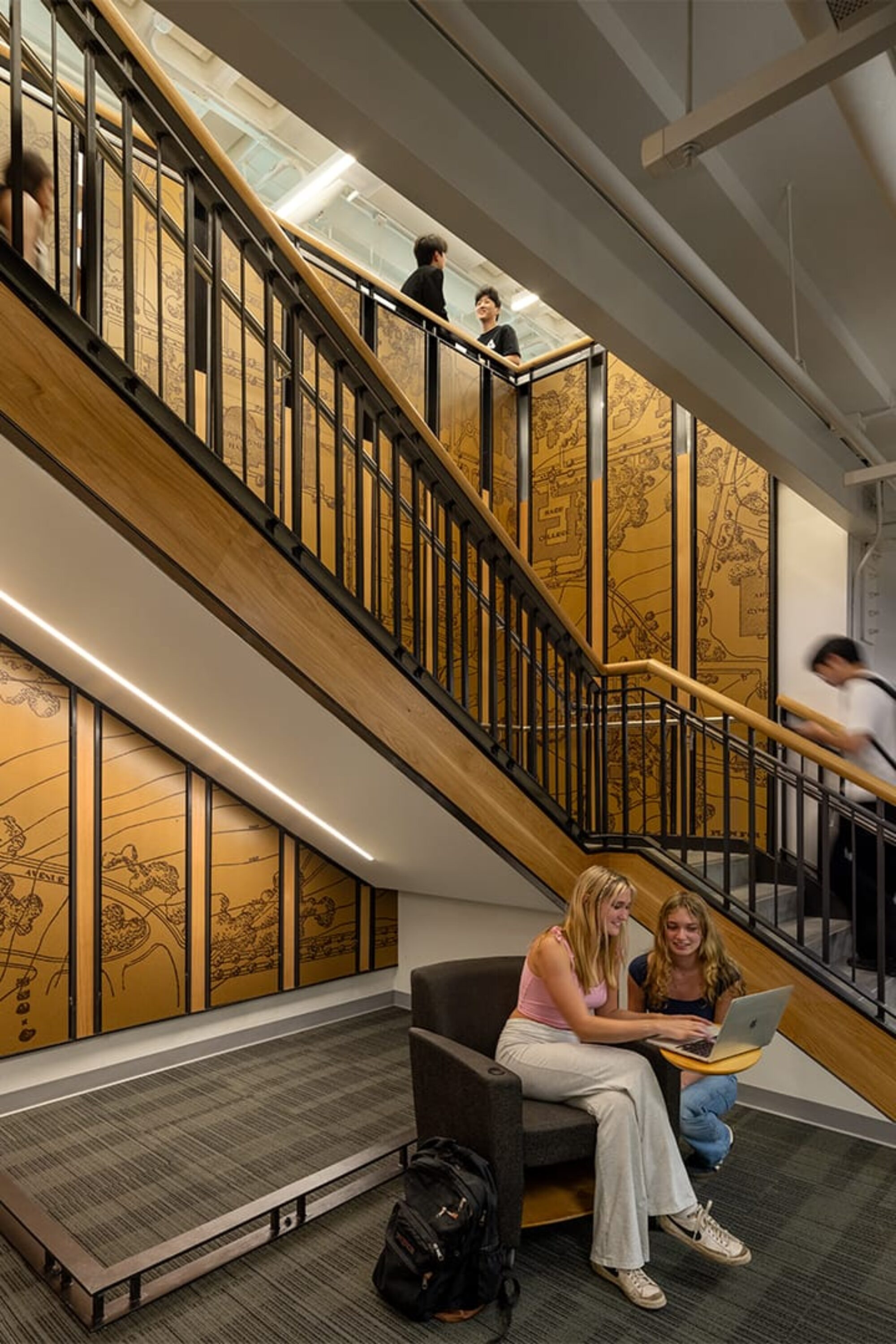
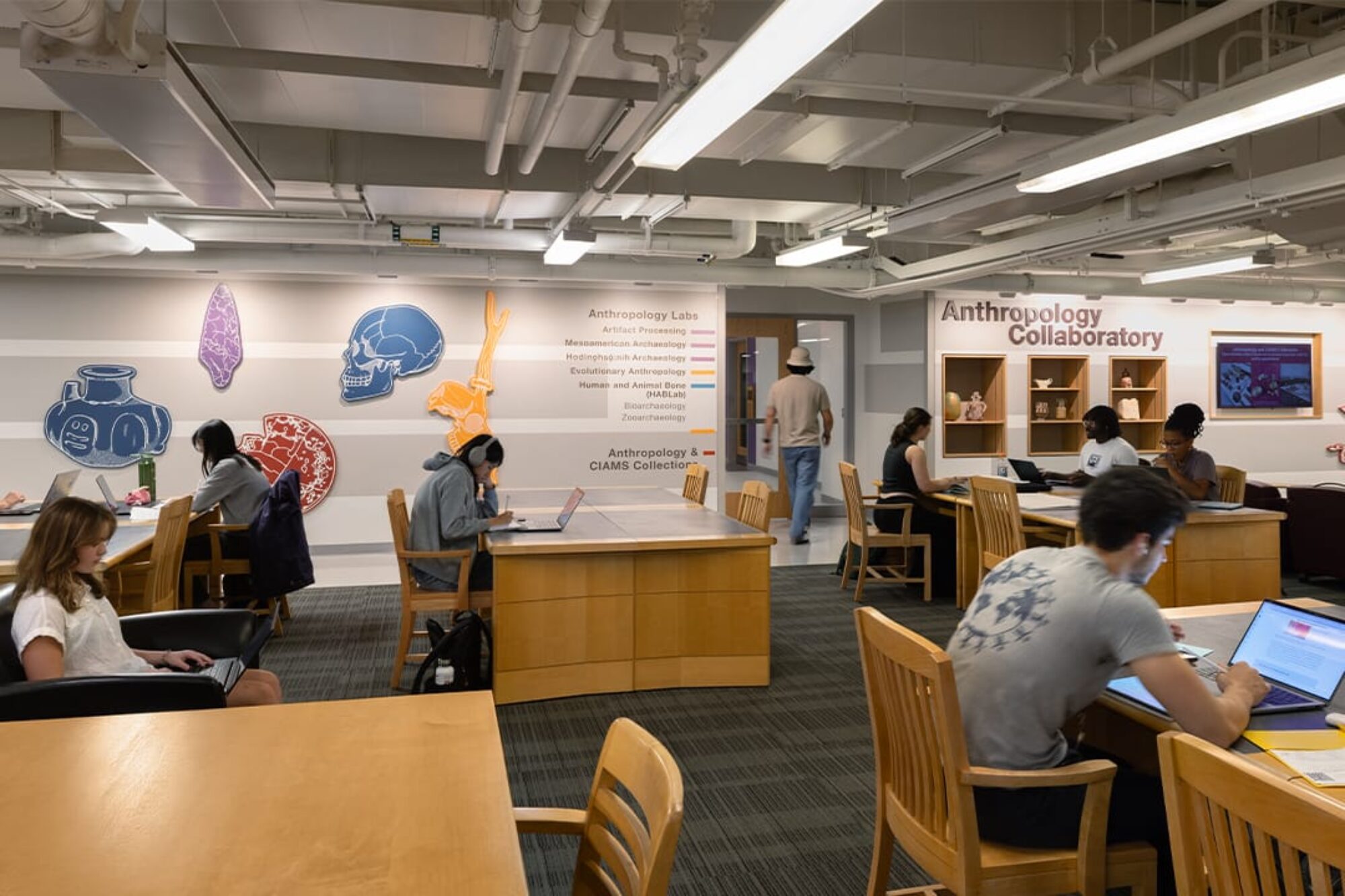
On the main floor, a new open plan improves flow and visibility, replacing the old “bowling-alley” layout with a single merged service desk visible from every corner. The lower level now provides a modern home for Cornell’s Department of Anthropology, bringing new life and purpose to space that was once just a basement.
A place where students want to be
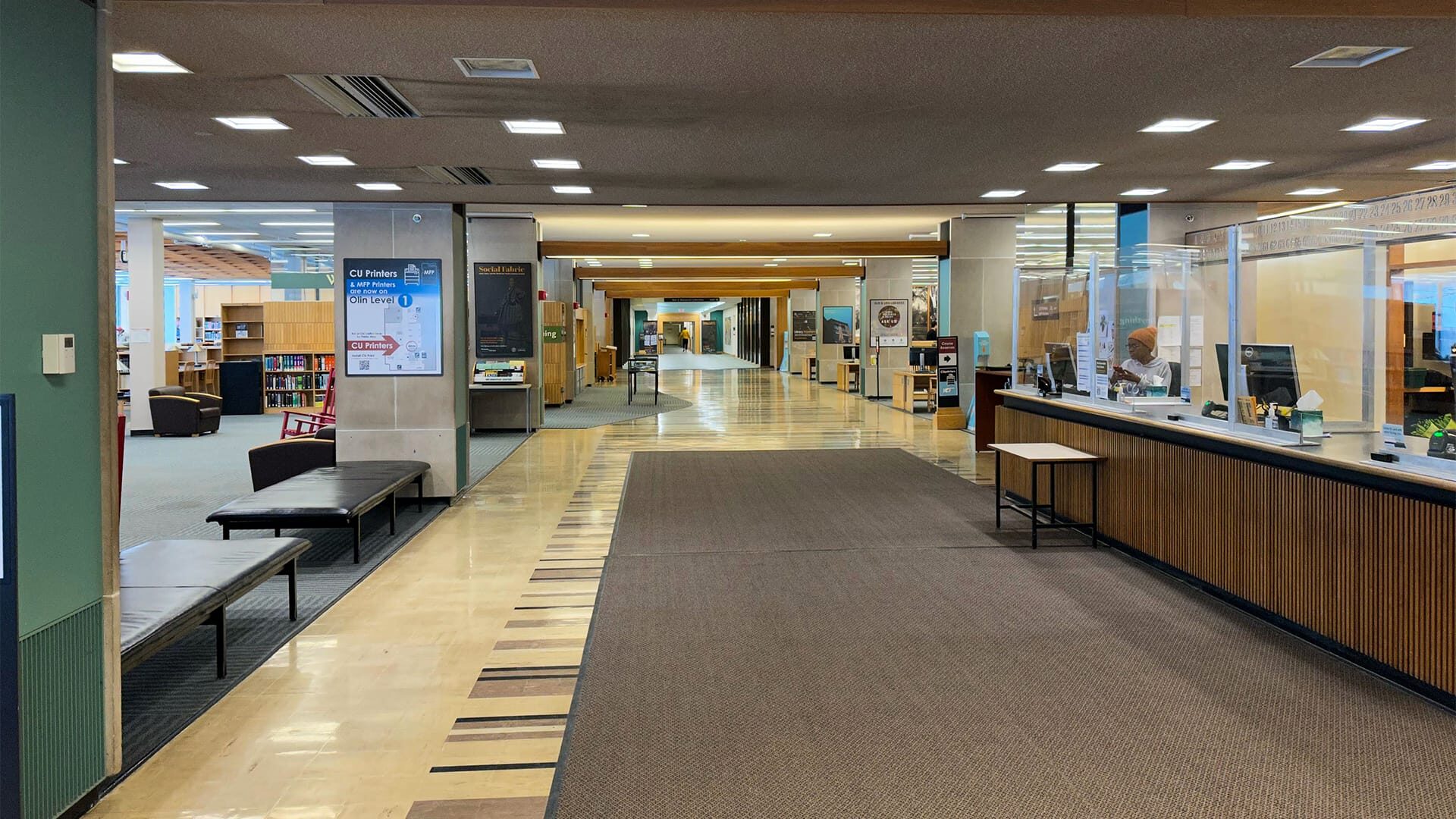
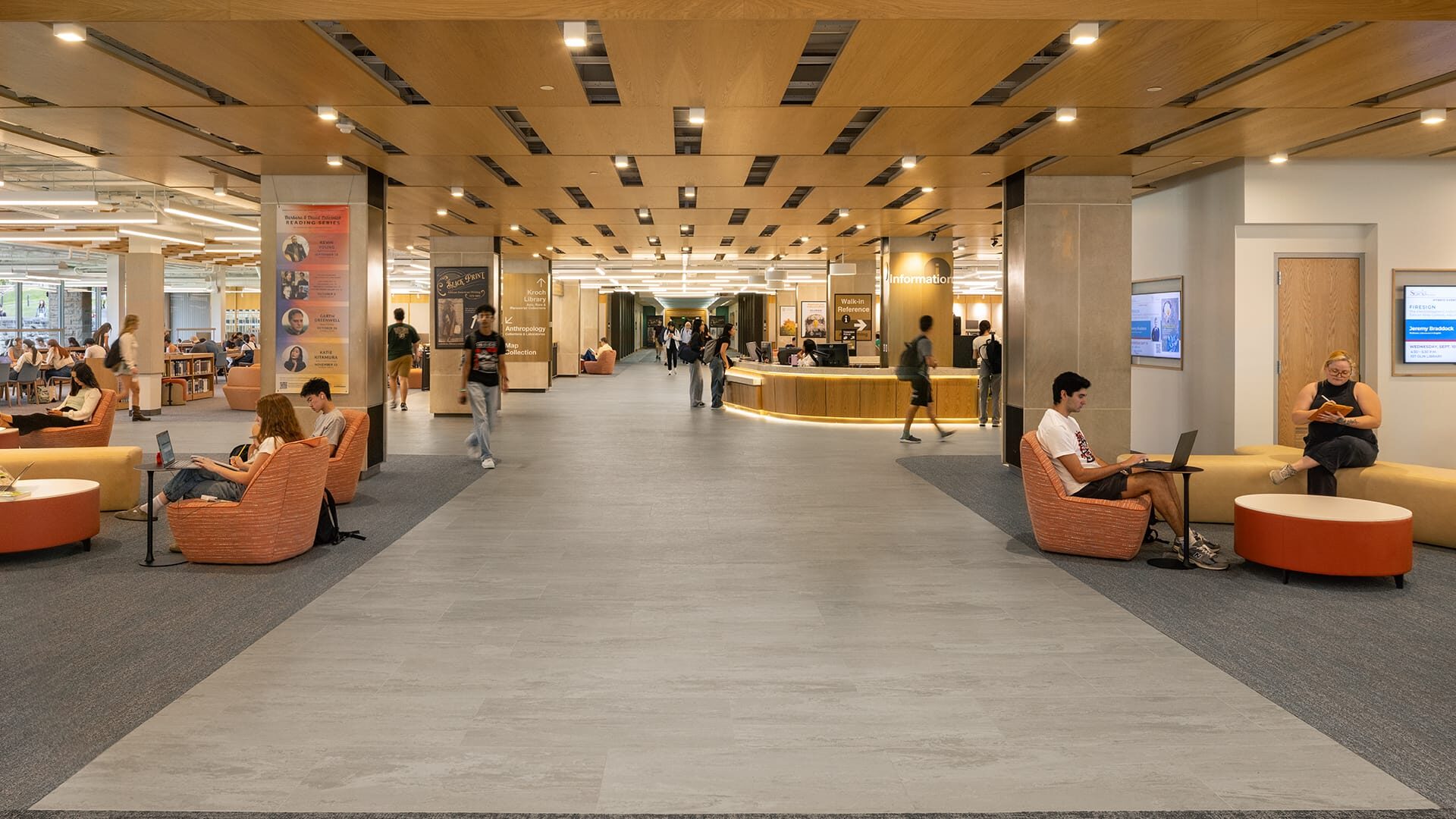
Every design decision was about improving how people experience the library—clarity, flow, and comfort. The biggest transformation came not from adding more, but from taking things away.
Stakeholder engagement
Close collaboration with Cornell University Library staff, students, and faculty brought the renewal to life. Goody Clancy led hands-on engagement sessions, from VR walk-throughs of the Revit model to furniture “sit tests” with students. The team also encouraged the reuse of Olin’s historic call board, which was salvaged and later reinvented by Cornell students and faculty as a programmable digital clock display—a fitting symbol of Olin’s evolving spirit of access and innovation.
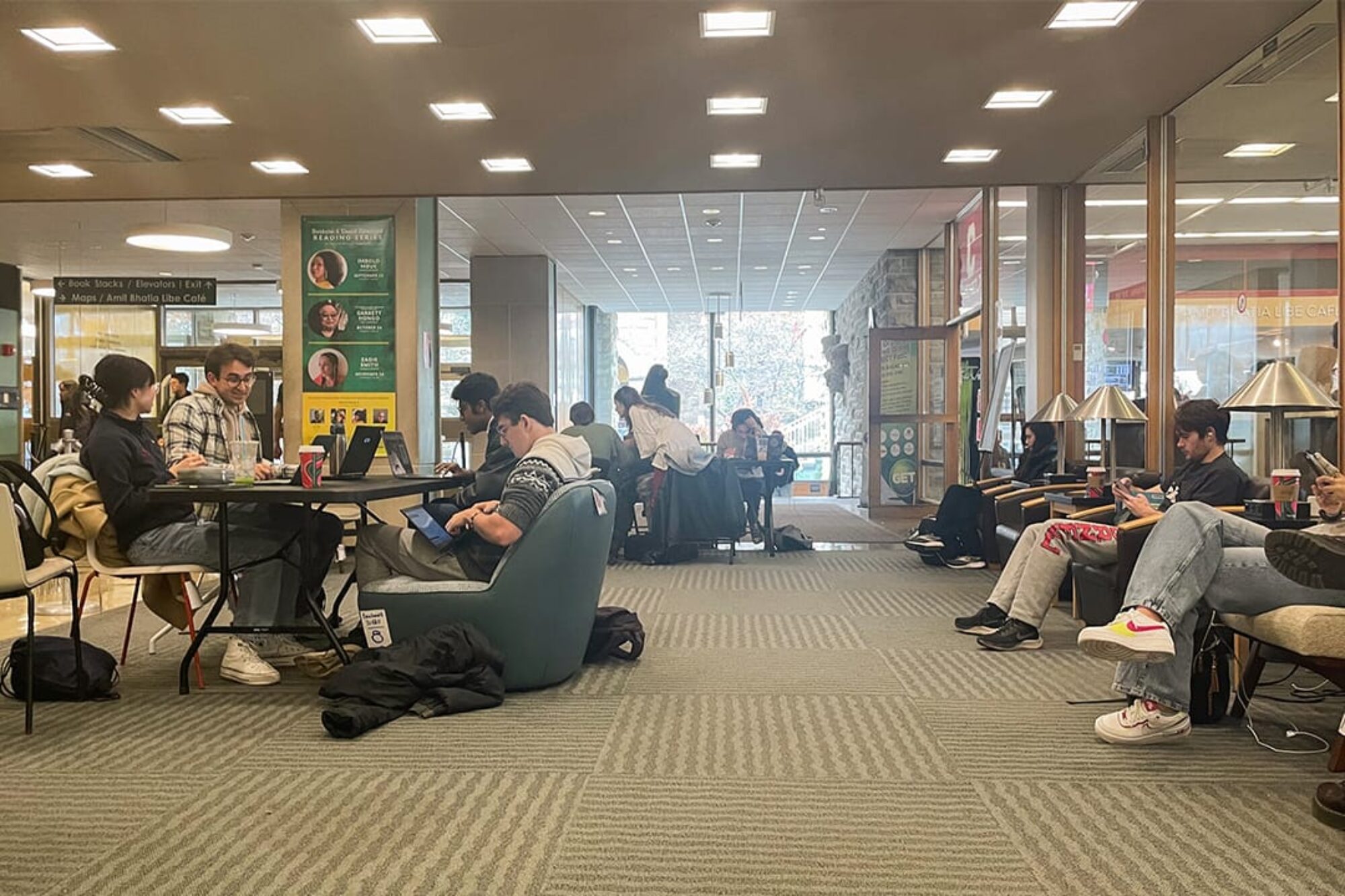
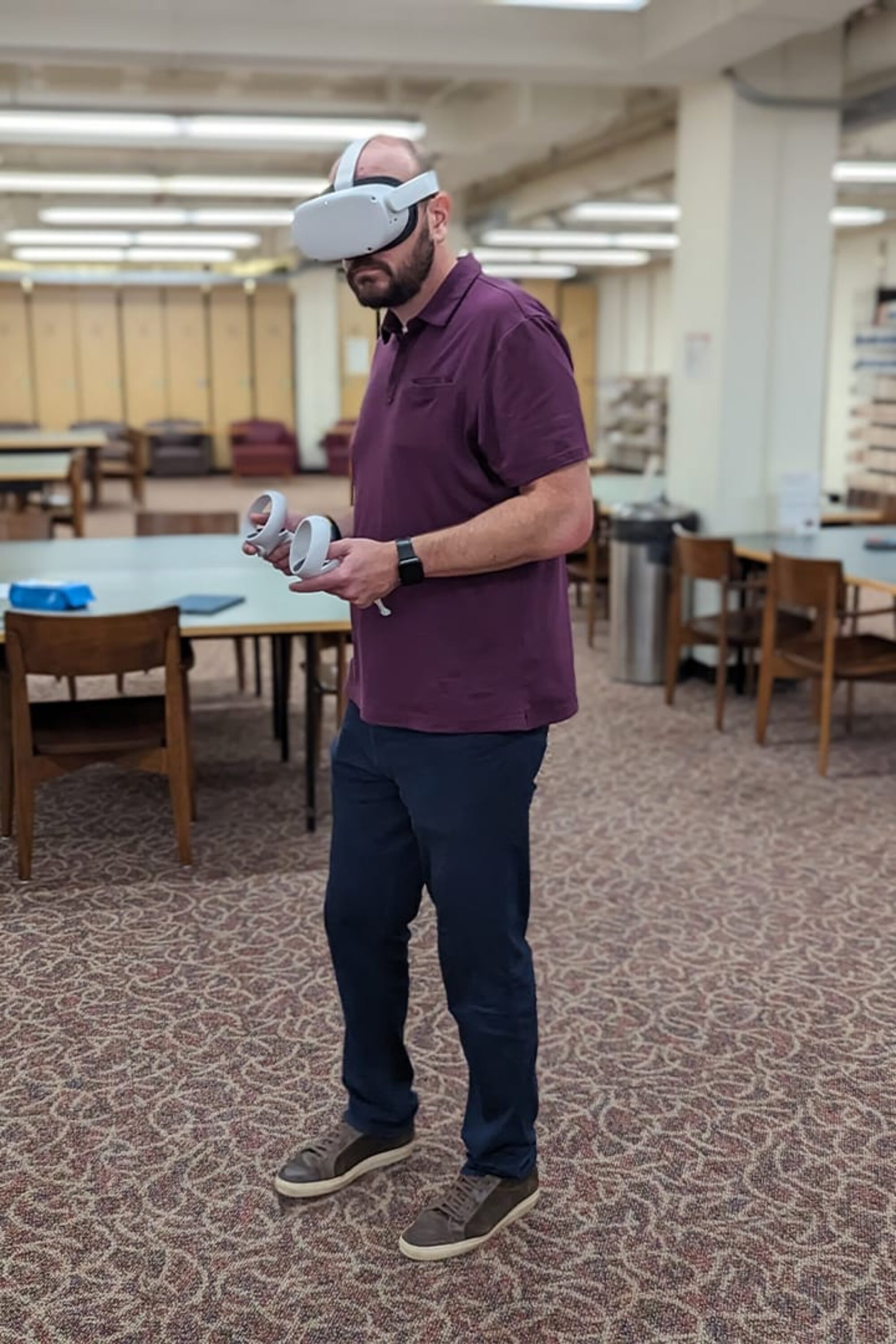
We sought input from all members of the Cornell community on how to transform the lower levels of the building into a more welcoming and connected space. Everything from furniture selection to the repurposing of the historic call board was achieved via community participation.

A showpiece for Anthropology
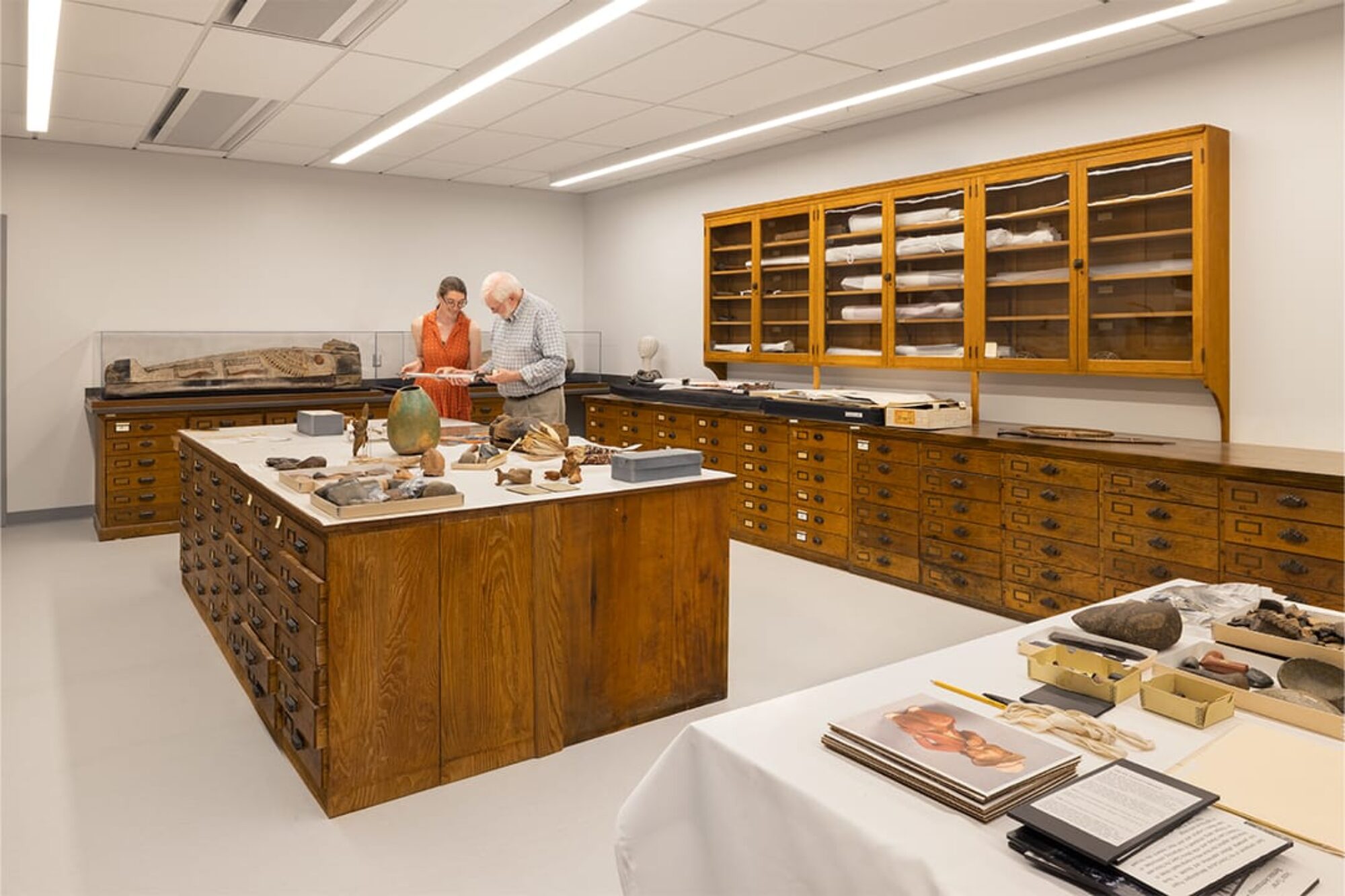
Below the revitalized main floor, part of Olin’s once-utilitarian basement was transformed into a visible new home for Cornell’s Department of Anthropology. Collaborating closely with faculty, the team designed flexible classrooms, artifact labs, offices, and specialized storage spaces tailored to the department’s unique teaching and research needs. Historic casework and collections were relocated from across the Arts Quad, while new lighting and finishes create a bright, stable environment for the study and preservation of materials that span centuries and cultures—from mummies and bones to pottery, maps, and more.
-
5,000+
acoustic panels installed within existing exposed concrete baffles
-
15
pieces of turn-of-the-century casework salvaged and reinstalled
This space is now more accessible and welcoming to all who enter… Libraries are about being open: yes, to knowledge, but also to students, allowing them space to be who they are.
For more information on this page:
Project Team
Mohar Design
Kugler Ning
RFS Engineering
Welliver Construction
Photography
Brad Feinknopf
Related Content
-
 Student Life•Regenerative RenewalAccessibility, comfort, and preservation of memoryBalch Hall, Cornell University
 -
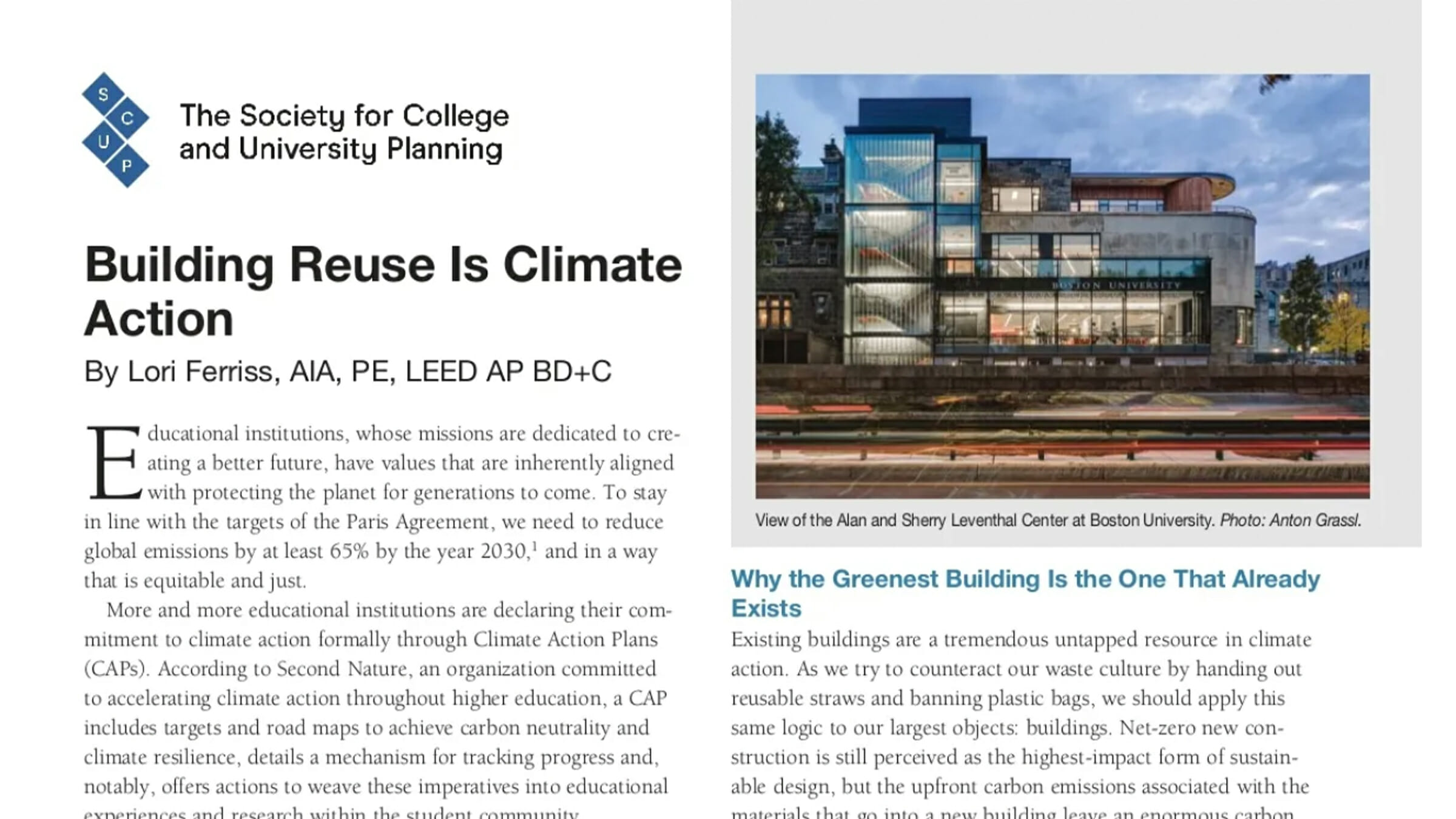
Building Reuse is Climate Action
Read on pubs.royle.com -
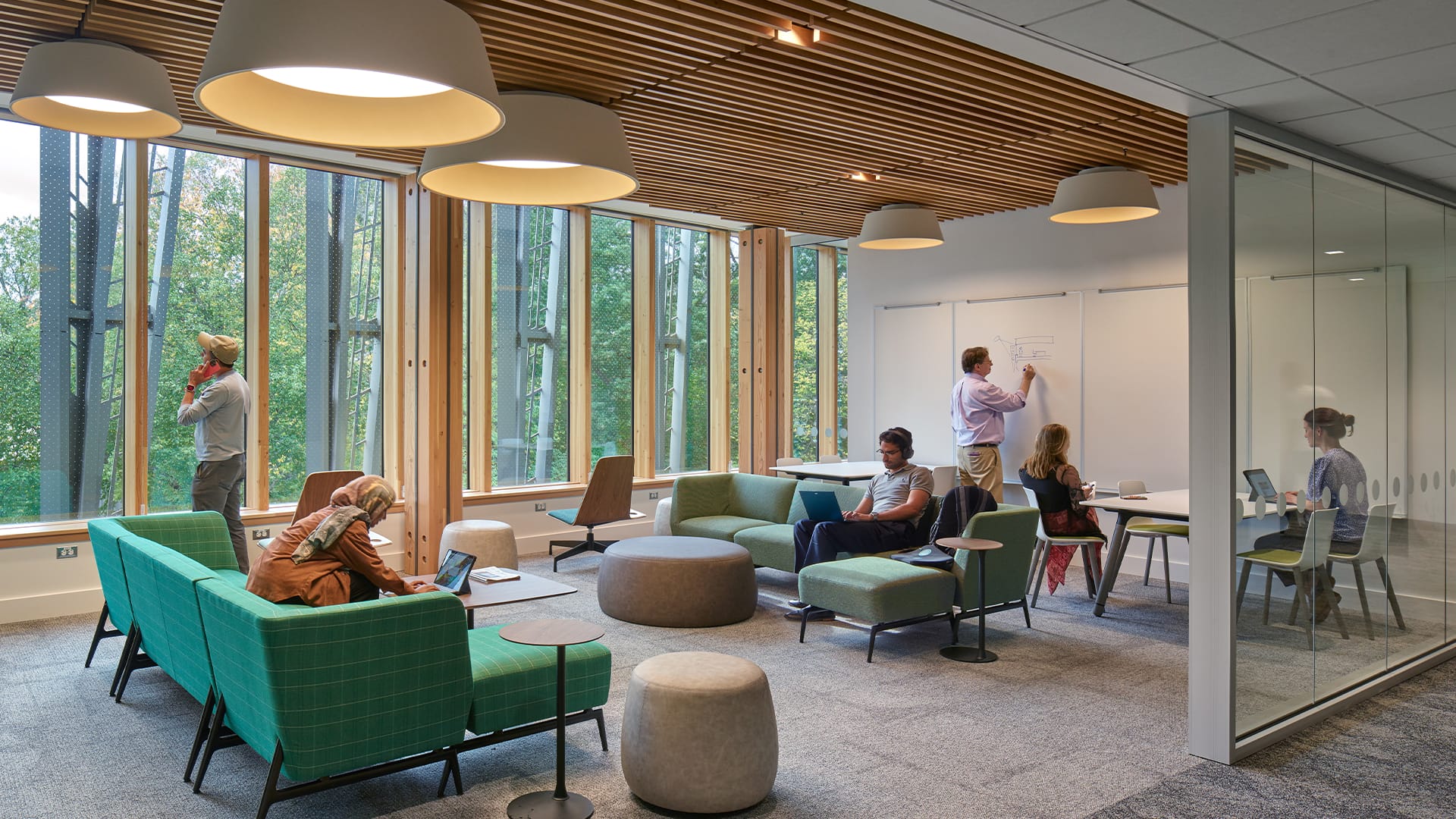 Science + Technology•Teaching + Learning•Regenerative RenewalSustainable transformation connects art and science, quad and woodsMartin Hall, Swarthmore College